Winter dormancy setup
Provide a cool winter rest by moving outdoor pots to a cold frame or unheated garage kept around 30–45°F and slightly damp, which protects crowns from deep freezes while still allowing full dormancy.

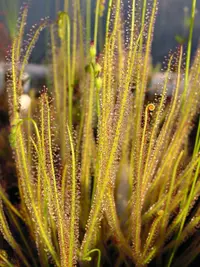
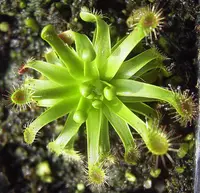
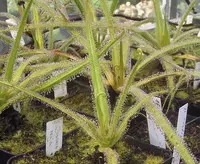
Threadleaf sundew, Drosera filiformis, is a small carnivorous bog plant with long, thin leaves covered in sticky glands that trap insects. It forms shimmering, grassy clumps that stay low to the ground.
This species is native to nutrient-poor wetlands in eastern North America, where it relies on captured insects for extra nutrients. It usually produces delicate pink to reddish flowers on slender stalks above the leaves.
Drosera filiformis can be moderately easy to grow if its basic needs are met. It prefers very bright light, consistently wet conditions, and nutrient-poor, acidic soil. Understanding how to care for threadleaf sundew mainly involves recreating its natural bog environment indoors or outdoors.

Care Difficulty
Moderate Care

Light Preference
Full Sun

Water Requirements
Keep Soil Moist

Temperature Preference
Cold Hardy

Hardiness Zone
6–9

Soil Texture
Sandy, Peaty, Organic-rich

Soil pH
Strongly acidic (4.5–5.5)

Soil Drainage
Waterlogged tolerant

Fertilization
Minimal (feed rarely)
Scan your plant to receive care tips personalized for your specific plant
Available on iOS and Android
This temperate carnivorous species needs strong light to form dense, dewy traps and healthy red coloration.
This bog species needs constantly wet, low‑mineral conditions rather than alternating wet and dry cycles.
This temperate sundew needs warm summers for growth and cold winters for dormancy.
This species prefers moderate humidity but adapts well to most household conditions if roots stay constantly wet.
Drosera filiformis requires nutrient-poor, acidic, constantly wet soil with plenty of air spaces.
This species is well suited to container growing outdoors in sunny, wet conditions.
Drosera filiformis gains most nutrients from captured insects, so artificial fertilizing must stay very light and infrequent.
Drosera filiformis needs only light, targeted pruning to maintain vigor and reduce disease risk.
Container-grown Drosera filiformis benefits from occasional repotting to refresh the acidic, nutrient-poor substrate.
This species is commonly multiplied by seed, leaf cuttings, or division under bright light and consistently moist conditions.
This temperate sundew requires a cool winter dormancy and is fairly cold hardy when roots stay insulated.

Plant Health Check
Not sure what's wrong with your plant? Check your plant's health inside the app.
This species is naturally restricted to acidic, nutrient-poor bogs and wet sands along the Atlantic Coastal Plain of eastern North America, especially New Jersey and nearby regions. It often grows in seepage zones where groundwater keeps the substrate saturated but not permanently flooded.
In cold climates, the plant survives winter by retreating into a tight, bud-like structure called a hibernaculum at the soil surface. The long leaves die back completely and new carnivorous foliage emerges from this protected bud in spring.
Wild populations are often associated with habitats that experience periodic low-intensity fires. Fire helps reduce competition from taller vegetation and maintains the open, sunny conditions that D. filiformis requires.

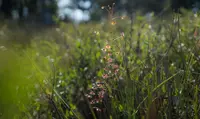
In parts of its native range, Drosera filiformis can form dense, almost pure stands where hundreds of plants create a shimmering field of sticky, dew-covered leaves that significantly reduces local insect abundance just above the soil surface.
Poor flowering usually results from insufficient winter dormancy, low light, or plants that are still immature. Provide a cool winter rest, strong light, and avoid repotting right before the growing season to support flower production.
Keep your plants happy and healthy with plant identification, disease detection, and easy care guidance.