Australian sundew Care (Drosera aliciae)

Also known as: Alice Sundew, Shepherds Crook Sundew
Australian sundew

About Australian sundew

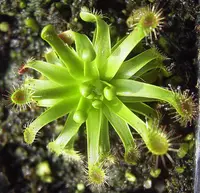
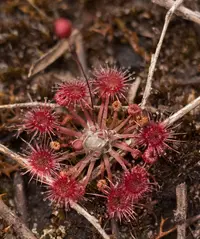
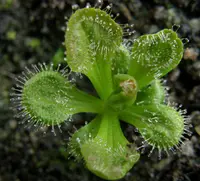
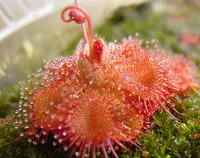
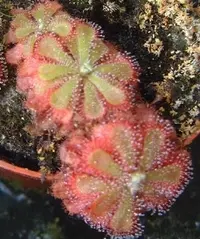
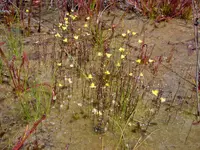
Drosera aliciae, commonly called Australian sundew, is a small carnivorous plant that forms a tight, flat rosette of spoon-shaped leaves. Each leaf is covered in red, sticky hairs that trap small insects, supplying nutrients that are often scarce in its native habitats.

This species naturally occurs in nutrient-poor, sunny bogs and wetlands in parts of Australia and southern Africa. Its compact growth and striking coloration make it a popular choice for indoor carnivorous plant collections.

Australian sundew is generally considered manageable for beginners who are ready to learn how to care for Australian sundew, as long as its need for bright light, consistently moist conditions, and low-mineral, acidic soil is respected.

Main Plant Requirements

Care Difficulty

Moderate Care

Light Preference

Partial Sun

Water Requirements

Keep Soil Moist

Temperature Preference

Tropical / Frost Sensitive

Hardiness Zone

10–11

Soil Texture

Sandy, Peaty, Organic-rich

Soil pH

Strongly acidic (4.5–5.5)

Soil Drainage

Waterlogged tolerant

Fertilization

Minimal (feed rarely)

Get Personalized Care Plan

Scan your plant to receive care tips personalized for your specific plant

Available on iOS and Android

How to Care for the Australian sundew

This compact sundew needs bright light to form strong red coloration and sticky traps.

  • Provide 4–6 hours of direct morning sun plus bright, filtered light for the rest of the day; in hot regions, shield from harsh sun after 1–2 pm.
  • Tolerates light partial shade, but leaves turn greener and traps weaken if total direct sun falls below about 3 hours daily.
  • Outdoors, give maximum sun from late fall to early spring; in summer, use 30–40% shade cloth or dappled light to prevent leaf scorch.

This bog species requires consistently wet conditions and low-mineral water.

  • Use rainwater, distilled, or reverse-osmosis water; avoid tap water unless tested below 50 ppm minerals to protect Drosera aliciae roots.
  • Keep the soil saturated, not soupy; trays can hold 0.5–2 cm of water, allowing the surface to just stop glistening before refilling.
  • In cooler seasons, reduce tray depth so soil stays moist rather than flooded; pale, limp leaves often signal overwatering, while crisping leaf tips indicate drying out.

This species prefers mild, frost-free conditions with stable, cool-to-warm temperatures.

  • Aim for 65–80°F (18–27°C) for best growth, with minimal day–night swings to reduce stress.
  • Protect from cold below 35–40°F (2–4°C); frost can kill foliage and damage the crown, so move plants under cover during cold snaps.
  • In hot spells above 90°F (32°C), provide light shade, good air movement, and slightly deeper water trays to buffer root temperature and prevent heat stress.

This species prefers consistently moist air but adapts to typical indoor humidity if roots stay wet.

  • Aim for 50–70% humidity to keep traps dewy and active for the Australian sundew.
  • Tolerates brief drops to 30–40%, but leaves may curl slightly and dew production decreases.
  • Increase humidity with a nearby tray of water or grouped plants, avoiding enclosed, stagnant air around foliage.

This carnivorous species needs nutrient-poor, acidic, open soil that stays constantly moist without becoming stagnant.

  • Use a mix of 1:1 sphagnum peat moss and perlite or silica sand to provide low nutrients and a loose structure.
  • Aim for acidic conditions around pH 4.5–5.5; never add compost, regular potting mix, or fertilizer granules.
  • Ensure the mix drains freely yet remains evenly damp by avoiding fine sand or dense materials that compact easily.
  • Rinse sand and perlite before use to remove mineral residues that could build up and damage Drosera aliciae roots.

This species is very suitable for container growing when moisture and mineral buildup are controlled.

  • Choose a relatively deep pot so the consistently wet mix stays cooler and roots can spread without crowding.
  • Use plastic or glazed ceramic containers, which retain moisture more evenly than unglazed clay for this bog species.
  • Place the pot in a shallow tray of distilled or rainwater, letting excess drain freely while maintaining a stable water table.

Drosera aliciae gains most nutrients from captured insects, so use fertilizer very sparingly for healthy growth.

  • Skip fertilizer for most plants; caring for Australian sundew normally relies on adequate light, pure water, and insects.
  • If growth is weak, apply a very dilute balanced NPK (1⁄4–1⁄8 strength) to roots only, never on leaves.
  • Feed no more than every 4–6 weeks during active growth in spring–summer, then stop in fall–winter.

Drosera aliciae needs only light pruning to keep the rosette clean and healthy.

  • Best time is late winter or early spring, before strong new growth starts.
  • Use small scissors or fine tweezers to remove dead, brown, or moldy leaves at the base.
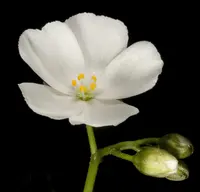
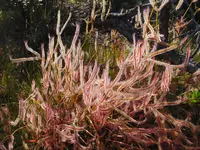
  • Cut spent flower stalks near the crown if seed is not wanted, directing energy back into leaf production.
  • Avoid cutting healthy sticky leaves, as this reduces photosynthesis and insect capture.

This small sundew grows well in pots but benefits from occasional repotting into fresh, low‑nutrient mix.

  • Repot every 1–2 years in late winter or early spring, before vigorous growth resumes.
  • Check for crowded rosettes, roots circling the pot, slow growth, or sour-smelling substrate as signs to repot.
  • Use a plastic pot with drainage and fresh 1:1 sphagnum peat and perlite or sand, with no added fertilizer.
  • Lift the plant gently, keep the root ball intact, water with pure water after repotting, and shade lightly for a few days to limit stress.

This species is commonly propagated to expand a collection or replace older rosettes.

  • Divide mature clumps in late winter or early spring, separating small offset rosettes with attached roots.
  • Use leaf cuttings on live sphagnum or peat:sand mix, keeping them flat on the surface and consistently moist.
  • Maintain bright, indirect light, high humidity, and temperatures around 65–75°F to support rooting and new plantlets.
  • Sow fresh seeds on the surface of moist, nutrient-free medium and avoid covering them, as they need light to germinate.

This subtropical sundew dislikes frost and needs protection in regions with cold winters.

  • Keep plants above 40°F; prolonged exposure near or below freezing can kill foliage and crowns.
  • Grow in containers that can be moved indoors to a bright, cool windowsill or under grow lights in winter.
  • Maintain evenly moist, not waterlogged, substrate with pure water, as dry soil increases cold damage risk.
  • Do not allow cold drafts directly on the plant, and avoid sudden temperature swings.

Care Tips

Winter photoperiod tweak

In winter, extend daylength to 12–14 hours with a simple timer on your grow light so the plant maintains strong rosette growth and does not weaken in low natural light.

Mineral-safe water storage

Store distilled or reverse-osmosis water in a dedicated, clearly labeled container and rinse it out monthly so trace minerals or residues from other uses do not slowly build up in the tray.

Insect feeding control

Limit supplemental insect feeding to a few small prey items per month and remove any large or partially undigested insects with tweezers to prevent mold starting on the sticky leaves.

Tray depth management

Use a shallow tray only 1–2 cm deep and allow the water level to briefly drop to just above the pot base before refilling, which improves root aeration while still keeping this bog species evenly moist.

Division timing and handling

Divide crowded rosettes only in active growth, then press divisions firmly into fresh medium and keep humidity higher for 1–2 weeks so fine roots re-establish quickly, which is one of the most reliable methods to grow Drosera aliciae.

Common Pests and Diseases

Aphids

These insects pierce young leaves and flower stalks, sucking sap and causing distortion, sticky honeydew, and weakened growth. Symptoms include clustered green, black, or red soft‑bodied insects around the rosette center or flower stems.

Solution

Rinse the plant gently with low‑mineral water to dislodge aphids, then place the pot where air moves lightly around it and humidity remains stable. For persistent infestations, use a diluted insecticidal soap sprayed carefully around (not into) the crown, and repeat after 5–7 days while avoiding runoff into the tray.

Fungus gnats

These insects lay eggs in wet peat, and the larvae can chew on fine roots and young growth, especially in constantly waterlogged trays. Symptoms include tiny black flies around the pot and reduced vigor despite apparently wet conditions.

Solution

Allow the tray water level to drop slightly between refills while keeping the peat evenly moist, not flooded, and remove algae or decaying debris from the soil surface. Use yellow sticky traps to catch adults and, if needed, add a biological control such as Bacillus thuringiensis israelensis (BTi) to the water to reduce larvae without harming the plant when growing Australian sundew in small containers.

Botrytis (gray mold)

This disease favors cool, stagnant, very humid air and dead insect remains on the leaves, leading to brown, mushy spots and gray fuzzy mold on leaves or old flower stalks. Symptoms include rapid collapse of affected tissue starting from damaged or overcrowded areas.

Solution

Remove all affected leaves and spent flower stalks promptly and discard them, then improve air circulation around the plant without exposing it to cold drafts. Reduce overcrowding of rosettes, keep the leaf surface reasonably clean of old prey, and if needed apply a sulfur‑based fungicide lightly, avoiding heavy wetting of the crown.

Spider mites

These pests occur mainly in very dry indoor air or under strong artificial light, sucking sap from leaves and causing dull, stippled, or bronzed foliage and reduced dew production. Symptoms include very fine webbing at the base or between leaves and slow decline in trapping ability.

Solution

Increase humidity gradually to 50–60% and rinse foliage with soft or distilled water to remove mites and dust. For persistent cases, apply a miticide or insecticidal soap at low strength, treating both upper and lower leaf surfaces and repeating after 5–7 days while monitoring dew production and light levels.

Interesting Facts

Rosette bog specialist

This species forms a tight, flat rosette only a few cm across, an adaptation to the wind-exposed, nutrient-poor fynbos bogs of the Western Cape in South Africa where it naturally occurs.

Color change with prey

The leaf tentacles often deepen to a more intense red when the plant is regularly catching insects, which is linked to higher levels of protective pigments called anthocyanins.

Rapid tentacle movement

Its marginal tentacles can bend inward within minutes after an insect lands, increasing contact with the sticky mucilage and digestive enzymes, a movement controlled by changes in cell turgor pressure rather than muscles.

Botan icon

Did you know?

This species was one of the sundews observed in detail by Charles Darwin in his experiments on carnivorous plants, helping to establish that insect capture and digestion in Drosera involve true secretion of digestive enzymes and nutrient absorption by the leaf surface.

FAQs about Australian sundew

Lack of flowers usually comes from insufficient light, poor seasonal temperature cues, or nutrient buildup from hard water or fertilizer. Provide strong light, cool but frost-free winter conditions, and very low-mineral water to support normal flowering.

Grow Healthy Plants with Botan Care

Keep your plants happy and healthy with plant identification, disease detection, and easy care guidance.

Botan plant care app — identify plants on mobile

Explore More Plants