Staggered Sowing
Sow small batches 1–2 weeks apart in spring to extend the flowering period and make it easier to identify the best-performing plants for future seed saving.

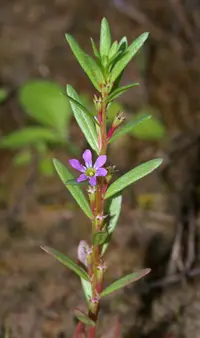
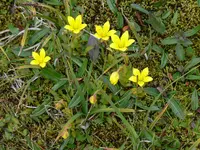
Grass-poly, Lythrum hyssopifolia, is a small annual wetland plant from the loosestrife family. It typically grows in low, branching tufts with narrow leaves and small pink to purple flowers.
In nature it occurs in damp fields, marshy edges, and seasonally flooded ground, especially in Europe and parts of Asia, and as an introduced species elsewhere. It tends to appear in disturbed, wet soils, which makes it opportunistic but sometimes short-lived in gardens or containers.
Those who want to learn how to care for Grass-poly should note its need for consistently moist soil, good light, and low competition from taller plants.

Care Difficulty
Moderate Care

Light Preference
Full Sun

Water Requirements
Keep Soil Moist

Temperature Preference
Cool Climate

Hardiness Zone
6–9

Soil Texture
Sandy, Loamy, Silty

Soil pH
Slightly acidic (6.5–7.0), Neutral (7.0)

Soil Drainage
Waterlogged tolerant

Fertilization
Minimal (feed rarely)
Scan your plant to receive care tips personalized for your specific plant
Available on iOS and Android
This annual wetland species develops best with consistent, bright outdoor light.
This species prefers consistently moist to wet conditions and does not tolerate prolonged drying.
This annual typically thrives in mild to warm outdoor conditions during the growing season.
Humidity is not a critical factor for Lythrum hyssopifolia, which adapts to a wide range of ambient conditions.
This species prefers consistently moist, fine-textured soil that resists drying out.
This species can be grown in containers if moisture needs are carefully managed.
This wetland annual usually needs little feeding, especially in naturally rich or damp soils.
Pruning Lythrum hyssopifolia is mainly used to tidy plants and manage self-seeding.
This species is usually grown in the ground or naturalized areas, so transplanting young plants is more common than repotting mature ones.
Propagation of this species is most often done from seed, which suits its annual, wetland habit.
As an annual, this plant does not need direct winter protection; care focuses on seed survival and site management.

Plant Health Check
Not sure what's wrong with your plant? Check your plant's health inside the app.
This species is naturally adapted to seasonally flooded habitats such as rice fields, ditches, and temporary pond margins, where it germinates as water recedes and completes its life cycle before the soil dries out completely.
The plant produces very small seeds in dry capsules, which can be easily transported in mud on machinery, footwear, or bird feet, helping explain its spread along irrigation networks and agricultural landscapes.
Although now found in several temperate regions, it is thought to have a primary origin in Mediterranean-type climates, and its life cycle is closely aligned with the cool, wet winters and dry summers typical of those regions.

In some rice-growing regions, this species is monitored as a minor weed because its timing and growth form allow it to exploit the same shallow, seasonally wet soils as young rice plants, yet it usually remains small enough that careful water and field management can keep it from becoming dominant.
This species grows relatively quickly under moist, open conditions, often completing its life cycle in a single season. Growth slows in compacted or dry soils, or when shaded by taller vegetation or dense competing weeds.
Keep your plants happy and healthy with plant identification, disease detection, and easy care guidance.