yellow marsh saxifrage Care (Saxifraga hirculus)

Also known as: marsh saxifrage, bog saxifrage
yellow marsh saxifrage

About yellow marsh saxifrage

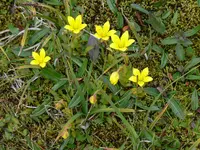
Yellow marsh saxifrage (Saxifraga hirculus) is a small, clump-forming perennial usually found in cold, wet habitats such as bogs, fens, and mountain wetlands. It carries bright yellow, star-shaped flowers on slender stems above narrow, grass-like leaves.

In nature, it occurs across northern parts of Europe, Asia, and North America, often in nutrient-poor but constantly moist ground. The plant prefers cool temperatures, high moisture, and acidic, organic-rich substrates, which makes it more challenging to grow in typical garden conditions.

Because it needs steady moisture and dislikes heat and drying out, gardeners need to plan carefully when they care for yellow marsh saxifrage, especially outside its natural climate range.

Main Plant Requirements

Care Difficulty

Hard Care

Light Preference

Partial Sun

Water Requirements

Keep Soil Moist

Temperature Preference

Cold Hardy

Hardiness Zone

2–6

Soil Texture

Sandy, Peaty, Organic-rich

Soil pH

Strongly acidic (4.5–5.5), Acidic (5.5–6.5)

Soil Drainage

Waterlogged tolerant

Fertilization

Minimal (feed rarely)

Get Personalized Care Plan

Scan your plant to receive care tips personalized for your specific plant

Available on iOS and Android

How to Care for the yellow marsh saxifrage

This species prefers bright, cool conditions that mimic open, moist meadows and stream edges.

  • Provide 4–6 hours of soft morning sun with light shade or dappled light in the afternoon to prevent leaf scorch.
  • Allow light, shifting shade from grasses or nearby plants; yellow marsh saxifrage tolerates partial shade but flowers less in deep shade.
  • In summer, protect from strong midday sun, especially in hotter regions, and ensure no reflective surfaces increase heat around the plant.

This plant is adapted to consistently moist, even boggy, conditions and does not tolerate drying out.

  • Keep the root zone evenly moist; soil should feel damp at 2–5 cm depth and never fully dry, especially during active growth.
  • Use soil rich in organic matter that stays wet but is not stagnant; slow surface puddling and yellowing, limp leaves can indicate overwatering in poorly aerated soil.
  • Increase moisture in late spring–summer and allow only slight surface drying in cooler months; browning leaf tips and shriveling stems often signal underwatering.

This cold-hardy species prefers cool summers and is most reliable in climates with mild to moderate temperatures.

  • Aim for growing-season temperatures around 50–68°F (10–20°C), which support steady growth without heat stress.
  • Mature plants tolerate down to about 5–14°F (-15 to -10°C) under snow cover; sudden frost without snow can damage exposed crowns.
  • Prolonged heat above 77–82°F (25–28°C) weakens plants, so provide extra shade and high moisture during hot spells, and avoid siting near heat-reflective stone or walls.

This species prefers cool, consistently moist air typical of boggy habitats, so humidity matters.

  • Aim for 60–80% humidity, especially during warm weather, to prevent leaf edges from drying.
  • It tolerates only brief periods of drier air; persistent low humidity causes browning tips and reduced flowering.
  • Increase humidity outdoors by positioning near other moisture-loving plants or shallow water, and in pots by using trays with wet gravel rather than misting.

This bog species needs constantly moist, airy, organic-rich soil to thrive.

  • Use a fine-textured, peaty mix with added sand, such as 2 parts peat or coco coir to 1 part sharp sand, to mimic Saxifraga hirculus habitat.
  • Keep drainage slow but not stagnant: soil should stay wet and sponge-like, never fully drying or remaining foul-smelling.
  • Maintain slightly acidic conditions, ideally pH 5.0–6.5, avoiding lime or alkaline amendments that can limit nutrient uptake.
  • For containers, pack the mix gently to keep pore spaces for air movement while still holding water evenly around the roots.

This species can grow in containers if moisture is managed carefully to mimic bog conditions.

  • Choose a deep, heavy pot that resists tipping and allows a saturated lower zone while keeping the crown slightly higher and less waterlogged.
  • Use a watertight outer cachepot or saucer to maintain a constant shallow water reservoir without submerging the entire root ball.
  • Place the container in a cool, sheltered outdoor spot where evaporation is moderate, reducing rapid swings between waterlogged and overly dry substrate.

This alpine wetland species needs only light feeding, as yellow marsh saxifrage is adapted to low-nutrient habitats.

  • Use a very dilute balanced liquid fertilizer (around 1/4 strength, such as 10-10-10) only during active growth in spring–summer.
  • Apply no more than every 4–6 weeks, and skip feeding entirely if growth is already strong and foliage looks healthy.
  • Avoid heavy compost or rich slow-release granules that can cause soft, weak growth and root problems.
  • Stop all feeding in fall and winter to respect its natural dormancy and prevent fertilizer salt buildup.

Pruning needs for Saxifraga hirculus are minimal and mainly hygienic rather than structural.

  • In late winter or early spring, remove dead or damaged leaves and spent flowering stems with clean, sharp scissors.
  • Thin out any rotting or crowded rosettes to improve air movement and reduce fungal problems in damp sites.
  • Deadheading faded blooms can slightly tidy the plant but has limited impact on overall flowering or vigor.
  • Disinfect tools before and after work, especially in wet soils where disease can spread more easily.

This species is usually grown in moist beds or bog gardens, so focus on careful transplanting rather than frequent repotting.

  • Transplant in early spring or early fall, when temperatures are mild and soil remains consistently moist.
  • Look for signs like slow growth, crowding, or poor flowering to decide when mature clumps of Saxifraga hirculus need lifting and dividing.
  • Lift clumps gently, keep as much soil around the roots as possible, and replant at the same depth into cool, humus-rich, wet soil.
  • Water thoroughly after transplanting, then shade lightly for several days to reduce transplant shock and root stress.

Propagation of this species is possible but moderately specialized, relying mainly on division and seed.

  • Divide established clumps in early spring, separating small rosettes with intact roots and replanting them into consistently moist, cool soil.
  • Sow fresh seed on the surface of a gritty, moist substrate and expose to cool conditions; many growers use natural cold stratification outdoors.
  • Keep seed trays evenly damp, not waterlogged, with bright indirect light to encourage steady germination.
  • Label all divisions and seed trays, since young plants are small and can be overlooked or confused with mosses.

This cold-hardy alpine tolerates freezing conditions well and usually needs little active winter care in the ground.

  • In colder regions, a thin mulch of fine gravel or leaf mold around the crown helps stabilize soil temperature without smothering it.
  • Ensure soil or bog substrate remains moist but not ice-saturated to limit heaving and root damage.
  • For container specimens, move pots into a cold, bright, frost-prone but sheltered spot to avoid repeated freeze–thaw on the root ball.

Care Tips

Cool root zone

Place the pot inside a slightly larger cachepot with damp sand or fine gravel between the two containers to keep the root zone cool and evenly moist, which mimics the plant’s natural boggy habitat.

Use rainwater tray

Set the pot in a shallow tray filled with pebbles and rainwater so the water line stays just below the drainage holes, maintaining a consistently moist micro-bog without waterlogging the crown.

Seasonal mulching

In outdoor plantings, apply a thin layer of fine grit or sharp sand around but not touching the stems in late autumn to protect surface roots, improve winter drainage, and reduce heaving from freeze–thaw cycles.

Gentle clump renewal

Every 3–4 years, lift and divide congested clumps at the edges only, discarding the oldest, woody center to maintain flowering vigor without overly disturbing the shallow root system.

Bog container grouping

Group this plant with other low-growing bog or fen species in a shared wide basin or trough, which stabilizes moisture levels and creates a more self-buffering mini-ecosystem for growing yellow marsh saxifrage.

Common Pests and Diseases

Powdery mildew

This disease causes a white, powdery coating on leaves and flowering stems, especially in warm, humid but stagnant air. Symptoms include distorted new growth and a general decline in vigor.

Solution

Remove and discard the most affected leaves and any dead material to reduce spores. Improve air movement around clumps, avoid overhead watering in the evening, keep foliage as dry as practical, and use a sulfur or potassium bicarbonate fungicide labeled for ornamentals if the problem persists.

Leaf spot

This disease produces small brown to dark purple spots on leaves that may merge into larger patches, often appearing in persistently wet, cool conditions. Symptoms include premature yellowing and shedding of older leaves.

Solution

Cut off and discard heavily spotted leaves and any plant debris around the crown. Reduce leaf wetness by watering at the base where possible, keep plants spaced so they dry quickly, and use a copper-based or chlorothalonil fungicide according to label directions if spotting continues to spread.

Aphids

These insects cluster on soft stems and flower stalks, sucking sap and causing curling or distortion of young growth. This pest also leaves sticky honeydew on foliage, which can attract sooty mold.

Solution

Rinse colonies off stems and buds with a gentle but firm stream of water, repeating every few days as needed. Encourage or introduce natural predators such as lady beetles, and use insecticidal soap or a light horticultural oil, making sure to coat the undersides of leaves and tender shoots.

Spider mites

This pest feeds on the undersides of leaves, causing fine speckling and a dull, gray-green appearance, especially in hot, dry weather. Symptoms include very fine webbing between leaves and stems when populations are high.

Solution

Increase humidity around the plant and regularly hose down foliage, focusing on the leaf undersides to dislodge mites. Remove heavily damaged leaves and, if needed, apply insecticidal soap or a miticide labeled for spider mites, repeating at intervals to catch new hatchlings.

Slugs and snails

These pests chew irregular holes in leaves and young shoots, often leaving a silvery slime trail on and around plants, especially in damp sites where Saxifraga hirculus naturally grows. Symptoms include ragged foliage and reduced flowering if growing points are eaten.

Solution

Hand-pick slugs and snails in the evening or early morning and use barriers such as copper tape around containers or raised beds. Reduce hiding places like dense debris, use iron phosphate slug pellets if necessary, and keep the soil moist but not waterlogged to balance the plant’s needs with lower slug pressure.

Interesting Facts

Specialist of rich fens

This species naturally occurs in base-rich, minerotrophic fens and spring-fed wetlands, where groundwater movement provides a steady supply of dissolved minerals and cool, oxygenated water.

Arctic–alpine distribution

The plant has a broad but patchy range across arctic and boreal regions of Europe, Asia, and North America, where it grows in cold, open habitats above or beyond the treeline as well as in lowland boggy sites.

Indicator of habitat quality

Because it is sensitive to drainage, nutrient enrichment, and habitat disturbance, its presence often indicates relatively intact, undisturbed wetland ecosystems with stable hydrology.

Botan icon

Did you know?

In several parts of Europe, this species is legally protected and red-listed as threatened or endangered, because drainage of fens and peatlands, along with water pollution and climate-driven habitat change, has caused major declines in many of its historically known populations.

FAQs about yellow marsh saxifrage

This species performs best outdoors in cool, consistently moist, boggy ground or along stream edges. It is challenging to maintain indoors long term because indoor air is usually too dry and containers rarely stay wet enough.

Grow Healthy Plants with Botan Care

Keep your plants happy and healthy with plant identification, disease detection, and easy care guidance.

Botan plant care app — identify plants on mobile

Explore More Plants