western rockjasmine Care (Androsace occidentalis)

western rockjasmine

About western rockjasmine

Western rockjasmine (Androsace occidentalis) is a small annual alpine-style plant known for its compact rosettes and delicate clusters of tiny white to pinkish flowers. It typically forms low mats or scattered tufts, giving a fine-textured look close to the ground.

In the wild it occurs across dry, open habitats in parts of western and central North America, often in rocky or sandy soils. Its short life cycle and tolerance of poor, well-drained substrates make it relatively undemanding once established, but it dislikes heavy, waterlogged ground.

To care for western rockjasmine, gardeners usually provide bright light, moderate moisture, and gritty, fast-draining soil that mimics its natural habitat.

Main Plant Requirements

Care Difficulty

Moderate Care

Light Preference

Full Sun

Water Requirements

Low Water

Temperature Preference

Cold Hardy

Hardiness Zone

4–8

Soil Texture

Sandy, Loamy, Rocky

Soil pH

Slightly acidic (6.5–7.0), Neutral (7.0)

Soil Drainage

Well-drained

Fertilization

Minimal (feed rarely)

Get Personalized Care Plan

Scan your plant to receive care tips personalized for your specific plant

Available on iOS and Android

How to Care for the western rockjasmine

This small alpine annual prefers bright, cool conditions with direct sun exposure in open sites.

  • Provide 6–8 hours of sun daily, ideally with full morning sun and light afternoon shade in hotter regions where western rockjasmine can scorch.
  • Grow in open, unshaded spots; it tolerates light, dappled shade but flowering and compact growth decline in less than 4–5 hours of direct sun.
  • In late spring and early summer, monitor for leaf crisping or bleaching; add slight afternoon shade or use nearby rocks to cast partial shade if this appears.

This species prefers dry to slightly moist mineral soils and is sensitive to excess water.

  • Water only when the top 2–3 cm of soil are completely dry, then moisten the root zone once, avoiding repeated light splashes that keep the surface damp.
  • Androsace occidentalis grows best in very well-drained, gritty or sandy soil; standing water or heavy clay greatly increases root rot risk.
  • In cooler months or during dormancy, reduce watering to brief, infrequent soakings; wilting, shriveled foliage signals underwatering, while yellowing, soft crowns indicate overwatering.

This alpine annual is cold-tolerant but has a defined range for active growth and flowering.

  • Optimal growth occurs around 50–70°F (10–21°C), with coolest conditions in early spring supporting compact rosettes and better flowering.
  • Plants tolerate short dips to about 20°F (-6°C) under snow cover, but repeated freeze–thaw cycles without insulation can damage crowns and roots.
  • Heat above 80–85°F (27–29°C) shortens the life cycle; use rocky mulch or slight afternoon shade to keep soil cooler and reduce stress in hot spells.

This species is adapted to dry, open habitats, so humidity is rarely a concern in typical home or outdoor conditions.

Androsace occidentalis prefers lean, sharply drained, sandy or gravelly soil that stays on the drier side.

  • Use a mix of roughly 50–70% coarse sand or fine gravel with the remainder a light loam-based potting soil.
  • Ensure very rapid drainage; water should pass through the profile within seconds and never leave the surface muddy.
  • Aim for slightly acidic to neutral pH, around 6.0–7.0, avoiding strongly acidic or alkaline extremes.
  • Avoid heavy clay, high-peat, or constantly moist mixes, which reduce aeration and promote root rot.

This small alpine annual can be grown in containers if the pot remains very free-draining and relatively dry.

  • Choose a shallow, wide container to accommodate its fibrous roots and spreading rosette without holding excess moisture in depth.
  • Use unglazed clay pots when possible, as they allow faster evaporation and reduce the risk of waterlogged conditions.
  • Raise the container on pot feet or bricks so drainage holes stay clear and runoff leaves the pot quickly after watering.

This small annual wildflower usually thrives in lean soils and needs little or no added fertilizer.

Androsace occidentalis needs only minimal pruning, mainly to keep plants tidy and healthy.

  • In late spring or after seed set, snip off spent flower stalks with clean scissors to neaten plants.
  • Remove any dead or damaged foliage at ground level to reduce disease risk.
  • Avoid heavy cutting, since this annual species completes its life cycle quickly and does not respond with new structural growth.

Transplanting is only needed when moving young Androsace occidentalis seedlings into their final outdoor position.

  • Transplant in early to mid spring once seedlings have 2–3 true leaves and soil is workable.
  • Use shallow plugs or small cells so roots are not tightly circling before planting out.
  • Plant into very well-drained, gritty soil, keeping the root ball intact and handling roots gently.
  • Water lightly after transplanting, then allow the soil surface to dry between waterings to limit transplant shock.

This annual is most reliably propagated from seed rather than from cuttings or division.

  • Sow fresh seeds of western rockjasmine in late fall outdoors or in early spring under cool conditions.
  • Use a gritty, free-draining seed mix and press seeds onto the surface, barely covering them.
  • Maintain cool temperatures (50–60°F) and even, light moisture until germination.
  • Move seedlings to bright light as soon as they emerge to prevent weak, elongated growth.

This species is cold hardy as seed and typically needs no special winter care in the ground.

  • In colder regions, allow plants to set and drop seed before cleaning up spent growth.
  • Avoid heavy mulch directly over the sowing area, which can keep soil too wet and reduce seed survival.
  • For containers, place pots in a cold, sheltered spot with excellent drainage to prevent waterlogging and root rot.

Care Tips

Seed stratification method

For more reliable germination, mix seed with slightly moist sand in a labeled bag and cold-stratify in a refrigerator at 35–40°F for 2–4 weeks before sowing in trays outdoors in early spring.

Use gritty top-dressing

After planting, apply a 0.5–1 cm layer of fine gravel around the crowns to keep leaf rosettes dry, reduce soil splash, and limit damping-off in young plants.

Micro-habitat mounding

When planting in heavy or compacted soils, build small raised mounds or ridges 5–10 cm high with a gritty mix so roots sit above the surrounding grade and excess water drains away quickly.

Targeted seed collection

Check plants frequently as capsules turn from green to straw-colored, then cut the heads into paper bags and dry them indoors so seed can be stored cool and dry for future sowings of Androsace occidentalis plant care projects.

Low-competition spacing

Keep a narrow weed-free buffer of at least 5 cm around each rosette using gentle hand-weeding or a narrow hoe, since this small annual loses vigor quickly when competing with grasses or broadleaf weeds.

Common Pests and Diseases

Powdery mildew

This disease causes a white, dusty coating on leaves, stems, and sometimes flower stalks, and is favored by dry foliage with humid air and crowding. Symptoms include reduced vigor and premature leaf yellowing and drop.

Solution

Improve air circulation around plants, avoid overhead watering, and remove and discard heavily infected leaves. If needed, apply a sulfur-based or potassium bicarbonate fungicide labeled for ornamental perennials, following label rates and timing during dry, mild weather.

Leaf spot

This disease produces small brown to dark-purple spots on foliage that may merge and cause partial blight of the rosette, especially in cool, damp conditions. Symptoms include weakened plants and reduced flowering in dense plantings or poorly drained sites.

Solution

Remove and destroy affected leaves to reduce inoculum, and water at soil level rather than on foliage. In persistent cases, use a copper-based fungicide labeled for ornamental plants and increase spacing and drainage to keep leaves dry more quickly after rain or irrigation.

Aphids

These insects cluster on young stems and flower stalks, sucking sap and distorting new growth while excreting sticky honeydew that can attract sooty mold. This pest is more common on plants growing in richer soils or somewhat sheltered, less exposed sites.

Solution

Dislodge colonies with a firm stream of water and pinch off heavily infested shoot tips. For continued pressure, apply insecticidal soap or a light horticultural oil, ensuring thorough coverage of the undersides of leaves and flower stems, and repeat at 5–7 day intervals as needed.

Spider mites

These pests thrive in hot, dry conditions and feed on the undersides of leaves, causing fine stippling, a dull gray-green appearance, and sometimes delicate webbing on the small rosettes. Symptoms include slowed growth and general loss of vigor, especially on plants in very exposed, dry microhabitats.

Solution

Increase humidity around plants slightly by occasional gentle spraying of foliage and reduce heat stress where possible. Rinse foliage thoroughly with water to knock mites off, and if populations remain high, use insecticidal soap or a horticultural oil, taking care to treat the undersides of leaves and repeating treatments as the label advises.

Interesting Facts

Ephemeral spring annual

This species is a very short-lived annual that completes its entire life cycle in early spring, often disappearing from view by early summer as temperatures rise and soils dry.

Miniature cushion rosettes

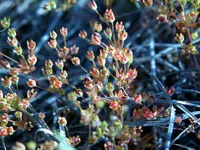
The plant forms tiny, flat rosettes only a few millimeters to about 1 cm across, creating low cushion-like mats that help it endure exposed, wind-swept microhabitats on open ground.

Tiny, inconspicuous flowers

Its white to pinkish flowers are only a few millimeters wide, with a distinct yellow eye, and are often overlooked despite producing viable seed that can form local seed banks in suitable habitats.

FAQs about western rockjasmine

This species behaves as a short-lived annual in most of its native range. Plants usually germinate, flower, set seed, and die within a single growing season, relying on a persistent seedbank to return each year.

Grow Healthy Plants with Botan Care

Keep your plants happy and healthy with plant identification, disease detection, and easy care guidance.

Botan plant care app — identify plants on mobile

Explore More Plants