Crinkle-leaf Pineapple Lily Care (Eucomis vandermerwei)

Crinkle-leaf Pineapple Lily

About Crinkle-leaf Pineapple Lily

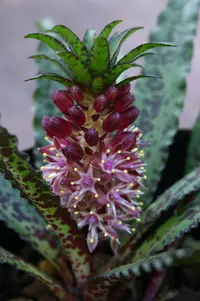
Crinkle-leaf pineapple lily, Eucomis vandermerwei, is a compact bulbous perennial known for its rosette of wavy, often purple-speckled leaves and striking summer flower spikes. The flower stems carry dense columns of small star-shaped blooms topped by a tuft of leafy bracts that resemble a miniature pineapple. Native to high-altitude regions of South Africa, it is adapted to seasonal rainfall and dry resting periods, which influences how to care for Crinkle-leaf Pineapple Lily. It generally prefers bright light, well-drained soil, and moderate moisture while in active growth, making it manageable for most gardeners if kept out of soggy conditions.

Main Plant Requirements

Care Difficulty

Moderate Care

Light Preference

Full Sun

Water Requirements

Moderate Water

Temperature Preference

Warm Climate

Hardiness Zone

7–10

Soil Texture

Sandy, Loamy, Organic-rich

Soil pH

Acidic (5.5–6.5), Slightly acidic (6.5–7.0)

Soil Drainage

Well-drained

Fertilization

Light (every 4–6 weeks)

Get Personalized Care Plan

Scan your plant to receive care tips personalized for your specific plant

Available on iOS and Android

How to Care for the Crinkle-leaf Pineapple Lily

This species prefers bright, direct sun for strong flowering and compact growth.

  • Provide 6–8 hours of sun daily; full morning sun with light afternoon shade suits Crinkle-leaf Pineapple Lily in most climates.
  • In hot regions, protect from intense mid-afternoon sun to prevent leaf scorch, using dappled shade from taller plants or a light shade cloth.
  • In cooler or cloudy areas, choose the sunniest spot available; too much shade leads to weak stems, fewer flowers, and stretched foliage.

Eucomis vandermerwei grows from bulbs and needs moisture balanced with sharp drainage.

  • During active growth, water when the top 3–5 cm of soil feels dry, allowing water to drain freely from the bed or raised area.
  • Use a gritty, well-drained soil; persistent wetness or a sour smell around the bulbs signals overwatering and high rot risk.
  • Reduce watering as foliage yellows in late season, then keep bulbs almost dry when dormant, only preventing soil from becoming bone-dry in prolonged drought.

This bulb prefers warm growing conditions and does not tolerate hard frost.

  • Ideal growing temperatures are 65–80°F (18–27°C), with warmer days and slightly cooler nights encouraging strong foliage and flowering.
  • Plants tolerate brief dips to about 40°F (4°C), but repeated exposure below 32°F (0°C) can damage or kill bulbs, especially in wet soil.
  • In hot areas, growth remains stable up to about 90°F (32°C) if soil moisture is adequate; mulch lightly to buffer temperature swings around the bulbs.

This species handles a broad humidity range but benefits from moderate ambient moisture.

  • Aim for 40–60% humidity; typical indoor levels suit Crinkle-leaf Pineapple Lily well.
  • It tolerates drier air if soil moisture is consistent and the bulb is not left bone dry for long periods.
  • Crisping leaf tips signal low humidity or underwatering; group pots or place on a pebble tray to raise humidity locally.

Eucomis vandermerwei grows best in open, sharply drained yet moderately fertile soil.

  • Use a loose, sandy or gritty loam with plenty of air spaces around the bulb and roots.
  • Aim for slightly acidic to neutral pH, roughly 6.0–7.0, to support nutrient availability without toxicity issues.
  • Mix equal parts compost, coarse sand or grit, and perlite or pumice to balance drainage with moisture retention.
  • Avoid heavy clay, compacted ground, or mixes high in fine peat that stay wet and increase bulb rot risk.

This bulb is well suited to container growing outdoors on patios or balconies.

  • Choose a pot deep enough to sit the bulb 5–8 cm below the rim while still leaving room for a 3–5 cm drainage layer.
  • Select a stable, heavier container material, such as ceramic or clay, to prevent tall flower spikes from tipping the pot.
  • Raise the pot on feet or blocks so drainage holes stay clear and excess water runs off quickly after rain or watering.

This compact bulb benefits from light, targeted feeding to support flowering without excessive leaf growth.

  • Apply a balanced liquid fertilizer at half strength every 3–4 weeks during active growth in spring–summer.
  • Use a slow‑release bulb or container fertilizer in early spring for potted Crinkle-leaf Pineapple Lily.
  • Avoid high‑nitrogen products, which promote soft foliage instead of strong flowers.
  • Stop feeding once leaves yellow and the plant enters dormancy in late summer–fall.

Pruning needs for Eucomis vandermerwei are minimal and mainly focus on cleanliness and bulb health.

  • In late fall or once foliage has fully yellowed, cut leaves back to just above the bulb or soil surface.
  • Remove spent flower spikes at the base after flowering to redirect energy to bulb development.
  • Trim only dead, diseased, or damaged tissue using clean, sharp scissors or pruners to reduce infection risk.

This small bulb is slow to crowd its pot, so repotting is infrequent and should be done with care.

  • Check for roots circling the pot drainage holes, compacted mix, or reduced flowering as signs it needs more space.
  • Plan to repot or lift and replant every 3–4 years in late winter–early spring before strong new growth starts.
  • Use a free‑draining, gritty mix and replant bulbs at the same depth, handling them gently to limit root breakage.
  • Water lightly after repotting, then keep just slightly moist for 1–2 weeks to reduce transplant stress.

New Eucomis vandermerwei plants are usually produced from bulb division rather than seeds.

  • Lift clumps in late winter–early spring while dormant and gently separate offsets with roots attached.
  • Replant divisions into well‑drained, sandy or gritty soil, setting bulbs at the same depth as before.
  • Keep the medium just slightly moist and provide bright, indirect light until strong new shoots appear.
  • Seed propagation is possible in warm, bright conditions but seedlings take several years to reach flowering size.

This species has limited frost tolerance and needs some winter protection in many climates.

  • In mild areas (down to about 20–25°F), allow foliage to die back naturally, then mulch the soil with 5–8 cm of dry material.
  • In colder regions, lift bulbs after foliage dies back, dry them, and store in barely moist peat or vermiculite at 40–50°F.
  • For containers, move pots indoors to a cool, frost‑free, bright spot and keep the mix almost dry during dormancy.

Care Tips

Bulb lifting schedule

In colder regions (below USDA zone 8), lift bulbs once foliage has fully yellowed, air-dry them for 3–5 days in a shaded, ventilated space, then store in dry peat or vermiculite at 45–55°F until replanting.

Container depth choice

Use a pot deep enough to allow 8–10 cm of soil below the bulbs so roots can develop a stable base that keeps the heavy flower spikes from toppling in wind or rain.

Staking low and early

For tall, flower-heavy spikes, insert discreet, short stakes (about half spike height) when stems are 10–15 cm tall, then secure loosely with soft ties before the inflorescence becomes top-heavy.

Controlled offset division

Divide clumps only when offsets have a clearly formed individual bulb, then replant each with the basal plate just below soil level to maintain flowering quality and avoid setback.

Seasonal pot rotation

If containers are kept outdoors, rotate pots by 90° every 1–2 weeks during active growth so spikes develop evenly and do not lean strongly toward the primary light source when growing Crinkle-leaf Pineapple Lily.

Common Pests and Diseases

Mealybugs

This pest feeds on the soft tissues at the leaf bases and around the bulb neck, often hiding in tight crevices. Symptoms include cottony white clusters, sticky honeydew, and distorted or weakened leaves and flower spikes.

Solution

Remove visible insects with a cotton swab dipped in 70% isopropyl alcohol, then wash leaves and the bulb crown with a strong but gentle stream of water. For persistent infestations, use an insecticidal soap or neem oil spray directed into the leaf bases and around bulbs, repeating every 7–10 days until no new mealybugs appear.

Bulb mites

These insects attack damaged or stressed bulbs, tunneling into the scales and basal plate. Symptoms include slow emergence, stunted growth, and bulbs that feel soft, dusty, or crumbly inside when inspected.

Solution

Discard badly infested bulbs and only store or plant healthy, firm ones. Before storage or replanting, clean bulbs, remove old roots and loose outer scales, and treat remaining bulbs with a labeled miticide dip or hot-water treatment recommended for ornamental bulbs, then store them dry in cool, well-ventilated conditions.

Narcissus bulb fly

This pest lays eggs at the base of the bulb, and the larvae burrow inside and eat the bulb tissue. Symptoms include sudden collapse of foliage, failure to flower, and a single large cream-colored maggot found inside a hollowed bulb.

Solution

Inspect bulbs at lifting time and destroy any that feel soft or show tunneling. In areas where this fly is common, replant bulbs deeper, cover soil around emerging shoots with fine mesh to reduce egg laying, and consider using a soil-applied biological control product containing beneficial nematodes targeting fly larvae.

Slugs and snails

These pests feed on tender emerging foliage and developing flower spikes, especially in damp beds or containers. Symptoms include irregular holes, shredded leaves, and slime trails on leaves and soil.

Solution

Hand-pick slugs and snails in the evening, remove nearby hiding places such as boards and dense debris, and use iron phosphate slug bait around plant clumps. Copper tape on containers and sharp mineral mulches (such as grit) around bulbs also reduce damage when growing Crinkle-leaf Pineapple Lily outdoors.

Botrytis blight

This disease is caused by a gray mold fungus that thrives in cool, damp, poorly ventilated conditions. Symptoms include soft, water-soaked spots on leaves or flower spikes that develop fuzzy gray mold, often starting on damaged tissue or spent flowers.

Solution

Remove and discard all affected leaves, flowers, and plant debris, and avoid wetting the foliage when watering. Improve spacing and airflow around plants, reduce overhead irrigation, and in persistent cases use a labeled fungicide for ornamental bulbs at the first sign of spotting or mold, especially during cool, wet weather.

Interesting Facts

Mountain grassland native

This species is native to high-altitude grasslands and rocky slopes in Mpumalanga, South Africa, where it experiences strong sun, cool nights, and a distinct dry winter rest period.

Distinct crinkled foliage

It is characterized by short, broad leaves with heavily undulating, crinkled margins and dark purple spotting, a combination that makes it easy to distinguish from other Eucomis species with smoother, greener leaves.

Compact dwarf habit

Unlike many pineapple lilies, this species stays very compact, with short flower spikes and low foliage, an adaptation to exposed, windy mountain habitats that reduces water loss and physical damage.

Botan icon

Did you know?

Eucomis vandermerwei is considered one of the rarest and most geographically restricted Eucomis species, known from a small natural range in South Africa and regarded as of conservation concern in its native habitat due to habitat disturbance and limited distribution.

FAQs about Crinkle-leaf Pineapple Lily

This species usually blooms in mid to late summer, often from July into early September, depending on climate. Each flower spike can look good for 3–6 weeks, especially if spent flowers are removed and soil moisture stays even.

Grow Healthy Plants with Botan Care

Keep your plants happy and healthy with plant identification, disease detection, and easy care guidance.

Botan plant care app — identify plants on mobile

Explore More Plants