Basket mounting
Grow this species in a wooden or plastic slat basket with coarse orchid mix so the long, pendulous growths and flower spikes can hang naturally and dry quickly after watering, reducing rot risk.

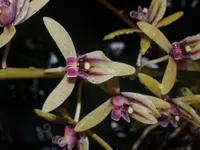
Cymbidium aloifolium, commonly called aloe-leafed cymbidium, is an epiphytic orchid that often grows on tree trunks and rocky surfaces in warm, humid Asian forests. It forms long, strap-like, arching leaves and produces hanging flower spikes with many small, waxy blooms in earthy tones. The plant tends to grow in clumps over time, creating an elegant, cascading habit that suits baskets or mounted displays. It is considered a moderately demanding orchid because it prefers stable warmth, consistent moisture, and good air movement. Understanding how to care for Aloe-leafed cymbidium starts with recognizing its natural habitat and aiming to provide similar bright, filtered light and even moisture without waterlogging the roots.

Care Difficulty
Moderate Care

Light Preference
Partial Shade

Water Requirements
Regular Water

Temperature Preference
Tropical / Frost Sensitive

Hardiness Zone
11–12

Soil Texture
Loamy, Sandy, Organic-rich

Soil pH
Acidic (5.5–6.5), Slightly acidic (6.5–7.0)

Soil Drainage
Moist but well-drained

Fertilization
Moderate (every 2–4 weeks)
Scan your plant to receive care tips personalized for your specific plant
Available on iOS and Android
This orchid prefers bright, filtered light similar to lightly shaded tropical forest edges.
This epiphytic orchid prefers evenly moist but never waterlogged roots.
This species favors warm to intermediate temperatures with slight day–night variation.
This orchid benefits from moderate to high air humidity for stable growth and flowering.
This orchid prefers a coarse, airy medium that drains quickly yet retains light, even moisture around the roots.
This species is well suited to container culture when the pot supports its arching, sometimes heavy growth.
This epiphytic orchid benefits from steady, dilute nutrition during its active growing season.
Pruning needs for Cymbidium aloifolium are light and focus on hygiene rather than shaping.
This orchid prefers to stay slightly crowded, so repotting is infrequent but important when the root system outgrows its container.
Division is the standard method for increasing Cymbidium aloifolium plants.
This species is not frost hardy and needs careful winter management in most temperate climates.

Plant Health Check
Not sure what's wrong with your plant? Check your plant's health inside the app.
This species produces long, hanging inflorescences with many small, waxy flowers arranged in tight rows, an adaptation that helps present nectar and pollen efficiently to visiting insects in its forest habitat.
The narrow, stiff, arching leaves resemble those of some Aloe species, which inspired the name aloifolium and reflects its ability to tolerate relatively high light compared to many other orchids.
In the wild it often grows as both an epiphyte on tree trunks and a lithophyte on rocks, anchoring its roots into crevices where leaf litter and moisture collect.

Historical records show that this orchid was cultivated in Indian gardens centuries ago, and it was one of the early Cymbidium species introduced to European horticulture during the 18th and 19th centuries, helping spark long-term interest in Cymbidium breeding.
Lack of flowering is often due to insufficient light, too-warm nights, or nutrient imbalance. Provide bright, indirect light, a slight temperature drop at night, and a balanced orchid fertilizer to support spike initiation and bud development.
Keep your plants happy and healthy with plant identification, disease detection, and easy care guidance.