Begonia × hiemalis Care

Begonia × hiemalis

About Begonia × hiemalis

Begonia × hiemalis, often sold as the winter-flowering or Rieger begonia, is a compact, bushy hybrid grown mainly as a decorative indoor plant. It is valued for its bright, rose-like blooms in many colors and its glossy, asymmetric leaves.

This plant does not occur naturally in the wild but was bred from several Begonia species, mainly from tropical and subtropical regions. It tends to flower heavily over a long period when conditions are stable.

Many growers find it somewhat short-lived and a bit fussy if light, moisture, and temperature fluctuate too much. To care for Begonia × hiemalis successfully, provide bright, indirect light, even moisture without waterlogging, and a well-drained, airy potting mix.

Main Plant Requirements

Care Difficulty

Moderate Care

Light Preference

Bright Indirect Light

Water Requirements

Moderate Water

Temperature Preference

Tropical / Frost Sensitive

Hardiness Zone

10–11

Soil Texture

Loamy, Peaty, Organic-rich

Soil pH

Acidic (5.5–6.5), Slightly acidic (6.5–7.0)

Soil Drainage

Moist but well-drained

Fertilization

Moderate (every 2–4 weeks)

Get Personalized Care Plan

Scan your plant to receive care tips personalized for your specific plant

Available on iOS and Android

How to Care for the Begonia × hiemalis

This plant prefers bright, indirect light for reliable flowering and compact growth.

  • Provide 6–8 hours of bright, filtered light daily, such as behind a sheer curtain or in dappled shade outdoors.
  • Allow gentle morning sun but protect from strong midday and afternoon sun, which can scorch leaves and fade flowers.
  • In winter, move Begonia × hiemalis closer to a bright window or a lightly shaded south or west exposure to compensate for shorter days.

This plant prefers evenly moist but never waterlogged soil for healthy roots and flowering.

  • Water when the top 2–3 cm of soil feels dry, using enough water that excess drains away, then empty saucers to avoid root problems.
  • Reduce watering slightly in cooler, low-light seasons and increase frequency during warm, active growth when the potting mix dries faster.
  • Watch for yellowing, mushy stems as a sign of overwatering, and for limp, crisping leaves and very light pots as signs of underwatering.

This plant grows best in stable, moderate temperatures without sudden extremes.

  • Aim for 65–75°F (18–24°C) during active growth, which supports steady flowering and reduces stress.
  • Protect from temperatures below 55°F (13°C); light frost or prolonged chills can cause leaf drop, tissue damage, or plant loss.
  • In hot weather above 80°F (27°C), provide shade, good air movement, and slightly higher humidity to prevent heat stress and wilting.

This plant prefers moderate to slightly elevated humidity for stable foliage and flowering.

  • Aim for 45–60% humidity; it tolerates brief dips lower but prolonged very dry air weakens leaves and buds.
  • Watch for crisp leaf edges, curling, and bud drop as signs of low humidity stress.
  • Increase humidity with a nearby humidifier or pebble tray and by grouping plants, but avoid misting that leaves foliage wet for long.

This plant grows best in a loose, airy, organic-rich mix that drains quickly yet holds some moisture.

  • Use a peat- or coco-based soilless mix with added perlite and fine bark to create a light, well-structured medium.
  • Aim for slightly acidic pH around 5.5–6.5, which supports nutrient availability and healthy root function.
  • Improve drainage and aeration by using at least 30–40% coarse components such as perlite, pumice, or horticultural grit.
  • Avoid heavy garden soil, unamended clay, or mixes that stay wet for more than 2–3 days after watering, which encourages root rot.

This species is well suited to container growing for seasonal displays and controlled moisture management.

  • Choose a pot only 2–4 cm wider than the root ball to prevent excess wet substrate around the roots.
  • Select sturdy, stable containers so the relatively top-heavy plant does not tip when blooms develop on one side.
  • Use a lightweight plastic or composite pot if frequent moving is expected, but switch to heavier materials outdoors to limit wind and accidental knockover.

This hybrid begonia responds well to light, consistent feeding during active growth.

  • Use a balanced water‑soluble fertilizer (around 10‑10‑10 or 20‑20‑20) diluted to 1/4–1/2 strength.
  • Feed every 2–3 weeks in spring and summer when Begonia × hiemalis is actively growing and flowering.
  • Skip or reduce feeding to once every 6–8 weeks in fall and winter, when growth slows.
  • Flush the pot with plain water every 4–6 weeks to prevent salt buildup from fertilizers.

Thoughtful pruning helps this compact begonia maintain shape and support repeat flowering.

  • In late winter or early spring, remove dead, diseased, or damaged stems with clean, sharp scissors.
  • Pinch back leggy shoots above a leaf node to encourage bushier growth and more flower buds.
  • Thin crowded interior stems to improve airflow and reduce fungal disease risk.
  • Deadhead spent flower clusters close to their base to extend the blooming period.

This plant is usually kept in small containers and benefits from occasional repotting to refresh the root zone.

  • Check for roots circling the pot or emerging from drainage holes, or for slowed growth despite good care.
  • Plan to repot every 1–2 years in late winter or early spring, before strong new growth starts.
  • Move into a pot only 2–3 cm wider, using a light, well‑draining mix to limit waterlogging stress.
  • Loosen circling roots gently, water thoroughly after repotting, and keep in bright, indirect light for 1–2 weeks.

New plants are most often produced from stem or leaf cuttings rather than seed.

  • Take 5–8 cm non‑flowering stem cuttings in late spring or early summer, just below a node.
  • Insert cuttings into moist, sterile, well‑draining mix; optional rooting hormone can improve success.
  • Maintain 70–75°F, high humidity, and bright, indirect light until roots form in 3–5 weeks.
  • For leaf cuttings, place a healthy leaf with its petiole in mix and keep evenly moist until small plantlets appear.

This hybrid begonia is not frost tolerant and is best treated as an indoor or protected plant in cold climates.

  • Move container plants indoors before temperatures drop below 50°F, choosing bright, indirect light.
  • Maintain indoor temperatures around 60–70°F and avoid cold drafts or sudden temperature swings.
  • Reduce watering slightly in winter while keeping the soil from fully drying out.

Care Tips

Rotate for symmetry

Turn the pot 90° every 5–7 days during active growth so flower clusters develop evenly and stems do not lean or stretch toward the strongest light source.

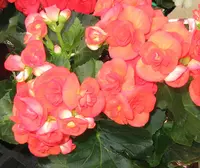
Remove spent clusters

Cut entire faded flower clusters back to just above a healthy leaf node using clean scissors, which directs energy into new buds and keeps the plant compact instead of straggly.

Use breathable cachepots

Place the plastic nursery pot inside a slightly larger decorative cachepot with a few spacers (pebbles or pot feet) at the bottom to prevent the root zone from sitting in runoff while still maintaining moderate root moisture.

Plan post-bloom recovery

After the main flowering flush, reduce fertilizer, trim back leggy stems by about one-third, and give the plant 4–6 weeks of rest with slightly cooler temperatures to reset it for the next blooming cycle when growing Begonia × hiemalis.

Monitor salt buildup

Every 4–6 weeks, leach the potting mix by slowly running water through the pot for several minutes to flush out fertilizer salts that can burn the fine roots and cause marginal leaf scorch.

Common Pests and Diseases

Botrytis blight

This disease causes soft, mushy brown patches on leaves, flowers, and stems that quickly become covered with gray, fuzzy mold, especially in cool, humid conditions. Symptoms include rapid collapse of flower clusters and spotting on petals.

Solution

Remove and discard all affected flowers and leaves, improve air circulation, and avoid overhead watering or water sitting on foliage. Keep night temperatures slightly warmer and use a fungicide labeled for ornamentals if humidity cannot be reduced and symptoms continue.

Powdery mildew

This disease produces white, powdery patches on leaves, stems, and flower buds, often starting on older leaves in crowded or poorly ventilated conditions. Symptoms include distorted new growth and reduced flowering if not addressed.

Solution

Increase airflow around the plant, avoid wetting the foliage, and keep humidity moderate rather than very high. Remove heavily affected leaves and apply a sulfur or potassium bicarbonate-based fungicide labeled for ornamentals if needed as part of broader Begonia × hiemalis care instructions.

Pythium crown rot

This disease causes the base of the stems near the soil line to turn brown, water-soaked, and soft, leading to sudden wilting and collapse of the entire plant even though the soil may appear moist. Symptoms include plants that do not recover after watering and a foul odor near the crown area.

Solution

Discard severely affected plants, as recovery is rare once the crown is rotten, and do not reuse the contaminated potting mix. For prevention, use sterile, well-draining media, avoid overwatering and standing water in saucers, and keep night temperatures and humidity from remaining excessively high around the pot base.

Thrips

These insects feed by rasping and sucking plant tissues, causing silvery streaks, distorted leaves, and deformed or streaked flowers. This pest spreads quickly in warm, dry indoor air and can also transmit viral diseases.

Solution

Isolate affected plants, remove heavily damaged flowers, and rinse foliage gently under lukewarm water to dislodge insects. Use yellow or blue sticky traps, then apply an insecticidal soap or neem oil spray to leaf undersides and developing buds, repeating at 5–7 day intervals until new growth appears clean.

Two-spotted spider mites

This pest creates tiny yellow speckles on leaves and very fine webbing, especially on the undersides and between leaf stalks, leading to a dull, gray-green appearance. Symptoms include leaf drop and general decline under warm, dry indoor conditions.

Solution

Increase humidity around the plant, shower the foliage thoroughly to wash off mites, and wipe leaf undersides with a damp cloth where practical. Follow with repeated treatments of insecticidal soap or horticultural oil, ensuring full coverage of the undersides of leaves every 5–7 days until no new stippling or webbing appears.

Interesting Facts

Hybrid rather than species

Begonia × hiemalis is not a true wild species but a complex hybrid group derived mainly from Begonia socotrana and tuberous begonias, bred specifically for compact growth and heavy flowering in cool indoor conditions.

Short-day flowering response

This plant was selected for its strong response to day length; flower buds form best under short days combined with cool temperatures, a trait inherited from its highland and island parent species.

Repeat-blooming tuberous habit

Unlike many traditional tuberous begonias that have a more defined resting period, these hybrids can cycle through multiple flushes of flowers indoors when light and temperature remain stable, while still forming a tuber-like storage organ at the base.

Botan icon

Did you know?

Begonia × hiemalis, often sold under the trade name Elatior begonia, originated from intensive breeding programs in northern Europe during the late 19th and early 20th centuries, which focused on creating long-flowering pot plants for cool, low-light interiors long before modern indoor plant trends.

FAQs about Begonia × hiemalis

Lack of flowers usually comes from insufficient light, depleted nutrients, or old, spent growth. Deadhead faded blooms, provide a balanced fertilizer at low strength, and ensure bright, indirect light to support repeat flowering and overall vigor.

Grow Healthy Plants with Botan Care

Keep your plants happy and healthy with plant identification, disease detection, and easy care guidance.

Botan plant care app — identify plants on mobile

Explore More Plants