Chilean glory creeper Care (Eccremocarpus scaber)

Chilean glory creeper

About Chilean glory creeper

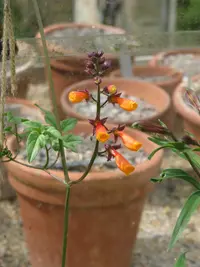
Chilean glory creeper (Eccremocarpus scaber) is a fast-growing, twining vine valued for its long season of tubular, orange to red flowers. It typically climbs with slender stems and delicate, divided leaves, creating a light, lacy screen on trellises, fences, or arches.

This species is native to Chile and neighboring areas of western South America, where it grows in mild, relatively dry climates. In cooler regions it is often treated as a tender perennial or annual, since it may not survive hard frost.

The plant is vigorous but not difficult if its needs are met, so it suits gardeners who want quick vertical color. To care for Chilean glory creeper, provide sun, well-drained soil, and consistent but not excessive moisture.

Main Plant Requirements

Care Difficulty

Moderate Care

Light Preference

Full Sun

Water Requirements

Moderate Water

Temperature Preference

Tropical / Frost Sensitive

Hardiness Zone

9–11

Soil Texture

Sandy, Loamy, Organic-rich

Soil pH

Acidic (5.5–6.5), Slightly acidic (6.5–7.0)

Soil Drainage

Well-drained

Fertilization

Moderate (every 2–4 weeks)

Get Personalized Care Plan

Scan your plant to receive care tips personalized for your specific plant

Available on iOS and Android

How to Care for the Chilean glory creeper

This fast-growing climber needs strong light to flower well outdoors.

  • Give Chilean glory creeper 6–8 hours of direct sun daily, with morning and midday sun preferred and some protection from harsh late-afternoon summer sun in hot regions.
  • It tolerates light or dappled shade for part of the day, but flowering and vigor decline noticeably in sites with less than 4–5 hours of direct sun.
  • In cooler seasons or coastal climates, it handles full sun all day, while in very hot inland areas it benefits from open shade during the hottest hours.

This vine prefers evenly moist, well-drained soil that never stays waterlogged.

  • Water when the top 3–5 cm of soil feels dry, allowing a thorough soak that drains freely through the soil profile before the next watering.
  • Reduce frequency in cool or rainy weather and increase during hot, dry periods, watching for wilting or dull, limp leaves as early signs of underwatering.
  • Yellowing lower leaves, soft stems, or persistent surface wetness indicate overwatering; Eccremocarpus scaber grows best in loose soil amended with grit or compost for fast drainage.

This species grows best in mild, frost-free conditions with moderate summer warmth.

  • Optimal growth occurs around 65–80°F (18–27°C), where vines extend rapidly and flowering is strongest through the main growing season.
  • The plant is very frost-sensitive; growth slows below 50°F (10°C) and hard frost around 28–30°F (-2 to -1°C) can kill top growth or entire plants if unprotected.
  • In heat above 90°F (32°C), flowering may pause and foliage can scorch, so combine these temperatures with slightly higher shade and reliable soil moisture.

This climber prefers moderate humidity but copes with typical indoor levels.

  • Aim for 40–60% humidity to keep foliage and flower buds from drying at the edges.
  • It generally tolerates short dry spells in heated homes but prolonged air below 30% can cause leaf curl and crispy tips.
  • Increase local humidity with a nearby tray of moistened pebbles or by grouping Chilean glory creeper with other plants away from hot drafts.

Eccremocarpus scaber grows best in light, well-aerated soil that drains quickly yet holds moderate moisture.

  • Use a loose mix such as 50–60% peat- or coir-based potting mix with 20–30% compost and 20–30% perlite or sharp sand.
  • Aim for slightly acidic to neutral pH around 6.0–7.0, avoiding strongly alkaline or saline conditions that limit nutrient uptake.
  • Ensure water runs freely through the profile; heavy clay should be improved with coarse sand, fine bark, and organic matter before planting.
  • Avoid compacted, boggy, or constantly wet soils, which promote root rot and reduce oxygen around fine feeder roots.

This species adapts well to container growing when the pot supports its vigorous climbing habit.

  • Choose a deep, broad container that allows extensive root run and prevents the plant from becoming unstable as top growth increases.
  • Select a heavy or weighted pot if using tall supports so wind or uneven growth does not tip the container over.
  • Position a sturdy trellis or obelisk firmly within the pot at planting time to guide climbing stems and reduce breakage at the base.

This fast-growing climber responds well to moderate feeding during its main growth phase.

  • Use a balanced liquid fertilizer (for example 10-10-10) at half strength every 2–3 weeks in spring and summer.
  • Alternatively, apply a slow-release balanced fertilizer or a light layer of fine compost at the start of the season.
  • Reduce feeding to once every 6–8 weeks in fall and stop in winter dormancy.
  • Water before and after applying fertilizer to avoid root burn and ensure even nutrient uptake for Chilean glory creeper.

Thoughtful pruning keeps Eccremocarpus scaber flowering well and prevents it from becoming tangled.

  • In late winter or very early spring, cut back long, weak, or leggy stems to encourage strong new growth.
  • Remove dead, diseased, or damaged shoots as soon as noticed, using clean, sharp hand pruners.
  • Thin crowded stems to improve air flow and light penetration through the vine structure.
  • After the main flush of flowers, lightly shorten spent flowering stems to maintain shape and promote further blooming.

This vigorous climber benefits from timely transplanting or potting-on to support rapid root expansion.

  • Transplant young plants outdoors after frost, once soil has warmed in late spring, spacing to allow full vine growth.
  • In containers, move to a 1–2 in wider pot when roots circle the base, growth slows, or watering becomes very frequent.
  • Use a free-draining mix and handle the root ball gently, keeping it intact to limit transplant shock.
  • Water thoroughly after planting, then keep evenly moist and shaded from harsh sun for a few days while roots re-establish.

New plants are most commonly raised from seed, with stem cuttings as a secondary method.

  • Sow fresh seeds indoors in late winter to early spring, 6–8 weeks before the last frost date.
  • Use a light, free-draining seed mix, keep at 65–75°F, and maintain steady moisture until germination.
  • Provide bright light for seedlings and prick out into individual pots once they have 2–3 true leaves.
  • For cuttings, take softwood tips in late spring, use rooting hormone, and root in humid, warm, bright but indirect light.

Cold sensitivity means this vine often behaves as an annual in cooler regions.

  • Eccremocarpus scaber tolerates only light frost; plants usually die back in areas below about 20–25°F.
  • In mild climates, mulch 5–8 cm around the base in late fall to insulate the root zone.
  • For containers, reduce watering, then move plants to a cool, bright, frost-free spot indoors or in a greenhouse.
  • Cut back dead top growth in late winter before new shoots appear, disposing of any diseased material.

Care Tips

Early support training

Install a sturdy trellis or mesh right at planting time and loosely tie new shoots every 10–15 cm so the vines climb vertically instead of tangling on nearby plants.

Pinch for branching

When young shoots reach 20–30 cm, pinch out the soft tips with clean fingers or shears to encourage multiple side shoots and a denser flowering display along the support.

Seasonal hard trim

In mild climates, cut back old, woody stems hard in late winter or very early spring to a low framework so new growth is vigorous and better positioned on the support.

Deadhead flower clusters

Regularly remove spent flower clusters before they set seed to extend the blooming period and reduce self-seeding in unwanted areas when growing Chilean glory creeper.

Container root refresh

For container plants kept more than one season, lift and root-prune the outer 2–3 cm of the root ball and repot into fresh mix in late winter to maintain strong growth and prevent pot-bound stress.

Common Pests and Diseases

Aphids

These insects feed on tender shoots and flower stems, causing distorted growth and sticky honeydew deposits that can attract sooty mold. This pest is especially common on vigorous young vines and flower clusters.

Solution

Spray affected shoots with a strong stream of water to dislodge colonies, then treat remaining insects with insecticidal soap or a ready‑to‑use neem oil spray, coating undersides of leaves and stems. Encourage natural predators such as lady beetles outdoors and remove heavily infested shoot tips to reduce population pressure when growing Chilean glory creeper.

Spider mites

This pest thrives in hot, dry conditions and causes fine mottling on leaves, light webbing, and gradual leaf bronzing or drop. Symptoms include slow decline of overall vigor when infestations are heavy.

Solution

Increase humidity around the plant and rinse foliage thoroughly, especially leaf undersides, with lukewarm water to remove mites and webs. Follow with insecticidal soap or horticultural oil labeled for mites, repeating every 5–7 days until new growth appears clean, and improve airflow to prevent reinfestation.

Leaf spot

This disease produces small brown or tan spots that may merge into larger patches, sometimes with yellow halos, mainly on older foliage. Symptoms include premature leaf yellowing and shedding in damp or overcrowded plantings.

Solution

Remove and discard affected leaves and any fallen debris around the base to reduce disease spread. Improve spacing and airflow, avoid overhead watering, and if the problem persists in wet weather, apply a copper‑based or other labeled ornamental fungicide, targeting both upper and lower leaf surfaces.

Powdery mildew

This disease appears as white or gray powdery patches on leaves, stems, and sometimes flower stalks, often during warm days and cool nights. Symptoms include curling, yellowing, and reduced flowering when coverage becomes extensive.

Solution

Prune to open up dense growth and increase light and air movement, then remove and dispose of heavily infected shoots. Avoid wetting foliage late in the day and, when needed, apply a sulfur or potassium bicarbonate fungicide labeled for ornamentals, repeating according to label directions until new growth is clean.

Interesting Facts

Self-twining tendril climber

This species produces slender, branched tendrils at the ends of its leaves that coil tightly around nearby supports, allowing the vine to climb rapidly without needing to develop thick, woody stems.

Specialized tubular flowers

Its narrow, tubular orange-red flowers are adapted for pollination by long-billed hummingbirds in its native range, with nectar held deep in the tube to match the birds’ bill and tongue length.

Hardy short-lived perennial

In its native Andean habitats it behaves as a short-lived perennial or subshrub, but in cooler climates it often survives only as a fast-growing annual, completing its life cycle in a single warm season.

Botan icon

Did you know?

This vine has naturalized and become invasive in some mild coastal regions outside its native South America, where its abundant, wind-dispersed seeds and rapid growth allow it to smother local vegetation and alter plant communities.

FAQs about Chilean glory creeper

This is generally a fast-growing climber, especially in warm, frost-free conditions with fertile soil. In a single season it can cover a small trellis or fence, so regular pruning and support management are important when growing Chilean glory creeper.

Grow Healthy Plants with Botan Care

Keep your plants happy and healthy with plant identification, disease detection, and easy care guidance.

Botan plant care app — identify plants on mobile

Explore More Plants