Philodendron 'Burle-Marx' Care

Philodendron 'Burle-Marx'

About Philodendron 'Burle-Marx'

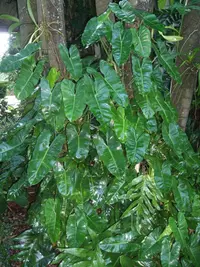
Philodendron 'Burle-Marx' is a compact, tropical aroid grown mainly as an indoor foliage plant. It forms low, spreading clumps with glossy, narrow, heart-shaped leaves. The leaves often show a rich green color and a slightly wavy edge, giving a lush, modern look to tabletops, shelves, or mixed plant displays.

This cultivar originates from tropical regions of South America, where similar philodendrons grow as understory plants in warm, humid forests. It is considered relatively forgiving and suitable for many homes, as long as it is protected from cold, harsh sun, and soggy soil.

Because of its sturdy nature and steady growth, it suits both beginners and more experienced growers who want to care for Philodendron 'Burle-Marx' without complex routines.

Main Plant Requirements

Care Difficulty

Easy Care

Light Preference

Bright Indirect Light

Water Requirements

Moderate Water

Temperature Preference

Tropical / Frost Sensitive

Hardiness Zone

10–11

Soil Texture

Loamy, Peaty, Organic-rich

Soil pH

Acidic (5.5–6.5), Slightly acidic (6.5–7.0)

Soil Drainage

Moist but well-drained

Fertilization

Light (every 4–6 weeks)

Get Personalized Care Plan

Scan your plant to receive care tips personalized for your specific plant

Available on iOS and Android

How to Care for the Philodendron 'Burle-Marx'

This tropical aroid prefers bright, indirect light that mimics dappled forest shade.

  • Provide 6–8 hours of bright, filtered light daily, such as near an east- or north-facing window or under light tree canopy outdoors.
  • Tolerates partial shade, but in very low light stems stretch, new leaves shrink, and Philodendron 'Burle-Marx' may lose its compact form.
  • Protect from strong midday and afternoon sun, which can cause yellow patches or crisp brown edges, especially in summer; shift slightly brighter in winter.

Watering should aim for evenly moist, never soggy, roots.

  • Allow the top 2–4 cm of soil to dry before watering again, using a finger test rather than a fixed schedule.
  • In spring and summer, expect more frequent watering as growth and evaporation increase; reduce slightly in fall and winter when growth slows.
  • Use a freely draining mix and containers or beds that release excess water; yellowing, mushy leaves suggest overwatering, while drooping, thin leaves and dry potting mix indicate underwatering in Philodendron 'Burle-Marx'.

Stable, warm conditions support dense foliage and steady growth.

  • Aim for 65–80°F (18–27°C) for best growth, with consistent conditions avoiding abrupt temperature swings.
  • Plant growth slows below about 60°F (16°C); brief drops to 55°F (13°C) are usually tolerated, but damage can occur closer to 50°F (10°C).
  • Protect from frost, cold drafts, and hot, dry air; above 85°F (29°C) provide shade and higher humidity, and avoid placing plants near heaters or air conditioners that blow directly on them.

This species benefits from moderately high humidity to support steady growth.

  • Aim for 50–70% humidity to reduce leaf edge browning and support firm, glossy foliage.
  • It tolerates short periods of 35–40% air moisture but prolonged dryness leads to curled tips and yellowing margins.
  • Increase humidity with a nearby humidifier, grouped plants, or a pebble tray rather than misting Philodendron 'Burle-Marx' directly.

This plant prefers a loose, airy, organic-rich mix that drains quickly yet holds some moisture.

  • Use a base of peat or coco coir with chunky orchid bark and perlite to create a coarse, well-aerated structure.
  • Target a slightly acidic to neutral pH of about 5.5–7.0, which supports nutrient uptake and root health.
  • Avoid dense, heavy garden soil or mixes that stay waterlogged, as these restrict oxygen and promote root rot.
  • For how to take care of Philodendron 'Burle-Marx', add a small amount of compost or worm castings, but keep at least half the mix made of chunky, draining components.

This species is well suited to container culture due to its compact, clumping growth habit.

  • Choose a pot with slightly wider than deep dimensions so the shallow, spreading roots can occupy the volume without staying soggy.
  • Use a stable, heavier container or place it in a cachepot to prevent tipping as stems arch outward or climb supports.
  • Select terracotta or other porous materials if the potting mix stays wet longer than 5–7 days, since they allow faster evaporation from the root zone.

Feed Philodendron 'Burle-Marx' modestly to support steady, leafy growth without stressing the roots.

  • Use a balanced liquid fertilizer (such as 10-10-10 or 20-20-20) diluted to 1/4–1/2 strength for container plants.
  • Apply every 4–6 weeks during spring and summer when growth is active.
  • Pause or reduce feeding to 1 light application in late fall or winter, especially in low light.
  • For a gentler option, mix a small amount of compost or use slow-release granules at the start of the growing season.

Thoughtful pruning keeps Philodendron 'Burle-Marx' compact, dense, and healthy in indoor spaces.

  • Plan most pruning for late winter to early spring, before vigorous new growth starts.
  • Remove yellowing, dead, or damaged leaves at the base with clean, sharp scissors or pruners.
  • Cut back overly long or crowded stems just above a node to control size and encourage branching.
  • Disinfect tools before and after use to limit disease spread between stems or plants.

Repotting helps maintain root health and stable growth for Philodendron 'Burle-Marx' in containers.

  • Check for roots circling the pot, pushing through drainage holes, or slowed growth as signs repotting is needed.
  • Plan to repot every 2–3 years in spring, moving to a container 2–5 cm wider with drainage holes.
  • Gently loosen the outer roots, remove a little old soil, and place the plant at the same depth in fresh, airy mix.
  • Water thoroughly after repotting, then keep in bright, indirect light and avoid heavy feeding for 2–3 weeks to limit stress.

New Philodendron 'Burle-Marx' plants are most often produced from stem cuttings taken during active growth.

  • Take 8–12 cm stem cuttings in spring or early summer, each with at least 1 node and a healthy leaf.
  • Root cuttings in water or a moist, well-draining mix, keeping temperatures around 70–80°F and humidity above 50%.
  • Optional rooting hormone on the cut end can speed root initiation and reduce rotting.
  • Once roots reach 3–5 cm, pot cuttings individually and transition gradually to normal indoor light and watering.

Cold-sensitive Philodendron 'Burle-Marx' needs protection in regions where temperatures drop near freezing.

  • Move container plants indoors before temperatures fall below 55°F, choosing bright, indirect light away from drafts.
  • Keep indoor temperatures stable at 65–80°F and avoid cold windowsills or unheated rooms.
  • Water less often in winter, allowing the top soil layer to dry slightly more between waterings.
  • In mild climates, plants grown outdoors year-round benefit from a light mulch layer to buffer brief cool spells.

Care Tips

Guide climbing stems

Provide a moss pole or chunky coir totem and loosely tie new vines with soft ties so the plant can root into the support and produce larger, more stable leaves over time.

Rotate for symmetry

Turn the pot 90° every 2–3 weeks so new growth does not lean strongly to one side and the plant maintains an even, compact form.

Use airy top‑dressing

Add a thin layer of chunky orchid bark on top of the mix to keep nodes slightly drier at the surface while still allowing aerial roots to anchor and reducing algae or fungus gnat issues.

Quarantine new arrivals

Keep any new aroids in a separate room for 2–3 weeks and inspect leaves and petioles with a hand lens so pests such as spider mites or thrips are not introduced to an established collection when caring for Philodendron 'Burle-Marx'.

Seasonal light adjustment

In winter, move the plant closer to a bright window or supplement with a grow light on a 10–12 hour timer to compensate for shorter days and help maintain steady growth and leaf size.

Common Pests and Diseases

Spider mites

This pest feeds on the undersides of leaves, causing pale speckling, dull foliage, and fine webbing, especially in warm, dry indoor air. Symptoms include slow decline in vigor and increased leaf sensitivity to light stress.

Solution

Rinse foliage thoroughly with a strong but gentle stream of lukewarm water, focusing on leaf undersides, then wipe leaves with a soft cloth. Increase humidity to 50–60%, isolate the plant, and repeat washes weekly; for persistent infestations, apply a neem oil or insecticidal soap spray labeled for indoor use, following directions carefully.

Mealybugs

These insects appear as white, cottony clumps at nodes, leaf bases, and along stems, sucking sap and causing distortion and yellowing. Symptoms include sticky honeydew and sooty mold growth on leaves and nearby surfaces.

Solution

Physically remove visible clusters with cotton swabs dipped in 70% isopropyl alcohol, then wash the plant with lukewarm water and mild insecticidal soap. Isolate the plant, inspect weekly, and repeat treatments until no new mealybugs appear; discard heavily infested potting mix if they persist in roots or at the soil line.

Scale insects

This pest forms small, tan to brown bumps on stems and leaf midribs that do not rub off easily, leading to sap loss and weak, yellowing foliage. Symptoms include sticky honeydew and, in advanced cases, thin, stunted new growth.

Solution

Gently scrape or rub off individual scales with a fingernail or soft cloth, then treat stems and affected leaves with an insecticidal soap or horticultural oil spray, ensuring full coverage. Repeat every 7–10 days through at least 2–3 cycles and keep the plant slightly separated from others to limit spread while monitoring new growth closely.

Bacterial leaf spot

This disease causes water-soaked, translucent spots that later turn brown with yellow halos, often starting where water sits on leaves. Symptoms include irregular lesions along leaf margins and faster spread in warm, humid, poorly ventilated conditions.

Solution

Remove and discard affected leaves, sterilizing scissors with 70% isopropyl alcohol between cuts, and avoid overhead watering or water sitting on foliage. Improve airflow, keep leaves dry, and allow the top of the soil to dry slightly between waterings; in recurring cases, consider using a copper-based bactericide labeled for ornamental houseplants according to label directions.

Fungal leaf blight

This disease produces tan to dark-brown patches that may appear zoned or irregular, sometimes merging into larger dead areas on leaves. Symptoms include faster development after prolonged leaf wetness or when dense foliage remains shaded and stagnant.

Solution

Prune and discard affected foliage, ensuring tools are disinfected, and thin dense growth slightly so light and air can reach inner leaves. Water at the soil level in the morning, avoid misting, keep humidity moderate (40–60%), and if needed apply a houseplant-safe fungicide labeled for foliar blights as part of broader Philodendron 'Burle-Marx' care instructions.

Interesting Facts

Named for a landscaper

This cultivar honors Roberto Burle Marx, a Brazilian landscape architect known for using bold tropical foliage, reflecting the plant’s strong visual presence in modern garden design.

Compact climbing habit

Unlike many large philodendrons, this plant has a naturally low, scrambling to climbing growth habit with short internodes, which creates dense clusters of overlapping leaves suitable for tight spaces and mass plantings.

Variable leaf coloration

New leaves often emerge lighter green and can show subtle, temporary bronzy or yellowish tones before maturing to a uniform glossy medium-green, a trait valued for gentle color contrast in foliage displays.

FAQs about Philodendron 'Burle-Marx'

This plant has a moderately fast growth rate. In good conditions it can add several new leaves each growing season and gradually form a dense clump, though growth slows in low light, cool temperatures, or if underpotted.

Grow Healthy Plants with Botan Care

Keep your plants happy and healthy with plant identification, disease detection, and easy care guidance.

Botan plant care app — identify plants on mobile

Explore More Plants