Stable container weight
Use a wide, heavy pot or add a top layer of coarse gravel to the container to stabilize this slender-stemmed palm and prevent tipping as the canopy gains height.

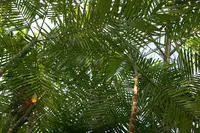
Hyospathe elegans is a small, clustering palm native to humid tropical forests of Central and South America. It typically grows in the shaded understory, sheltered by taller trees. The plant has slender, cane-like stems and elegant, arching fronds that give it a fine, airy look rather than a heavy palm canopy. It naturally prefers warm, stable temperatures, high humidity, and consistently moist but well-drained soil. These traits mean it can be sensitive to cold, dry air, and irregular watering, so some growers find it more demanding than common houseplants. Understanding how to care for Hyospathe elegans helps reduce stress and maintain healthy, steady growth over time.

Care Difficulty
Hard Care

Light Preference
Partial Shade

Water Requirements
Keep Soil Moist

Temperature Preference
Tropical / Frost Sensitive

Hardiness Zone
11–12

Soil Texture
Loamy, Silty, Organic-rich

Soil pH
Acidic (5.5–6.5)

Soil Drainage
Moist but well-drained

Fertilization
Minimal (feed rarely)
Scan your plant to receive care tips personalized for your specific plant
Available on iOS and Android
This understory palm prefers bright, filtered light that mimics dappled forest shade.
This species prefers evenly moist, well-drained soil without long dry spells or standing water.
This palm is a warmth-loving, frost-sensitive species that performs best in stable tropical to subtropical conditions.
This palm prefers consistently moist air and reacts to very dry indoor conditions.
This species prefers a loose, moist, organic-rich substrate that drains freely but does not dry out quickly.
This palm adapts reasonably well to container culture when the pot is chosen for stability and even moisture.
This palm grows slowly and needs only light, careful feeding to stay healthy.
This species needs minimal pruning, mainly to maintain health and a clean appearance.
This palm dislikes frequent disturbance, so repot or transplant only when clearly necessary.
Propagation of this palm is possible but slow and usually done from seed rather than division.
This palm is sensitive to frost and benefits from thoughtful winter protection in most temperate climates.

Plant Health Check
Not sure what's wrong with your plant? Check your plant's health inside the app.
This species is native to humid premontane and montane forests of Costa Rica and western Panama, where it grows as a small to medium understory palm rather than in open, exposed sites.
It forms a narrow, green to slightly waxy crownshaft (the tubular structure formed by leaf bases) with a relatively small head of arching pinnate leaves, giving it a more delicate appearance than many larger Central American palms.
It typically occurs along shaded slopes and moist ravines in intact forest, which makes it sensitive to habitat disturbance and dependent on conserved woodland for stable wild populations.
Growth is slow to moderate. Young plants often add only 5–15 cm of trunk height per year, slightly more in warm, consistently humid climates. Limited root disturbance and steady moisture help maintain a stable growth rate.
Keep your plants happy and healthy with plant identification, disease detection, and easy care guidance.