Airflow management
Place a small oscillating fan on a low, indirect setting near the plant to keep air moving around the leaves and roots, which reduces fungal issues and helps pseudobulbs mature firmly.

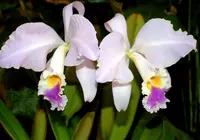
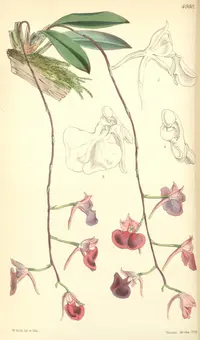
Cattleya mendelii is an epiphytic orchid, typically growing on trees and forming clumps of thick pseudobulbs with leathery leaves. It produces large, showy flowers with a frilled lip, often in soft pastel shades with a contrasting throat. Native to cloud forests of Colombia, it comes from cool to intermediate, humid conditions with bright but filtered light. Its need for good air movement, stable humidity, and careful watering makes it moderately challenging for beginners. Those familiar with orchid basics will find it rewarding to learn how to care for Cattleya mendelii, especially in controlled indoor or greenhouse environments.

Care Difficulty
Moderate Care

Light Preference
Bright Indirect Light

Water Requirements
Moderate Water

Temperature Preference
Tropical / Frost Sensitive

Hardiness Zone
Unknown

Soil Texture
Peaty, Organic-rich, Rocky

Soil pH
Acidic (5.5–6.5)

Soil Drainage
Well-drained

Fertilization
Moderate (every 2–4 weeks)
Scan your plant to receive care tips personalized for your specific plant
Available on iOS and Android
This species prefers bright, filtered light with some gentle direct sun each day.
Watering should balance consistent moisture with fast drainage around the roots.
This orchid thrives in intermediate to warm temperatures with a modest day–night drop.
This orchid needs moderately high humidity to bloom and grow well.
This epiphytic orchid needs a very open, airy medium rather than regular potting soil.
This species is well suited to container growing when the pot supports its shallow, spreading roots.
Feeding supports strong growth and flowering in Cattleya mendelii when light and watering are correct.
Pruning needs are light and focus on hygiene rather than reshaping Cattleya mendelii.
Repotting maintains healthy roots and airflow around this epiphytic orchid.
Division is the standard method for producing new plants from Cattleya mendelii.
This orchid is frost-sensitive and needs warm, stable indoor conditions in winter.

Plant Health Check
Not sure what's wrong with your plant? Check your plant's health inside the app.
This species is naturally restricted to the Eastern Andes of Colombia, where it grows as an epiphyte on trees in cool, moist cloud forests at mid to high elevations.
In its native range, it typically blooms in late spring to early summer, producing large, showy flowers that often appear on relatively short, robust pseudobulbs.
Its flowers usually have a white to pale pink perianth with a contrasting lip that often shows purple or magenta veining and a yellow throat, a color pattern thought to help guide pollinators toward the nectar source.

Cattleya mendelii was highly valued in the late 19th and early 20th centuries by European orchid collectors, and wild populations in Colombia experienced strong collecting pressure because its large, showy flowers matched the era’s demand for exhibition-quality cattleyas.
Lack of flowering usually comes from insufficient light, too little fertilizer, or no cool, drier rest after new growth matures. Check that pseudobulbs are firm, the plant is not overcrowded, and keep seasonal changes consistent.
Keep your plants happy and healthy with plant identification, disease detection, and easy care guidance.