Use protective gloves
Wear thick, puncture-resistant gloves and long sleeves when handling the plant, and use tongs or folded newspaper to move fallen spiny leaf bases so you avoid skin injuries and accidental breakage of new growth.

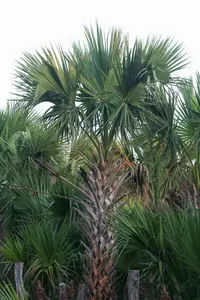
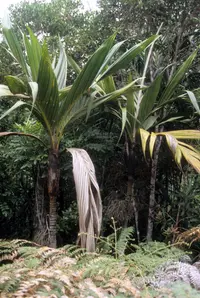
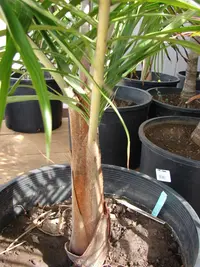
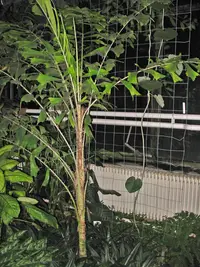
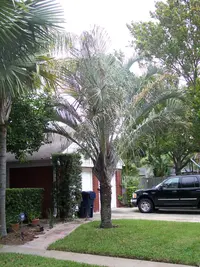
Guinea bactris (Aiphanes minima) is a small, spiny palm native to the Caribbean and parts of northern South America. It usually forms a slender trunk with stiff, divided leaves and very sharp spines along the stem and leaf bases.
In the wild it grows in tropical forests, often in shaded or partially shaded locations with moist, well-drained soil rich in organic matter. Its slow growth, need for warmth, and dangerous spines make it more challenging than common houseplants.
Enthusiasts who care for Guinea bactris value it for its compact size and unusual armored look, but it suits experienced growers better than casual plant owners.

Care Difficulty
Hard Care

Light Preference
Partial Shade

Water Requirements
Keep Soil Moist

Temperature Preference
Tropical / Frost Sensitive

Hardiness Zone
11–12

Soil Texture
Sandy, Loamy, Organic-rich

Soil pH
Acidic (5.5–6.5)

Soil Drainage
Moist but well-drained

Fertilization
Moderate (every 2–4 weeks)
Scan your plant to receive care tips personalized for your specific plant
Available on iOS and Android
This small spiny palm prefers bright, filtered tropical light with some direct sun protection.
This palm prefers consistently moist but not waterlogged soil, especially during active growth.
This species thrives in stable, warm, frost-free conditions typical of lowland tropical climates.
This species prefers fairly humid air and reacts quickly to dry indoor conditions.
Aiphanes minima prefers a loose, airy substrate that stays evenly moist yet never stagnant.
This palm is suitable for container growing when the pot supports its strong root system and spiny, upright form.
Aiphanes minima benefits from moderate feeding to support steady growth in containers or managed landscapes.
Aiphanes minima needs only light, targeted pruning to maintain health and a tidy form.
This spiny palm resents disturbance, so repotting or transplanting Aiphanes minima should be infrequent and careful.
Propagation of Aiphanes minima is usually done from seed and requires patience and warm, stable conditions.
This tropical palm is frost sensitive and needs careful winter management outside frost-free climates.

Plant Health Check
Not sure what's wrong with your plant? Check your plant's health inside the app.
This species forms a small clustering palm with slender trunks densely covered in sharp black spines, an adaptation that helps protect it from herbivores in its native Caribbean habitats.
Aiphanes minima is naturally found on several islands in the Lesser Antilles, often growing in moist to wet forests from low elevations up into lower montane zones.
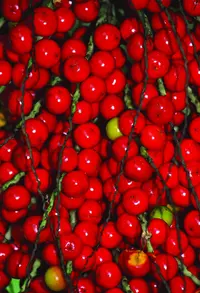
The small orange to red fruits are locally eaten and sometimes used as pig fodder, and the hard seeds have been used as a substitute for vegetable ivory in small craft work.
In some parts of its native range, Aiphanes minima has been heavily harvested for its palm heart, which has contributed to local population declines and has raised conservation concerns for wild stands.
Growth is moderate. Young plants usually add 15–30 cm of trunk per year in warm, stable conditions, slowing as they age. Container culture and cooler temperatures reduce this rate, so patience is important when growing Guinea bactris.
Keep your plants happy and healthy with plant identification, disease detection, and easy care guidance.