


Provide sturdy support
Install a strong trellis, wire frame, or pergola at planting time so the vigorous liana can climb safely and you can manage stems for easier harvesting and pruning.

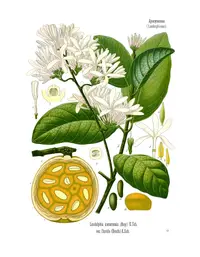
Bungo, Saba comorensis, is a vigorous tropical liana grown mainly for its large, fragrant flowers and edible, custard-like fruits. It naturally occurs in coastal forests and riverine areas of East Africa and nearby islands, where it climbs trees for support.
The plant has glossy green leaves and long, twining stems, so it needs a strong support structure in cultivation. It is considered moderately challenging because it prefers warm, humid, frost-free conditions.
Gardeners who care for bungo usually provide bright light, evenly moist but well-drained soil, and shelter from strong winds to keep growth steady and healthy.

Care Difficulty
Moderate Care

Light Preference
Partial Sun

Water Requirements
Moderate Water

Temperature Preference
Tropical / Frost Sensitive

Hardiness Zone
10–12

Soil Texture
Sandy, Loamy, Organic-rich

Soil pH
Acidic (5.5–6.5), Slightly acidic (6.5–7.0)

Soil Drainage
Moist but well-drained

Fertilization
Minimal (feed rarely)
Scan your plant to receive care tips personalized for your specific plant
Available on iOS and Android
Saba comorensis prefers bright, warm conditions that mimic its native tropical habitat.
This species prefers evenly moist, well-drained soil and does not tolerate standing water.
This tropical climber thrives in consistently warm, frost-free conditions.
Saba comorensis prefers moderately humid, tropical air but adapts if moisture levels are managed carefully.
Saba comorensis grows best in deep, loose, well‑aerated soil that drains freely but does not dry out instantly.
This species can be grown in containers if the pot is large and stable enough for its vigorous root and vine growth.
Saba comorensis benefits from modest, balanced feeding when grown in cultivation, especially in containers when caring for bungo.
Saba comorensis responds well to light, structural pruning to maintain a healthy, open canopy.
This species is usually grown in the ground, so focus on careful transplanting of young Saba comorensis plants.
Saba comorensis is usually propagated by seed, with vegetative methods used less often in home settings.
This tropical species is frost sensitive and needs protective winter care outside frost-free climates.

Plant Health Check
Not sure what's wrong with your plant? Check your plant's health inside the app.
This species is a robust woody climber that produces abundant white latex in its stems and unripe fruits, a characteristic feature of the Apocynaceae family linked to herbivore defense.
Its large, fibrous fruits and buoyant seeds are adapted to disperse by water, allowing the plant to travel along rivers and coastal currents between East African mainland and nearby islands.
The ripe fruit develops a soft, sweetly aromatic pulp that is locally eaten fresh in parts of East Africa and the Comoros, making it both a wild food source and a minor cultivated fruit tree in some areas.

Saba comorensis often occupies forest edges and secondary vegetation where it can climb high into the canopy, and in some coastal habitats its vigorous lianas form dense tangles that create important cover and nesting sites for birds and small mammals.
Growth is moderate. In warm climates with support, this liana can extend several meters over a few years. Size depends on pruning and structure, but it easily covers arbors or fences when conditions stay consistently warm and frost free.
Keep your plants happy and healthy with plant identification, disease detection, and easy care guidance.

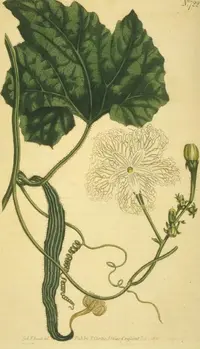
snakegourd
Trichosanthes cucumerina
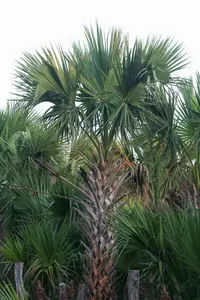
Rio Grande palmetto
Sabal mexicana
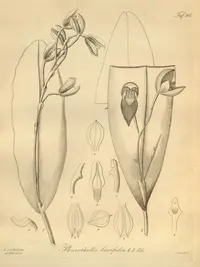
Green bonnet orchid
Pleurothallis ruscifolia
 POPULAR
Madagascar jasmine
Stephanotis floribunda
Pleurothallis palliolata
Pleurothallis palliolata
Virginia groundcherry
Physalis virginiana
white mulberry
Morus alba
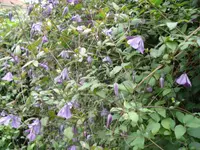
Purple clematis
Clematis viticella