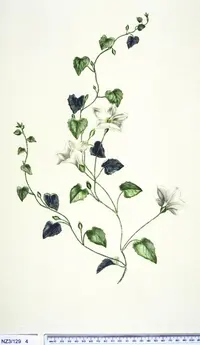
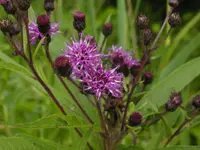
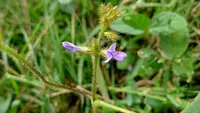
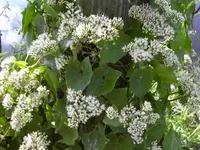
low false bindweed Care (Calystegia spithamaea)

low false bindweed

About low false bindweed

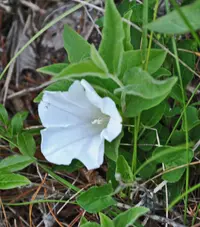
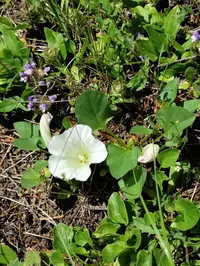
Low false bindweed (Calystegia spithamaea) is a low, clumping perennial vine relative that forms compact mounds rather than long trailing stems. It typically carries soft green leaves and showy, funnel-shaped white blooms that resemble small morning glories. Native to dry, open habitats and sandy or rocky soils in parts of eastern North America, it is often found in prairies, dunes, and open woodland edges.

This species is generally hardy and long-lived where winters are cold and soils drain well. It can be moderately challenging outside its natural range because it dislikes heavy, wet soils and strong competition from taller plants. Gardeners who care for low false bindweed usually focus on providing sun, good drainage, and low to moderate moisture.

Main Plant Requirements

Care Difficulty

Moderate Care

Light Preference

Full Sun

Water Requirements

Moderate Water

Temperature Preference

Cold Hardy

Hardiness Zone

4–8

Soil Texture

Sandy, Loamy, Rocky

Soil pH

Acidic (5.5–6.5), Slightly acidic (6.5–7.0)

Soil Drainage

Well-drained

Fertilization

Minimal (feed rarely)

Get Personalized Care Plan

Scan your plant to receive care tips personalized for your specific plant

Available on iOS and Android

How to Care for the low false bindweed

Calystegia spithamaea prefers full sun but tolerates some light shade, especially in hotter regions.

  • Provide 6–8 hours of direct sun daily; morning sun with light afternoon shade reduces leaf scorch in warm climates.
  • Plants tolerate partial shade (3–4 hours direct sun), but flowering on low false bindweed decreases and stems may stretch.
  • In cooler seasons or northern areas, maximize exposure by avoiding shade from shrubs or fences, and monitor for pale, sparse growth as a sign of insufficient light.

Calystegia spithamaea prefers moderate, consistent soil moisture without prolonged soggy conditions.

  • Water when the top 3–5 cm of soil feels dry; in average outdoor conditions this often means checking soil every few days in active growth.
  • Use well-drained, sandy or loamy soil so water passes through within a few seconds; standing water or a sour smell indicates poor drainage and risk of root rot.
  • In hot, dry weather, expect faster drying and potential wilting by evening, while in cool or rainy periods watering may be unnecessary for several days.

This species is a hardy perennial that thrives in temperate climates with cool to warm summers.

  • Active growth is strongest around 65–80°F (18–27°C), with steady flowering and compact stems in this range.
  • Dormant roots usually tolerate down to about 0°F (-18°C) in well-drained soil, though top growth dies back after hard frost.
  • Plants endure short periods above 90°F (32°C) if soil moisture is maintained, but prolonged heat with drought can cause leaf scorch and reduced flowering.

This species is adapted to relatively dry, open habitats and usually does not need special humidity management.

Calystegia spithamaea prefers light, well-aerated mineral soils that drain rapidly yet retain some moisture around the roots.

  • Use sandy or sandy-loam soil with 20–40% coarse sand or grit to prevent waterlogging.
  • Incorporate a modest amount of compost (10–20%) to supply nutrients without making the mix heavy or water-retentive.
  • Aim for slightly acidic to neutral pH, around 6.0–7.2, avoiding strongly acidic or alkaline sites.
  • Avoid compacted clay, peat-heavy mixes, or spots where water stands for more than a few hours after rain.

This species can be grown in containers if the pot is configured to mimic its dry, free-draining native conditions.

  • Choose a deep, relatively narrow pot to give the taproot room while limiting excess surface area that can stay wet.
  • Use a heavy, stable container material or weight the base so trailing stems do not tip the pot in wind.
  • Fill the bottom few cm with coarse gravel above the drainage holes to keep the main root zone from sitting in residual water.

This native perennial usually needs minimal feeding in average garden soil, so focus on modest support rather than heavy fertilization.

  • Apply a light layer of compost around low false bindweed in early spring to boost soil organic matter.
  • Use a balanced, slow-release fertilizer (around 10-10-10) once in late spring if growth appears weak or soil is poor.
  • Dilute liquid fertilizer to 1/2 strength and use no more than once a month during the active growing season.
  • Stop feeding in late summer so new growth can harden before winter dormancy.

Pruning Calystegia spithamaea is mainly about tidiness and guiding its low, twining growth habit.

  • Cut back dead, damaged, or diseased stems at any time using clean, sharp hand pruners.
  • In late winter or very early spring, remove weak or congested shoots to maintain an open, manageable clump.
  • Trim back excessively spreading stems after flowering to control spread and keep the plant within bounds.
  • Always cut just above a healthy leaf node to encourage branching and fuller growth.

This species is usually grown in the ground, so care focuses on site selection and gentle transplanting rather than frequent repotting.

  • Plan to transplant in early spring or early fall, when temperatures are mild and soil is workable.
  • Move plants if growth declines, roots circle the pot, or the clump has clearly outgrown its space.
  • Lift the root ball carefully, keeping as much soil around the roots as possible to reduce stress.
  • Replant at the same depth in well-drained soil, water thoroughly, then keep evenly moist until new growth resumes.

Propagation of this species is commonly done by division and stem cuttings, with seeds used less often.

  • Divide established clumps in early spring, keeping several healthy shoots and roots in each division.
  • Take 7–10 cm softwood or semi-ripe stem cuttings in late spring to early summer.
  • Insert cuttings into a moist, free-draining mix, keep at 65–75°F, and maintain high humidity for rooting.
  • Sow fresh seed in fall or early spring in a cold frame, using a light, well-drained seed-starting medium.

This hardy perennial typically survives normal winters in much of its range with minimal intervention.

  • Tolerates light to moderate frost once established, with top growth often dying back naturally.
  • After foliage dies back, cut stems to ground level and remove debris to reduce disease carryover.
  • Apply a 5–7 cm mulch layer over the root zone in colder regions to buffer freeze–thaw cycles.
  • For container plants in colder zones, move pots into a sheltered, unheated but frost-sheltered area.

Care Tips

Pinch For Bushiness

Pinch out the soft tips of young shoots in late spring to encourage branching and a denser, more wind‑resistant clump instead of a few lax, sprawling stems.

Provide Low Support

Install short, discreet hoops or a low mesh frame (15–30 cm high) around the plant early in the season so stems can lean on it and stay upright without needing tall trellises.

Edge And Contain

Use a shallow rhizome barrier or regularly slice a sharp spade vertically around the planting area in early spring to keep spreading roots from creeping into neighboring beds.

Mulch To Stabilize

Apply a thin, 2–3 cm layer of mineral mulch such as fine gravel or grit around the crown to reduce soil splash on leaves and flowers, which helps limit foliar disease in wet weather.

Targeted Pest Checks

Inspect undersides of leaves and tender shoot tips every 1–2 weeks for leaf miners, caterpillars, and aphids, and remove affected leaves or hand‑pick pests promptly to keep caring for low false bindweed low‑input and chemical‑light.

Common Pests and Diseases

Bindweed leaf beetle

This pest feeds on foliage, creating irregular shot holes and sometimes skeletonizing leaves on sandy or open sites where the plant naturally grows.

Solution

Handpick adults and larvae into soapy water where practical, encourage natural predators by maintaining plant diversity nearby, and avoid broad-spectrum insecticides that can disrupt beneficial insects; for heavy infestations on non-rare plantings, a labeled spinosad or pyrethrin product can be used sparingly, targeting only affected foliage in calm, dry weather.

Twining bindweed weevil

This pest, a specialist on bindweeds, chews notches and holes in leaves and may stunt new shoots through repeated feeding.

Solution

Inspect plants regularly and remove adult weevils by shaking stems over a tray or cloth, reduce nearby weedy bindweed hosts to limit population build‑up, and if damage is severe in garden situations, apply a targeted contact insecticide at dusk when adults are active, following all label directions to protect pollinators.

Powdery mildew

This disease causes a white, powdery coating on leaves and stems, often in late summer when days are warm and nights are cool and humid.

Solution

Improve air movement by spacing plants and trimming dense surrounding vegetation, avoid wetting foliage late in the day, remove and dispose of heavily infected leaves, and if needed use a sulfur or potassium bicarbonate fungicide labeled for ornamentals, applied at the first signs of disease.

Leaf spot

This disease produces small brown to tan lesions on leaves that may merge into larger blotches, leading to premature yellowing and leaf drop under prolonged wet conditions.

Solution

Remove and discard affected leaves to reduce inoculum, water at the base rather than overhead to keep foliage dry, and apply a copper-based fungicide or chlorothalonil product labeled for ornamental vines if spotting continues to spread during wet weather.

Interesting Facts

Specialist of sandy soils

This species is naturally restricted to dry, open habitats with sandy or gravelly soils, such as Great Lakes shorelines and sandy barrens, where many other broadleaf plants struggle to survive.

Compact, non-climbing habit

Unlike many other bindweeds that twine and climb, this plant remains low and upright or sprawling, typically under 30 cm tall, which helps it withstand strong winds in exposed sites.

Great Lakes regional endemic

Calystegia spithamaea occurs naturally only in a limited area of eastern North America, especially around the Great Lakes region, where some populations are considered of conservation concern due to habitat loss.

FAQs about low false bindweed

This species spreads slowly by short stems and is not usually aggressive. It forms small clumps rather than large mats. In suitable sandy or rocky soil, occasional sideways expansion occurs, but it rarely overwhelms neighboring plants.

Grow Healthy Plants with Botan Care

Keep your plants happy and healthy with plant identification, disease detection, and easy care guidance.

Botan plant care app — identify plants on mobile

Explore More Plants