


Staking Tall Stems
Install discreet stakes and soft ties early in the season for clumps exposed to wind, so tall stems stay upright and flower heads do not bend or snap after heavy rain.

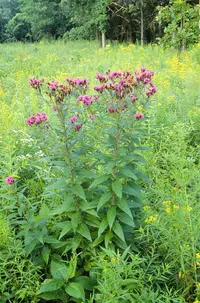
Prairie ironweed (Vernonia fasciculata) is a hardy, upright perennial native to North American prairies, wet meadows, and stream edges. It forms tall clumps topped with vivid purple flower clusters in late summer.
Plants have narrow, lance-shaped leaves and rigid stems that hold their shape well, creating strong vertical accents in mixed borders or naturalistic plantings. The flowers attract bees, butterflies, and other pollinators.
This species prefers full sun, consistent soil moisture, and rich to moderately fertile soil. Once its basic needs are met, it is relatively low maintenance, so learning how to care for prairie ironweed is straightforward for most gardeners.

Care Difficulty
Easy Care

Light Preference
Full Sun

Water Requirements
Keep Soil Moist

Temperature Preference
Cold Hardy

Hardiness Zone
3–7

Soil Texture
Loamy, Clay, Organic-rich

Soil pH
Acidic (5.5–6.5), Slightly acidic (6.5–7.0)

Soil Drainage
Moist but well-drained

Fertilization
Minimal (feed rarely)
Scan your plant to receive care tips personalized for your specific plant
Available on iOS and Android
This sun-loving perennial thrives in open sites with strong light exposure.
This species prefers consistently moist soil but not prolonged waterlogging.
This hardy prairie perennial tolerates a wide range of outdoor temperatures across many climates.
Humidity is not a major factor for prairie ironweed, which thrives in typical outdoor conditions.
This species prefers moist, fertile, structurally stable soil that still allows air to reach the roots.
This tall, moisture-loving perennial can be grown in containers but needs careful setup for stability and even moisture.
This native perennial usually thrives in average garden soil, so only light feeding is needed for prairie ironweed in poor or depleted sites.
Thoughtful pruning of Vernonia fasciculata helps maintain sturdy, upright growth and encourages abundant blooms.
This deep-rooted native is usually grown in the ground, so management focuses on careful transplanting rather than frequent repotting.
New plants of Vernonia fasciculata are commonly produced by seed and by division of mature clumps.
This species is a cold-hardy perennial that survives typical winters in USDA zones where it is commonly grown, needing minimal intervention.

Plant Health Check
Not sure what's wrong with your plant? Check your plant's health inside the app.
This species commonly reaches 1.2–2 m in height in undisturbed tallgrass prairies and wet meadows, forming dense clumps that help it compete for light among other tall native grasses and forbs.
Its rich purple flower heads bloom in mid to late summer, providing nectar and pollen for native bees, butterflies, and skippers at a time when many other prairie perennials have already finished flowering.
Unlike several other North American ironweeds that favor dry sites, this species is adapted to seasonally wet, alluvial, or poorly drained soils and often indicates remnant wet prairie or sedge meadow habitat.

Genetic and morphological studies have shown that Vernonia fasciculata is part of a North American radiation of ironweeds that diverged from tropical ancestors, adapting over time to colder temperate climates and the fire-influenced tallgrass prairie ecosystem.
This species forms upright clumps that typically reach 90–150 cm tall and about 60–90 cm wide. In rich, moist soil it can be taller. Stems are sturdy, so it usually stands without additional support.
Keep your plants happy and healthy with plant identification, disease detection, and easy care guidance.

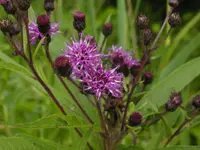
New York ironweed
Vernonia noveboracensis
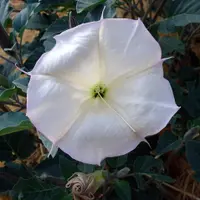
sacred datura
Datura wrightii
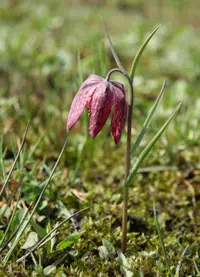
Snake's head fritillary
Fritillaria meleagris
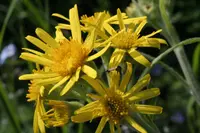
Tephroseris longifolia
Tephroseris longifolia
desert madwort
Alyssum desertorum
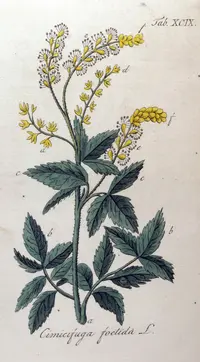
Actaea cimicifuga
Actaea cimicifuga
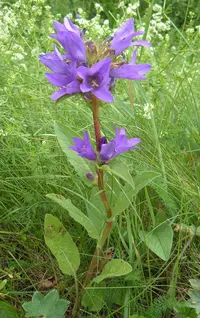
clustered bellflower
Campanula glomerata
California poppy
Eschscholzia californica