Tephroseris longifolia Care

Tephroseris longifolia

About Tephroseris longifolia

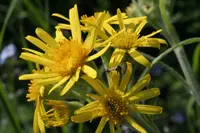
Tephroseris longifolia is a perennial herb in the daisy family, typically forming upright clumps with narrow leaves and bright yellow, daisy-like flower heads. It often grows in open meadows, rocky slopes, and light woodlands in parts of central and eastern Europe, usually in relatively cool, well-drained sites.

The plant has a moderately long lifespan but can be short-lived in hot or very dry conditions. It prefers sun to light shade, consistent moisture, and soil that drains freely. Once its needs are understood, it is not difficult to care for Tephroseris longifolia in suitable climates.

Main Plant Requirements

Care Difficulty

Moderate Care

Light Preference

Partial Sun

Water Requirements

Moderate Water

Temperature Preference

Cool Climate

Hardiness Zone

5–7

Soil Texture

Loamy, Silty, Organic-rich

Soil pH

Acidic (5.5–6.5), Slightly acidic (6.5–7.0)

Soil Drainage

Moist but well-drained

Fertilization

Minimal (feed rarely)

Get Personalized Care Plan

Scan your plant to receive care tips personalized for your specific plant

Available on iOS and Android

How to Care for the Tephroseris longifolia

This mountain perennial prefers cool, bright conditions with protection from intense midday sun.

  • Provide 4–6 hours of direct morning sun with light shade or dappled light in early afternoon to prevent leaf scorch.
  • Allow partial shade in hotter regions, especially from 12–4 p.m.; in cooler climates it tolerates more open sun if soil stays moist.
  • Watch foliage color and density: pale, weak stems indicate too little light, while crisped leaf edges suggest excessive exposure for Tephroseris longifolia.

This species needs consistently moist but not waterlogged soil, especially during active growth.

  • Water when the top 2–3 cm of soil feel slightly dry, aiming for evenly moist soil around the root zone without standing water.
  • Increase watering frequency in late spring–summer flowering periods, and reduce slightly in cooler months while preventing complete drying.
  • Ensure free-draining, humus-rich soil; yellowing, soft stems indicate overwatering, while drooping, thin leaves and dry soil signal underwatering.

This plant is adapted to cooler, montane climates and handles cold better than heat.

  • Support best growth in 55–70°F (13–21°C) during the growing season, avoiding prolonged exposure above 80°F (27°C) where possible.
  • Tolerate light frosts down to about 20–25°F (-6 to -4°C) when dormant, but protect young plants from sudden hard freezes.
  • In warm regions, use partial shade and mulch to keep roots cool; in colder climates, apply autumn mulch to buffer freeze–thaw cycles.

This alpine species handles typical outdoor humidity and rarely needs special humidity management.

  • Target 40–60% humidity, which matches most temperate outdoor conditions and avoids excess moisture around foliage.
  • Dry air is tolerated if soil moisture is kept steady, but prolonged hot, arid winds can cause leaf edge browning.
  • Humidity stress shows as limp, desiccated leaves; group plants with other perennials or use low windbreaks to slightly buffer air dryness.

This species prefers cool, moist but freely draining, moderately fertile mineral soil.

  • Use a sandy or gravelly loam with 20–30% coarse grit or sharp sand to keep the root zone from becoming waterlogged.
  • Aim for slightly acidic to neutral pH around 6.0–7.0, avoiding strongly alkaline or chalky sites that can limit nutrient uptake.
  • In garden beds or containers, mix in compost plus mineral grit or perlite to balance moisture retention with high aeration.
  • Avoid compacted clay, standing water, or heavy peat mixes, which encourage root rot and shorten Tephroseris longifolia lifespan.

This species can be grown in containers if the pot is set up to mimic a cool, sharply drained alpine site.

  • Choose a deep, narrow pot that allows strong taproot development while limiting excess surface compost that stays wet too long.
  • Select a heavy clay or stone container in windy sites to stabilize the tall flowering stems against tipping.
  • Raise the pot on feet or mesh tiles so drainage holes stay clear and meltwater or rain can escape quickly in all seasons.

This mountain species is adapted to lean soils, so Tephroseris longifolia needs only light, occasional feeding in cultivation.

  • Use a balanced, low-strength fertilizer (for example 10-10-10) diluted to 25–50% if growth seems weak on poor soil.
  • Apply once every 4–6 weeks during spring–early summer, never onto dry soil.
  • Prefer compost or well-rotted organic matter lightly mixed into the top layer instead of heavy synthetic feeding.
  • Stop feeding from late summer onward and do not fertilize during winter dormancy.

Pruning needs are minimal and focus on tidying and supporting flowering.

  • In late winter or very early spring, remove dead, damaged, or diseased stems at the base with clean, sharp snips.
  • Deadhead spent flower stems during bloom season to encourage a tidier clump and sometimes a longer flowering period in Tephroseris longifolia.
  • Cut back collapsed foliage after hard frost to reduce disease carryover and improve appearance.
  • Avoid hard cutting into healthy crowns, which can weaken regrowth in the next season.

This species is usually grown in the ground, with transplanting done only when necessary.

  • Plan transplanting for early spring or early fall when soil is cool and moist, avoiding hot, dry periods.
  • Look for crowded rosettes, stunted growth, or roots circling a pot as signs container-grown plants need a larger, slightly deeper container.
  • Lift plants with a wide soil ball, keeping roots as intact as possible to limit transplant shock.
  • Replant into well-drained, gritty soil, water thoroughly once, then keep evenly moist but not saturated until new growth resumes.

Propagation of this short-lived perennial is most reliable from seed, with some potential for careful division.

  • Sow fresh seed in late summer or fall on the surface of moist, free-draining mix; many seeds benefit from winter cold exposure (cold stratification).
  • Provide bright light, cool conditions (50–60°F), and consistent but light moisture for germination.
  • In early spring, divide only healthy, established clumps, keeping divisions small with plenty of roots attached.
  • Replant divisions immediately at the same depth and water gently to settle soil around the roots.

This is a cold-hardy species that usually needs only modest winter care in temperate climates.

  • Dormant crowns tolerate typical frosts and light freezes once established in well-drained soil.
  • Apply a thin mulch layer (2–5 cm) of leaf mold or compost around, not over, the crowns to buffer temperature swings.
  • In very wet winters, ensure good drainage so crowns do not sit in cold, saturated soil, which increases rot risk.
  • Move container-grown plants to a sheltered, unheated spot to avoid repeated freeze–thaw cycles that stress roots.

Care Tips

Stake Tall Stems

Install slim bamboo canes or wire hoops early in the season and loosely tie the flower stems with soft plant ties to prevent wind damage and lodging in taller clumps.

Cool-Root Mulching

Apply a 3–5 cm layer of fine gravel or composted bark around, but not touching, the crowns to keep roots cool, stabilize soil moisture, and reduce heaving in freeze–thaw cycles.

Controlled Division

Divide congested clumps every 3–4 years in early spring, replanting only the firm, healthiest sections at the same depth to maintain flowering vigor and reduce disease buildup in older crowns.

Powdery Mildew Management

Space plants to allow good air flow, water at soil level, and promptly remove and dispose of heavily infected leaves to reduce powdery mildew pressure without resorting immediately to fungicides.

Seedling Renewal Patch

Allow some seed heads to mature and fall in a designated area, then mark and thin the volunteer seedlings the following spring to maintain a self-renewing population for long-term Tephroseris longifolia care.

Common Pests and Diseases

Powdery mildew

This disease causes a white, floury coating on leaves and stems, often in warm, dry weather with poor air movement. Symptoms include distorted young growth and reduced flowering in dense clumps.

Solution

Improve air circulation by thinning surrounding vegetation and avoid overhead watering. Remove and destroy heavily infected leaves, then apply a sulfur or potassium bicarbonate fungicide labeled for ornamental perennials at the first sign of infection, repeating as directed if conditions stay favorable for the disease.

Leaf spot

This disease produces brown or purplish spots on leaves, sometimes with lighter centers and yellow halos, especially in cool, moist conditions or on plants growing in heavy soils. Symptoms include premature leaf drop and weakened plants when spotting is severe.

Solution

Remove and discard affected leaves to reduce spore spread, and keep foliage as dry as possible by watering at soil level in the morning. If spotting progresses, use a copper-based or chlorothalonil fungicide labeled for ornamental composites, and avoid overcrowding plants so foliage can dry quickly after rain.

Aphids

These insects cluster on young stems and flower stalks, sucking sap and causing curling or yellowing leaves. This pest also excretes sticky honeydew that can support sooty mold on the foliage.

Solution

Dislodge colonies with a strong stream of water and pinch off heavily infested shoot tips. If needed, treat with insecticidal soap or a light horticultural oil, applied thoroughly to stems and leaf undersides, and encourage natural predators such as lady beetles by avoiding broad-spectrum insecticides.

Leaf miners

These insects create narrow, winding tunnels inside leaves, leaving pale or translucent trails that reduce the photosynthetic area. Symptoms include weakened foliage and cosmetic damage, especially on plants growing in open, sunny meadows or borders.

Solution

Remove and dispose of mined leaves as soon as damage is noticed to break the life cycle. For persistent problems, apply a systemic insecticide containing spinosad according to label directions, timing treatments to coincide with the emergence of new larvae.

Rust

This disease forms small yellow spots on upper leaf surfaces and orange-brown pustules on the undersides, usually in cool, moist conditions. Symptoms include gradual weakening of the plant and premature leaf drop if infection is heavy.

Solution

Promptly remove and destroy infected leaves and plant debris to limit spore sources, and avoid overhead watering. In sites with repeated issues, apply a rust-active fungicide containing myclobutanil or a similar ingredient at the first appearance of pustules, following label intervals until weather turns less favorable for infection.

Interesting Facts

Limestone specialist

This species is strongly associated with calcareous, limestone-derived soils in central and southeastern Europe, where it grows in open grasslands, rocky slopes, and light woodland clearings that many other daisies do not tolerate well.

Fragmented native range

Its distribution is scattered across several European mountain systems, including the Alps and Carpathians, with genetically and geographically distinct subspecies adapted to local conditions.

Early-season bloomer

In much of its range, this plant flowers from late spring to early summer, providing one of the earlier pulses of yellow composite flowers for pollinating insects in cool upland habitats.

FAQs about Tephroseris longifolia

This species forms modest clumps and spreads mainly by short rhizomes and self-seeding. In most gardens it is not aggressive, but deadheading before seeds ripen limits spread and prevents unwanted seedlings in nearby beds.

Grow Healthy Plants with Botan Care

Keep your plants happy and healthy with plant identification, disease detection, and easy care guidance.

Botan plant care app — identify plants on mobile

Explore More Plants