Oncidium cheirophorum Care

Oncidium cheirophorum

About Oncidium cheirophorum

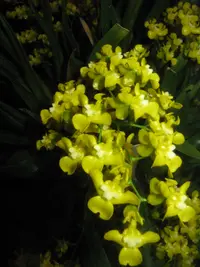
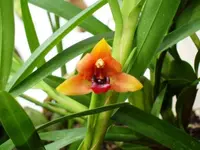
Oncidium cheirophorum is a compact epiphytic orchid, often called a miniature dancing lady, valued for its bright yellow, fragrant flowers. It typically grows on trees in moist, montane forests of Central America. The plant forms small clumps with clustered pseudobulbs and narrow leaves, producing branched flower spikes covered in many small blooms. Its moderate size and showy flowering habit make it suitable for growers with limited space or for mounting on bark or cork. It prefers bright, filtered light, regular moisture with fast drainage, and good air movement. Understanding how to care for Oncidium cheirophorum helps keep it blooming reliably in indoor or greenhouse conditions.

Main Plant Requirements

Care Difficulty

Moderate Care

Light Preference

Bright Indirect Light

Water Requirements

Moderate Water

Temperature Preference

Tropical / Frost Sensitive

Hardiness Zone

11–13

Soil Texture

Sandy, Organic-rich

Soil pH

Acidic (5.5–6.5)

Soil Drainage

Well-drained

Fertilization

Moderate (every 2–4 weeks)

Get Personalized Care Plan

Scan your plant to receive care tips personalized for your specific plant

Available on iOS and Android

How to Care for the Oncidium cheirophorum

This orchid prefers bright, indirect light that mimics dappled forest conditions.

  • Provide 10–12 hours of bright, filtered light daily, such as behind a sheer curtain or under 30–50% shade cloth.
  • Allow gentle morning sun but protect from strong midday and late-afternoon sun, which can scorch leaves and turn them yellow with brown patches.
  • In winter, move Oncidium cheirophorum to a brighter position or supplement with grow lights to prevent weak, stretched growth.

Watering should keep the roots moist but never waterlogged.

  • Water when the top 2–3 cm of the potting mix feels dry, then soak thoroughly and let excess drain completely.
  • Reduce watering in cooler, lower-light seasons and increase slightly during active growth in warmer months, always using touch to guide timing.
  • Watch for shriveled pseudobulbs or wrinkled leaves as signs of underwatering, and for black, mushy roots or sour smell as signs of overwatering.

This species prefers intermediate temperatures with mild day–night variation.

  • Aim for 65–80°F (18–27°C) by day and 55–65°F (13–18°C) at night to support steady growth and flowering.
  • Protect from cold below 50°F (10°C); brief drops to 45°F (7°C) may be tolerated but can stress the plant and slow root activity.
  • In hot spells above 85°F (29°C), increase air movement and humidity, and shade slightly to limit leaf overheating and dehydration.

This orchid prefers consistently moist air and reacts quickly to very dry indoor conditions.

  • Aim for 50–70% humidity; it tolerates brief drops to 40% but growth and flowering may slow.
  • Watch for dry, crisp leaf tips, wrinkled pseudobulbs, and stalled new growth as signs of low humidity stress.
  • Increase humidity with a pebble tray under the pot, grouping plants, or a small room humidifier rather than misting heavily.

This species grows best in a loose, airy epiphytic mix rather than compact potting soil.

  • Use a fine to medium orchid bark mix with added perlite and a little sphagnum moss to retain some moisture while staying open.
  • Ensure the substrate drains rapidly; water should run through in seconds and the mix should not stay soggy or smell sour.
  • Aim for slightly acidic to neutral conditions (pH 5.5–7.0), which suits typical orchid bark-based media.
  • Avoid dense garden soil, peat-only mixes, or any medium that compacts, as roots need constant air contact for healthy Oncidium cheirophorum care.

This orchid is well suited to container growing, including on patios or bright indoor spots.

  • Choose a snug pot that just fits the root mass, as oversized containers hold excess moisture and delay drying between waterings.
  • Use a stable, heavier pot if the plant becomes top-heavy in bloom to prevent tipping from tall flowering spikes.
  • Prefer slotted or orchid-style pots that increase side aeration and allow the bark mix to dry evenly from all directions.

This orchid responds well to light, consistent feeding during active growth.

  • Use a balanced orchid fertilizer (such as 20-20-20) diluted to 1/4–1/2 strength in low-mineral water.
  • Feed every 2 weeks in spring and summer, then reduce to monthly in early fall.
  • In mid–late winter, pause feeding or apply very weak solution only if Oncidium cheirophorum is still producing new growth.
  • Flush the pot with plain water once a month to prevent fertilizer salt buildup on roots.

Pruning focuses on removing spent tissues to maintain health and encourage future flowering.

  • Trim flower spikes back to the pseudobulb once all blooms have faded and no buds remain.
  • Cut away dead, shriveled, or blackened leaves and pseudobulbs with sterilized scissors or pruning snips.
  • Avoid cutting healthy green pseudobulbs, since they store water and energy needed for growth and flowering.
  • Gently remove dry, papery sheaths around pseudobulbs to improve airflow, taking care not to injure new shoots.

Repotting keeps the orchid medium fresh and prevents root crowding and decline.

  • Check for tight root masses, roots circling the pot, sour smell, or decomposed bark as signs repotting is needed.
  • Plan to repot every 2–3 years in late winter or early spring, just as new root tips begin to emerge.
  • Gently remove old mix, trim dead roots, and place the plant into fresh, airy orchid bark in a slightly larger pot.
  • Water lightly after repotting Oncidium cheirophorum, keep humidity moderate, and shade from strong sun until new roots establish.

Propagation is done mainly by division of mature clumps with multiple pseudobulbs.

  • Divide in late winter or early spring when repotting, choosing plants with at least 6–8 healthy pseudobulbs.
  • Use a sterile knife or shears to cut the rhizome, keeping 3–4 pseudobulbs per division for better recovery.
  • Plant divisions in fresh orchid bark, stabilizing them firmly so new roots are not disturbed by movement.
  • Maintain bright, indirect light, 60–75% humidity, and slightly reduced watering until divisions show new root and shoot growth.

This orchid is not frost hardy and needs warm, stable conditions in winter.

  • Keep temperatures around 60–70°F at night and 68–78°F by day, avoiding drops below 55°F.
  • Grow Oncidium cheirophorum indoors or in a heated greenhouse in cold climates, away from drafts and cold windowsills.
  • Reduce watering slightly in lower light, allowing the medium to dry just a bit more between waterings.
  • Maintain gentle air movement and 50–70% humidity to limit fungal problems while growth is slower.

Care Tips

Mounting strategy

Consider mounting plants on cork or hardwood slabs with a thin pad of sphagnum if you can maintain high humidity and frequent watering, which improves air movement around roots and reduces rot in compact grow spaces.

Targeted air movement

Place a small fan on a low, indirect setting to keep air gently moving across foliage and roots, which helps prevent fungal spotting on the fine leaves and pseudobulbs.

Spike staking

As inflorescences emerge, stake spikes early with thin, smooth stakes and soft clips so the branching sprays develop upright and avoid kinking or breaking under the weight of the flowers.

Pseudobulb monitoring

Check pseudobulbs weekly and adjust care if they wrinkle noticeably, as this indicates water-stress or root issues that should be addressed before new growth is affected when growing Oncidium cheirophorum.

Repot timing

Schedule repotting just as new roots start to appear from the latest growth, which minimizes transplant shock and allows the plant to establish quickly in fresh medium.

Common Pests and Diseases

Spider mites

This pest thrives in warm, dry, still air and often appears on thin Oncidium leaves and pseudobulbs as fine stippling and webbing. Symptoms include dull, silvery foliage and tiny moving dots on the undersides of leaves.

Solution

Rinse foliage thoroughly with a strong but gentle stream of lukewarm water, including leaf undersides, then increase humidity and air movement to discourage reinfestation. For persistent colonies, apply a neem oil or insecticidal soap spray labeled for orchids every 7–10 days for 3–4 cycles, isolating the plant from others during treatment.

Scale insects

These insects attach to pseudobulbs, leaf bases, and flower spikes as small, rounded bumps that do not move when touched. Symptoms include sticky honeydew, sooty mold growth, and gradual yellowing or shriveling of pseudobulbs.

Solution

Physically remove visible scale with a cotton swab dipped in 70% isopropyl alcohol, then wipe affected areas to dissolve remaining protective shells. Repeat inspections weekly and, if needed, use an insecticidal soap or horticultural oil spray, taking care to keep chemicals off open flowers and improving air movement to reduce new outbreaks.

Orchid mealybugs

This pest hides in leaf axils, under sheaths, and around roots, leaving white cottony clusters and sticky residue. Symptoms include distorted new growth and slowed flowering due to sap loss.

Solution

Unpot the plant if infestation reaches the roots, rinse roots and plant parts under lukewarm water, and remove visible insects with alcohol-dipped cotton swabs. After drying, repot into fresh medium and use repeated applications of insecticidal soap or systemic insecticide labeled for orchids, combined with close inspection of nearby plants when caring for Oncidium cheirophorum.

Bacterial brown spot

This disease causes water-soaked, translucent patches on leaves that quickly turn brown and sunken, often starting at leaf tips or margins. Symptoms include a soft, sometimes foul-smelling area that can expand rapidly in warm, wet conditions.

Solution

Isolate the plant, cut out infected tissue with a sterile blade well into healthy tissue, and keep leaves dry, especially overnight. Improve airflow, reduce overhead misting, and consider a copper-based bactericide labeled for orchids if new spots continue to appear.

Anthracnose leaf spot

This disease produces small, round to irregular tan or dark spots on leaves that may merge into larger patches with purple-brown margins. Symptoms include slow expansion of lesions under low airflow and high humidity, sometimes leading to tip dieback on thin Oncidium leaves.

Solution

Remove and discard affected leaf sections with sterile tools, then increase spacing and air circulation around the plant. Avoid wetting foliage, water in the morning so leaves dry quickly, and apply a fungicide labeled for anthracnose on orchids if new spots continue to develop.

Interesting Facts

Miniature cloud-forest epiphyte

This species is naturally small and compact, adapted to grow as an epiphyte on trees in Central American cloud forests at mid to high elevations, where light is bright but filtered by constant mist and cloud cover.

Naturally waxy yellow flowers

Its flowers are a clear, bright yellow with a slightly waxy texture and often carry a light, sweet fragrance, which distinguishes it from many larger, more patterned Oncidium relatives.

Rapidly clumping habit

The plant produces closely spaced pseudobulbs that form dense clumps over time, creating many simultaneous flowering growths from a relatively small root mass.

Botan icon

Did you know?

This species has been used extensively by orchid breeders to introduce compact size, bright clear-yellow color, and free-flowering habits into modern Oncidium hybrids, so its genetics are present in many popular yellow dancing-lady orchids sold today.

FAQs about Oncidium cheirophorum

Lack of flowers usually comes from insufficient light, too-warm nights, or no slight drying between waterings. Mature pseudobulbs need a moderate day–night temperature drop and balanced fertilizer at reduced strength to initiate reliable flowering.

Grow Healthy Plants with Botan Care

Keep your plants happy and healthy with plant identification, disease detection, and easy care guidance.

Botan plant care app — identify plants on mobile

Explore More Plants