Mark Dormant Clumps
After the foliage dies back, mark bulb locations with a discreet stake or tag so you do not disturb or cut through them when digging or replanting nearby during summer dormancy.

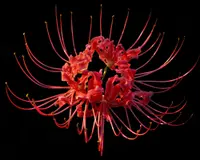
Red spider lily, Lycoris radiata, is a bulb-forming perennial grown mainly for its striking late-summer or early autumn flowers. It sends up leafless stems topped with spidery, recurved red petals and long, delicate stamens.
After flowering, narrow strap-like leaves emerge and persist through the cooler season, then die back in summer dormancy. This growth habit makes it suitable for mixed borders, under light deciduous shade, or naturalized drifts.
The species is native to East Asia and is widely cultivated in warm-temperate regions. It is generally low-maintenance once established, as long as the soil drains well and the bulbs are not disturbed too often.
Gardeners who learn how to care for Red spider lily usually find it long-lived and dependable in climates with mild winters and warm summers.

Care Difficulty
Moderate Care

Light Preference
Full Sun

Water Requirements
Moderate Water

Temperature Preference
Cool Climate

Hardiness Zone
6–10

Soil Texture
Sandy, Loamy, Organic-rich

Soil pH
Acidic (5.5–6.5), Slightly acidic (6.5–7.0)

Soil Drainage
Well-drained

Fertilization
Minimal (feed rarely)
Scan your plant to receive care tips personalized for your specific plant
Available on iOS and Android
Lycoris radiata performs best in bright outdoor sites with a balance of sun and light shade.
Lycoris radiata needs distinct wet and dry periods that follow its growth and dormancy cycles.
This bulb prefers moderate climates with cool winters and warm, not extreme, summers.
Humidity is not a major factor for Lycoris radiata, which handles typical indoor and outdoor air well.
Lycoris radiata prefers loose, well-drained soil that never stays waterlogged around the bulbs.
This species is suitable for container growing when bulbs are kept in a stable, sharply drained mix.
Lycoris radiata benefits from light, targeted feeding to support flowering without stimulating excessive leaf growth.
Lycoris radiata needs minimal pruning, mainly to remove spent parts and keep clumps tidy.
Transplanting Lycoris radiata focuses on dividing and relocating clumps rather than frequent container repotting.
Lycoris radiata is most reliably propagated by bulb division rather than from seed.
Lycoris radiata is moderately cold hardy and usually needs only simple winter care in most mild to cool climates.

Plant Health Check
Not sure what's wrong with your plant? Check your plant's health inside the app.
In parts of Japan, this species often blooms in mass displays right after typhoons or heavy late-summer rains, because the bulbs respond to changes in soil moisture and temperature at the end of the dormant period.
Most plants grown in China, Japan, and the US are triploid and almost always sterile, so they rarely set viable seed and spread mainly through bulbs dividing underground.
The bulbs contain lycorine and related alkaloids that are highly toxic if eaten, which helps protect them from many mammal herbivores and soil pests.

Historical records from Japan and China describe red spider lilies being planted deliberately along rice paddies, grave sites, and field borders as a living barrier, because their poisonous bulbs discouraged burrowing animals from disturbing crops and burial grounds.
Lack of flowers often comes from bulbs planted too deep, insufficient summer heat, or foliage removed too early. The leaves must photosynthesize fully in spring, then die back naturally, to recharge bulbs for late-summer flowering.
Keep your plants happy and healthy with plant identification, disease detection, and easy care guidance.