Use thornproof handling
Wear thick gloves and long sleeves when handling or pruning, and use long-handled tools where possible to avoid injury and accidental stem breakage from the dense, rigid thorns.

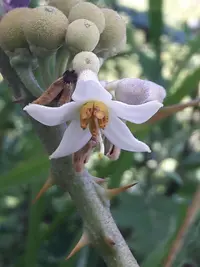
Solanum stramoniifolium is a spiny shrub in the nightshade family, grown mainly for its small orange to red fruits and ornamental value. It forms a dense, branching habit with thorny stems and leaves, making it more suitable for outdoor or protected garden spaces than casual handling.
This species is native to tropical regions of Central and South America, often found in disturbed sites and open areas. It tends to grow quickly in warm climates and can self-seed, so it may spread if not monitored.
The plant prefers bright light, moderate moisture, and well-drained soil. Because of its thorns and fruiting habit, it suits growers who already understand how to care for Solanum stramoniifolium and can manage its more demanding physical traits.

Care Difficulty
Moderate Care

Light Preference
Full Sun

Water Requirements
Regular Water

Temperature Preference
Tropical / Frost Sensitive

Hardiness Zone
10–12

Soil Texture
Sandy, Loamy, Organic-rich

Soil pH
Acidic (5.5–6.5), Slightly acidic (6.5–7.0)

Soil Drainage
Moist but well-drained

Fertilization
Light (every 4–6 weeks)
Scan your plant to receive care tips personalized for your specific plant
Available on iOS and Android
This sun-loving shrub fruits best in warm climates with strong light exposure.
This species prefers evenly moist, well-drained soil rather than constant saturation.
This warm-climate shrub grows best in stable, frost-free conditions.
This species prefers moderate ambient humidity but adapts to typical indoor air.
This species grows best in loose, well-aerated, slightly acidic to neutral soil that drains quickly.
This species is suitable for container growing when given enough root space and stable support.
This shrub fruits and flowers best with light, well-timed feeding rather than heavy fertilization.
Pruning helps control size and promote safer, more fruitful growth on this spiny shrub.
This species is usually grown outdoors and benefits most from thoughtful transplanting rather than frequent repotting.
New plants are most commonly raised from seed, with stem cuttings as a secondary option.
This tropical shrub is frost-tender and needs careful handling in climates with cold winters.

Plant Health Check
Not sure what's wrong with your plant? Check your plant's health inside the app.
This shrub develops dense, sharp spines not only on stems but also on the veins and margins of its leaves, forming an effective barrier against browsing animals and some insect herbivores.
In its native range in tropical America, this species often colonizes disturbed habitats such as road edges, abandoned fields, and forest clearings, helping stabilize soil and forming early-stage vegetation cover.
The plant produces clusters of small, bright orange berries that attract birds, which likely play a major role in seed dispersal and the natural spread of the species when they feed on the fruits.
Ripe fruits are sometimes eaten in local cuisines after proper preparation, but unripe fruits, leaves, and green parts contain potentially irritant alkaloids. For home gardeners, it is safer to treat this species as ornamental rather than as food.
Keep your plants happy and healthy with plant identification, disease detection, and easy care guidance.