Texas live oak Care (Quercus fusiformis)

Also known as: West Texas Live Oak, Escarpment Live Oak, plateau live oak, plateau oak, Edwards Plateau live oak
Texas live oak

About Texas live oak

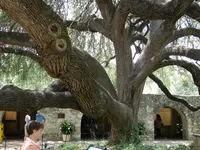
Texas live oak, Quercus fusiformis, is a long-lived evergreen to semi-evergreen oak tree native to central and southern Texas and parts of northern Mexico. It forms a broad, dense canopy with thick, leathery leaves and a strong, gnarled trunk.

This species is valued in landscapes for its durability, wind resistance, and high tolerance to heat, drought, and poor soils. It grows slowly to moderately, which makes it easier to manage in residential settings.

Understanding how to care for Texas live oak starts with its preference for full sun, good drainage, and avoidance of prolonged soil saturation. Once established, it generally requires minimal intervention beyond basic monitoring for pests and oak wilt.

Main Plant Requirements

Care Difficulty

Easy Care

Light Preference

Full Sun

Water Requirements

Low Water

Temperature Preference

Cold Hardy

Hardiness Zone

6–10

Soil Texture

Sandy, Loamy, Rocky

Soil pH

Slightly acidic (6.5–7.0), Slightly alkaline (7.0–7.5)

Soil Drainage

Well-drained

Fertilization

Minimal (feed rarely)

Get Personalized Care Plan

Scan your plant to receive care tips personalized for your specific plant

Available on iOS and Android

How to Care for the Texas live oak

This drought-adapted oak thrives in strong outdoor light once established.

  • Provide 6–10 hours of direct sun daily; full sun promotes dense canopies and sturdy branches for Texas live oak.
  • Young trees tolerate light afternoon shade; in hot southern sites, aim for morning sun with some relief from intense 2–5 p.m. exposure.
  • In dense shade, expect slower growth and thinner foliage; maintain weed- and shrub-free space around the tree to reduce light competition.

This species prefers deep, infrequent watering that encourages a strong root system.

  • For new trees, water when the top 5–8 cm of soil feels dry, soaking the root zone to 20–30 cm depth, then allow it to dry between waterings.
  • Established Quercus fusiformis often manages on natural rainfall; add slow, deep irrigation only during extended drought or visible leaf wilt.
  • Use well-drained soil; symptoms of overwatering include yellowing leaves and twig dieback, while crisp, curling leaves signal chronic dryness.

This oak is highly heat-tolerant and moderately cold-hardy in outdoor landscapes.

  • Active growth occurs best around 70–90°F (21–32°C), with stable development during typical warm-season conditions.
  • Mature trees tolerate down to about 5–10°F (-15 to -12°C) once established; young trees benefit from protection during the first few winters.
  • Handles intense summer heat up to 100–110°F (38–43°C) if roots are mulched and soil is not waterlogged, which reduces stress cracking and leaf scorch.

This species tolerates a wide humidity range and rarely needs special humidity management.

Quercus fusiformis prefers dry, mineral, well-drained soil that does not stay wet after rain or watering.

  • Use a sandy or gravelly loam with 20–30% coarse sand or fine gravel to keep pore spaces open.
  • Aim for slightly alkaline to neutral pH around 7.0–8.0; avoid strongly acidic mixes unless amended with lime.
  • Blend in limited, well-decomposed compost (no more than 15–20% of the volume) to avoid overly rich, moisture-holding substrate.
  • For compacted native ground, incorporate coarse grit and chunky bark into the top 20–30 cm to improve aeration and percolation.

This tree can be grown in containers only for the short to medium term because of its eventual size and strong root system.

  • Choose a deep, heavy container that resists tipping as the trunk thickens and canopy catches wind.
  • Use a sharply draining mix, such as 40% pine bark, 40% coarse sand, and 20% loam, to prevent chronic root-zone saturation.
  • Raise the pot slightly on feet or bricks so drainage holes remain clear and runoff does not reabsorb into the root zone.

This native oak usually needs minimal feeding in established landscapes, but light fertilization can support young or stressed trees.

  • For young Texas live oak trees, use a slow-release, balanced NPK fertilizer or well-rotted compost in early spring.
  • Apply once per year in the growing season, broadcasting evenly over the root zone and watering in well.
  • Use a moderate rate, staying at or below label recommendations to avoid salt buildup and excessive leafy growth.
  • Skip or greatly reduce feeding in late fall and winter, when growth naturally slows.

Pruning helps maintain structure, safety, and good air flow in Quercus fusiformis without encouraging weak growth.

  • Schedule main pruning in late winter, before new growth, to see branch structure clearly and limit stress.
  • Remove dead, diseased, crossing, or storm-damaged branches first, cutting back to the branch collar with clean tools.
  • Thin crowded interior branches slightly to improve light and airflow, preserving the natural canopy outline.
  • Use sharp bypass pruners or a pruning saw, making smooth cuts and avoiding large wounds where possible.

This oak is usually grown in-ground, so care focuses on timely transplanting of young container-grown trees.

  • Transplant in late fall or early spring when soil is workable and temperatures are mild to reduce shock.
  • Look for circling roots at the drainage holes, slow growth, or the root ball drying very quickly as signs it is pot-bound.
  • Move up only 1 container size or into a prepared ground hole 2–3× wider than the root ball, keeping the root flare at soil level.
  • Loosen or slice circling roots, water deeply after planting, then mulch 5–8 cm away from the trunk to conserve moisture.

Most home growers do not multiply Quercus fusiformis frequently, but it can be raised from acorns with patience.

  • Collect healthy, mature acorns in fall and discard those that float in water, since they are usually not viable.
  • Sow promptly in deep containers or nursery beds with well-drained soil, placing acorns on their side about 2–3 cm deep.
  • Keep the medium slightly moist and cool through fall and winter; natural chilling supports germination in spring.
  • Grow seedlings in full sun to light shade, protecting tender young plants from severe drought and mechanical damage.

This oak is quite cold hardy in its typical range and usually requires only basic winter care in the landscape.

  • Mature trees tolerate light to moderate frost, though very young plants benefit from extra attention in unusual cold.
  • Apply 5–8 cm of mulch over the root zone in late fall, keeping it slightly away from the trunk to reduce rot risk.
  • For container trees in colder areas, move pots into a sheltered, unheated space or against a south-facing wall.

Care Tips

Root flare check

Expose the root flare at planting by gently brushing soil away from the trunk base so the first major roots sit at or slightly above soil level, which reduces risk of girdling roots and trunk rot long term.

Early structural pruning

In the first 5–8 years, remove or shorten competing leaders and narrow V-shaped crotches to develop one dominant trunk and strong scaffold branches that can carry the tree’s heavy mature canopy.

Windward staking strategy

If staking is needed in exposed sites, place 2–3 stakes outside the root ball on the windward sides only and use flexible ties, then remove all stakes after 1–2 growing seasons to encourage a stable, self-supporting root system.

Mulch ring management

Maintain a 60–120 cm wide mulch ring that is 5–8 cm deep, keeping mulch pulled back 5–8 cm from the trunk to protect surface roots from heat and mechanical damage while preventing moisture against the bark.

Acorn and sprout control

Rake up acorns and cut off basal sprouts at their point of origin once or twice a year to reduce unwanted seedlings, discourage wildlife concentration near paths, and direct more energy into the main canopy when growing Texas live oak.

Common Pests and Diseases

Oak wilt

This disease is a serious vascular wilt caused by the fungus Bretziella fagacearum that blocks water movement in the tree. Symptoms include rapid leaf browning, premature leaf drop, branch dieback, and sometimes death, especially when trees are interconnected by roots.

Solution

Prune only during the coldest part of winter, immediately paint all fresh pruning cuts and wounds, and avoid injuring roots to reduce spread. If oak wilt occurs nearby, consult a certified arborist about trenching to sever root connections and, where appropriate, trunk injections with fungicide to protect high‑value trees, and do not move firewood from infected areas.

Hypoxylon canker

This disease is an opportunistic fungal canker that attacks stressed live oaks, causing bark cracking, tan to silver crusty patches on trunks or large branches, and progressive dieback. Symptoms include rapid decline in trees already weakened by drought, construction damage, or other stresses.

Solution

Reduce stress with deep, infrequent watering during drought, proper mulching, and avoiding soil compaction or mechanical injury. Remove and dispose of severely affected limbs or whole trees that are in decline, cutting back to healthy wood, and improve site conditions for nearby trees to limit new infections rather than relying on fungicides, which are generally ineffective once symptoms appear.

Oak leaf blister

This disease is caused by the fungus Taphrina caerulescens and leads to raised, blistered, thickened areas on leaves that may become yellow to brown. Symptoms include distorted foliage in spring but usually little long‑term damage to established trees.

Solution

Rake and discard fallen leaves to reduce fungal spores and avoid overhead irrigation that keeps foliage wet in spring. In high‑value, repeatedly affected trees, a preventive fungicide spray timed just before bud break can reduce infection, but good overall tree vigor through proper watering and mulching is usually sufficient.

Kermes scale

These insects are small, rounded scales that resemble galls or tiny beads on twigs and at leaf bases, feeding on sap and causing twig dieback and thinning foliage. This pest often produces little to no honeydew but can weaken trees when populations are high or trees are drought‑stressed.

Solution

Prune out and destroy heavily infested twigs during dormancy and encourage natural predators by minimizing broad‑spectrum insecticide use. For severe infestations, apply horticultural oil as a dormant or early‑season spray to smother young crawlers, and maintain tree vigor through proper watering to help it tolerate feeding.

Oak leaf skeletonizer

These insects are caterpillars that feed between leaf veins, leaving a lace‑like or skeletonized appearance on foliage and sometimes causing premature leaf drop. This pest can create noticeable cosmetic damage, especially on young or stressed trees, but healthy live oaks often recover well.

Solution

Monitor foliage in late spring to early summer and prune out small, localized infestations when practical. For larger outbreaks on valued trees, use targeted Bacillus thuringiensis (Bt) treatments when caterpillars are small, and support tree recovery with adequate water and mulch rather than repeated chemical sprays, which can disrupt beneficial insects.

Interesting Facts

Most drought-hardy live oak

This species is considered the most drought-tolerant of the North American live oaks, naturally occurring on thin, rocky, alkaline soils where many other oaks fail to establish.

Distinct acorn shape

Its name fusiformis refers to the spindle-shaped acorns, which are noticeably more elongated than those of coastal live oak relatives and help distinguish it in the field.

Cold-hardy live oak

Unlike many evergreen live oaks, it tolerates colder winters and occurs farther north and inland, which makes it a key species for those who want to grow Quercus fusiformis where freezes are common.

Botan icon

Did you know?

In central Texas, this species often forms extensive, naturally occurring clonal mottes, where multiple trunks arise from a shared root system, allowing it to persist for centuries even if individual stems are damaged by fire, drought, or storms.

FAQs about Texas live oak

This species is slow to moderate growing. Young trees typically add 12–24 in of height per year under good conditions, then slow as the canopy broadens and energy shifts to trunk thickening and root expansion.

Grow Healthy Plants with Botan Care

Keep your plants happy and healthy with plant identification, disease detection, and easy care guidance.

Botan plant care app — identify plants on mobile

Explore More Plants