Early structural training
Install sturdy stakes or a light trellis while the plant is still young so you can guide the main stems and establish a strong framework before wood becomes too rigid to redirect.

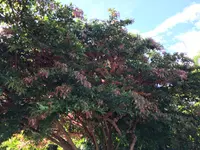
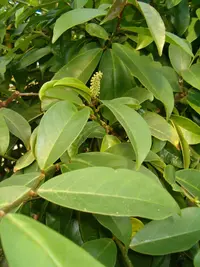
Zygia longifolia is a tropical legume tree, usually medium-sized, with a light, open crown and fine, feathery leaves that give it a delicate look. It often produces small, fluffy flower clusters followed by narrow seed pods, typical of many members of the pea family.
This species is native to Central and South American forests and river edges, where it grows in warm, humid conditions. In cultivation, it prefers bright light, regular moisture, and well-drained soil, and understanding these natural conditions helps guide how to care for Zygia longifolia.
Growth is usually fast in suitable climates, but its size and need for warmth make it better suited to outdoor planting in frost-free regions or large protected spaces.

Care Difficulty
Moderate Care

Light Preference
Partial Sun

Water Requirements
Moderate Water

Temperature Preference
Tropical / Frost Sensitive

Hardiness Zone
10–12

Soil Texture
Loamy, Sandy, Organic-rich

Soil pH
Acidic (5.5–6.5), Slightly acidic (6.5–7.0)

Soil Drainage
Moist but well-drained

Fertilization
Minimal (feed rarely)
Scan your plant to receive care tips personalized for your specific plant
Available on iOS and Android
This species prefers bright, indirect light with some gentle direct sun in suitable climates.
This tree prefers evenly moist, well‑drained soil rather than constant saturation.
This species prefers warm, frost‑free conditions typical of lowland tropics and subtropics.
This species benefits from moderate, stable air moisture but usually adapts to typical indoor levels.
Provide a loose, well-drained yet moisture-retentive substrate for healthy root development in Zygia longifolia.
This species can adapt to container culture when the pot supports its root spread and above-ground mass.
This leguminous tree usually needs minimal feeding, since it can fix atmospheric nitrogen through root nodules.
Pruning Zygia longifolia helps maintain a stable framework and safe clearance in landscape settings.
This species is typically grown as a landscape tree, so guidance focuses on transplanting rather than routine repotting.
Propagation of Zygia longifolia is usually done from seed, with vegetative methods used less often.
In mild to warm climates this tree needs minimal winter intervention once established.

Plant Health Check
Not sure what's wrong with your plant? Check your plant's health inside the app.
This small tree naturally occurs along lowland rivers and periodically flooded areas in Central and northern South America, often forming part of riparian gallery forests that help stabilize banks and reduce erosion.
It bears pale, powderpuff-like flower heads with many long stamens that typically open at night, releasing scent and nectar that attract moths and nocturnal insects as pollinators.
As a member of the legume family, it forms root nodules with symbiotic bacteria capable of fixing atmospheric nitrogen, which can improve soil fertility for nearby plants in its native habitats.

In some parts of its range, this species is considered an important component of secondary forest and riverine regeneration, because its relatively fast early growth and nitrogen-fixing ability allow it to establish in disturbed, nutrient-poor soils and facilitate the return of other native trees.
This species is moderate to fast-growing in warm climates, often adding 30–90 cm of height per year once established. Growth slows in poor soil, cool temperatures, drought, or when rootbound in a container.
Keep your plants happy and healthy with plant identification, disease detection, and easy care guidance.