Shelter From Wind
Plant in a position shielded from strong, drying winds or use a temporary windbreak for young trees, as the flexible branches and glossy leaves can scorch or tear in exposed coastal or rooftop sites.

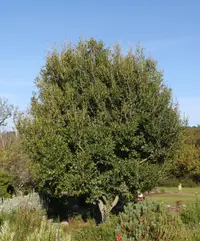
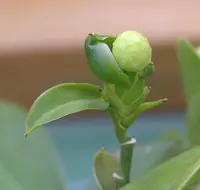
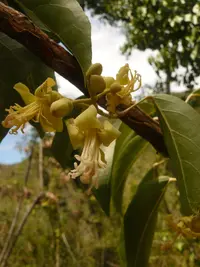
White pear, Apodytes dimidiata, is an evergreen tree or large shrub grown for its dense glossy foliage and clusters of small white flowers. In gardens it is often used as a screening or shade tree, developing a neat, rounded crown with age.
This species is native to southern and eastern Africa, where it grows in forest margins and coastal thickets. It adapts well to mild, frost-free climates and copes with occasional dry spells once established.
Growth is moderate and generally reliable if the plant receives good light, well-drained soil, and regular moisture during the first years. These traits make it relatively straightforward to care for White Pear in suitable outdoor climates.

Care Difficulty
Moderate Care

Light Preference
Partial Sun

Water Requirements
Moderate Water

Temperature Preference
Tropical / Frost Sensitive

Hardiness Zone
10–11

Soil Texture
Sandy, Loamy, Organic-rich

Soil pH
Acidic (5.5–6.5), Slightly acidic (6.5–7.0)

Soil Drainage
Moist but well-drained

Fertilization
Minimal (feed rarely)
Scan your plant to receive care tips personalized for your specific plant
Available on iOS and Android
Apodytes dimidiata grows best with bright, gentle sun and some daily shade.
Apodytes dimidiata prefers evenly moist but not saturated soil once established.
This species is a mild-climate tree that dislikes frost and extreme heat stress.
This species is fairly tolerant but grows best in moderately humid air.
This tree prefers a well-structured, free-draining yet moisture-retentive substrate.
This species can be grown in large containers for many years if the pot is chosen and managed carefully.
Apodytes dimidiata is a modest feeder, so use light, steady nutrition rather than heavy fertilizing.
Apodytes dimidiata benefits from light, targeted pruning to maintain structure and health.
This tree is usually grown in the ground, so focus on careful transplanting of young Apodytes dimidiata rather than frequent repotting.
Apodytes dimidiata is usually propagated by seeds or semi-hardwood cuttings under controlled conditions.
Apodytes dimidiata is moderately frost sensitive and benefits from basic winter protection in cooler regions.

Plant Health Check
Not sure what's wrong with your plant? Check your plant's health inside the app.
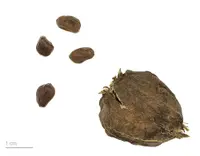
This species produces small black drupes with a persistent, enlarged white calyx on one side, creating a striking half-white, half-dark effect that attracts birds visually as the fruits ripen.
The tree occurs naturally from near sea level coastal forests up to montane forests around 1,800 m in parts of eastern and southern Africa, showing strong adaptability to different forest types and climates.
In its native range, the fleshy fruits are an important food source for several fruit-eating birds, which in turn disperse the seeds and help maintain forest regeneration dynamics.

In parts of southern Africa, this long-lived forest tree often persists as a scattered remnant when surrounding vegetation is cleared, acting as a structural refuge that can later facilitate the natural recovery of other forest species around it.
This species is generally moderate-growing, adding about 30–60 cm per year in suitable climates. In garden settings it often reaches 4–8 m tall and 3–5 m wide, forming a small to medium tree over time.
Keep your plants happy and healthy with plant identification, disease detection, and easy care guidance.