ratapple Care (Morisonia americana)

ratapple

About ratapple

Ratapple, Morisonia americana, is a small coastal shrub or subshrub native to Florida, the Caribbean, and parts of Central and South America. It is sometimes used in coastal plantings and restoration projects.

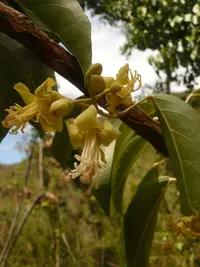
The plant typically has a dense, somewhat sprawling habit with small leaves and inconspicuous flowers, followed by fleshy fruit that attract wildlife. It is adapted to sandy, salty, and windy sites, which makes it relatively resilient once established.

Because it evolved in harsh coastal conditions, ratapple can be forgiving of poor soils and salt exposure but may be harder to maintain in cooler or very wet climates. To care for ratapple successfully, provide sun, well-drained soil, and avoid prolonged cold or waterlogging.

Main Plant Requirements

Care Difficulty

Moderate Care

Light Preference

Full Sun

Water Requirements

Moderate Water

Temperature Preference

Tropical / Frost Sensitive

Hardiness Zone

10–11

Soil Texture

Sandy, Loamy, Rocky

Soil pH

Slightly acidic (6.5–7.0), Neutral (7.0)

Soil Drainage

Well-drained

Fertilization

Minimal (feed rarely)

Get Personalized Care Plan

Scan your plant to receive care tips personalized for your specific plant

Available on iOS and Android

How to Care for the ratapple

Morisonia americana prefers bright, direct coastal sun but tolerates some light shade in hotter inland sites.

  • Provide 6–8 hours of full sun daily, ideally with morning sun and light afternoon shade where summers are very hot.
  • Inland or non-coastal plantings benefit from filtered light during the harshest midday hours to limit leaf scorch and moisture stress.
  • In partial shade, expect slower growth and fewer fruits on ratapple; prune surrounding vegetation if plants become leggy or foliage thins toward the interior.

This coastal shrub prefers evenly moist but well-drained soil and is moderately drought tolerant once established.

  • Allow the top 3–5 cm of soil to dry before deep watering, aiming for soil that feels slightly moist but never saturated around the root zone.
  • In hot, dry seasons, increase watering when leaves begin to lose gloss or slightly curl, a typical early sign of drought stress in Morisonia americana.
  • Avoid waterlogged sites; yellowing leaves, soft stems, or a sour smell from the soil indicate poor drainage and a high risk of root rot.

This species is a warm-climate shrub that thrives in mild coastal and subtropical conditions.

  • Optimal growth occurs around 70–85°F (21–29°C), where foliage and fruit development are most consistent.
  • Mature plants usually tolerate brief drops to about 30–32°F (-1–0°C), but young plants are more tender and can be damaged by light frost.
  • Extended exposure above 95°F (35°C) can cause stress; provide mulch to cool the root zone and reduce reflected heat from surrounding hard surfaces.

This coastal shrub tolerates a wide humidity range but grows best in moderately humid air.

  • Aim for 40–60% humidity to support steady foliage and flowering of ratapple.
  • Tolerates short periods of drier air, but prolonged <30% humidity may cause leaf tip browning and finer leaf drop.
  • Increase humidity outdoors with wind-sheltered planting spots and mulch; indoors, use a pebble tray or nearby humidifier rather than misting.

Morisonia americana prefers light, well-aerated, sandy to loamy soil that drains quickly.

  • Use a mix of 50–60% coarse sand, 20–30% loam or compost, and 10–20% perlite to keep the root zone open and oxygenated.
  • Aim for slightly acidic to neutral pH, around 6.0–7.0, to support nutrient availability without stressing the roots.
  • Ensure water drains freely within a few seconds; if it pools or lingers, increase sand or perlite content to improve structure.
  • Avoid heavy clay, waterlogged spots, or dense peat-based mixes that stay wet and promote root rot.

This species can be grown in containers when provided with a deep, stable setup that supports its shrubby, sometimes scrambling habit.

  • Choose a tall, heavy pot to counterbalance woody, lateral growth and reduce the risk of tipping in wind-exposed locations.
  • Select a mineral-based mix that dries within a few days, since containers hold water longer than sandy native soils.
  • Lift the container slightly on pot feet so drainage holes stay clear and runoff does not reabsorb into the root zone.

Morisonia americana, commonly called ratapple, grows well in modest soils and benefits from light, targeted feeding in cultivation.

  • Use a balanced slow-release fertilizer (around 10-10-10) or thin compost layer in spring to support new growth.
  • Apply granular product once at the start of the growing season; avoid multiple heavy feedings.
  • Dilute any liquid fertilizer to 1/2 strength and apply to moist soil only, never to dry roots.
  • Reduce or stop feeding in late fall and winter when growth slows or stops.

Pruning Morisonia americana is mainly done to maintain structure and remove damaged growth.

  • Schedule main pruning for late winter or very early spring before strong new growth begins.
  • Remove dead, diseased, crossing, or inward-growing branches to improve light and air movement.
  • Thin crowded stems rather than shearing, which preserves the plant’s natural form and flowering potential.
  • Use clean, sharp bypass pruners and make angled cuts just above outward-facing buds or side branches.

This species is usually grown in the ground, so management focuses on careful transplanting rather than frequent repotting.

  • Transplant young Morisonia americana in late winter or early spring while still dormant to reduce stress.
  • Look for signs such as roots circling the container, slow growth, or frequent drying as cues a potted plant needs a larger container.
  • Move up only 1 pot size, gently loosen circling roots, and set at the same soil depth as before.
  • Water thoroughly after planting, then keep soil evenly moist and shaded for 1–2 weeks to help roots re-establish.

Morisonia americana is most often propagated by seeds or semi-ripe cuttings under controlled conditions.

  • Collect ripe seeds, clean them, and sow in a well-drained medium; a brief cool stratification period can improve germination.
  • Take semi-ripe stem cuttings in late spring or early summer, 8–12 cm long, with several nodes.
  • Insert cuttings in a sterile, moist, free-draining mix, using rooting hormone to improve success rates.
  • Provide bright, indirect light, high humidity, and stable warmth around 70–75°F until roots form.

This species is fairly cold hardy in its native range and usually needs minimal winter care once established in the landscape.

  • In cooler zones or exposed sites, add a 5–8 cm mulch layer over the root zone, keeping it away from the stem.
  • Young or marginally hardy plants benefit from windbreaks or burlap wraps around the lower canopy.
  • Container-grown plants in colder climates can be moved into a cold, bright, frost-free space until spring.

Care Tips

Salt‑tolerant placement

Use this shrub as a windbreak or front-line planting in coastal sites where salt spray damages less tolerant species, since it naturally withstands salt exposure and helps protect more sensitive plants behind it.

Thicket renewal cut

Every 3–4 years, remove 20–30% of the oldest stems right at the base to keep the shrub dense, improve air flow, and encourage vigorous new growth for better flowering and fruiting.

Wildlife‑friendly spacing

Plant several individuals 1.5–2 m apart to form a loose hedge that supports pollinators and birds, while still allowing enough space between plants for light penetration and easy access for pruning and inspection.

Sand stabilization use

On loose, sandy sites, position plants in staggered rows along slopes or dune edges so the deep root system helps anchor soil and reduce erosion over time.

Low‑input groundcover

In nutrient-poor, dry coastal soils, allow basal suckers to fill in around the main plant to develop a low-maintenance, living ground layer that suppresses weeds with minimal additional inputs when growing ratapple.

Common Pests and Diseases

Leaf miners

This pest creates winding, pale tunnels inside the leaves, which can make the foliage look blotchy and thin. Symptoms include reduced vigor on young ratapple shrubs when infestations are heavy.

Solution

Remove and discard leaves that show fresh mines to reduce larval numbers, and encourage natural predators by avoiding broad-spectrum insecticides. For repeated damage on young plants, use a targeted systemic insecticide labeled for leaf miners according to label directions, focusing on new growth flushes.

Scale insects

These insects attach along stems and leaf midribs, appearing as small, rounded or oval bumps that excrete sticky honeydew. Symptoms include sooty mold growth on the honeydew and gradual decline in vigor.

Solution

Prune and discard heavily infested twigs, then wipe remaining colonies with a cotton pad dipped in diluted alcohol or a mild insecticidal soap solution. For larger outdoor shrubs, apply horticultural oil during mild weather to smother scales, repeating as needed while monitoring for beneficial insects.

Leaf spot

This disease causes small to medium brown or purplish spots on leaves, sometimes with a yellow halo, which can coalesce and lead to premature leaf drop. Symptoms include a thinned canopy on stressed or crowded plants, especially after warm, wet periods.

Solution

Collect and dispose of fallen leaves, and thin surrounding vegetation to improve airflow and faster leaf drying. If leaf spot recurs each season, apply a copper-based or other labeled ornamental fungicide at the start of new growth and after heavy rains, following label instructions carefully.

Sooty mold

This disease appears as a black, soot-like coating on leaves and stems that grows on honeydew excreted by sap-sucking insects such as scale or whiteflies. Symptoms include reduced photosynthesis and a dull, dirty appearance of the foliage.

Solution

First manage the honeydew-producing insects by using targeted controls such as horticultural oils or insecticidal soaps. Once insect pressure is reduced, gently wash affected leaves with a soft cloth and water, and improve light and airflow so new, clean growth can develop.

Interesting Facts

Coastal dune specialist

This species naturally grows in coastal dunes and sandy scrub from Florida through the Caribbean into Central and northern South America, where its deep roots help stabilize loose, shifting sands.

Edible seagrape relative

Morisonia americana belongs to the family Nyctaginaceae and produces fleshy, grape-like fruits that are eaten locally by people and wildlife, giving rise to common names such as ratapple and sea grape even though it is not a true grapevine.

Flexible growth form

In exposed coastal sites it often grows as a low, wind-sculpted shrub, but in more sheltered conditions it can develop into a small tree, showing strong plasticity in response to wind and salt exposure.

Botan icon

Did you know?

Genetic and morphological studies have led to several taxonomic changes for this species, which was long placed in the genus Coccoloba but is now recognized in Morisonia, reflecting a better understanding of its evolutionary relationships within the Nyctaginaceae.

FAQs about ratapple

This species usually forms a loose, shrubby clump rather than running aggressively. It can self-seed where conditions suit it, but seedlings are generally easy to remove or relocate if they appear in unwanted spots.

Grow Healthy Plants with Botan Care

Keep your plants happy and healthy with plant identification, disease detection, and easy care guidance.

Botan plant care app — identify plants on mobile

Explore More Plants