Manage Fruit Load
After natural fruit drop, thin clusters so fruits are spaced 7–10 cm apart to prevent limb breakage and improve final fruit size and quality.

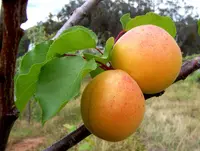
Apricot, Prunus armeniaca, is a deciduous fruit tree grown for its sweet, aromatic orange drupes. It typically forms a small to medium tree with a rounded, spreading crown and smooth, grayish bark. Leaves are oval, finely serrated, and turn warm colors in autumn.
This species is native to Central Asia and western China but is now widely cultivated in temperate regions. It prefers full sun, moderate moisture, and well-drained, fertile soil. Flowering occurs in early spring on bare branches, which makes it sensitive to late frosts.
Yields can be high, but productive growth depends on suitable climate, correct pruning, and frost protection. Understanding how to care for apricot helps maintain tree health and consistent fruiting over many years.

Care Difficulty
Moderate Care

Light Preference
Full Sun

Water Requirements
Moderate Water

Temperature Preference
Cold Hardy

Hardiness Zone
5–8

Soil Texture
Sandy, Loamy, Clay

Soil pH
Acidic (5.5–6.5), Slightly acidic (6.5–7.0)

Soil Drainage
Well-drained

Fertilization
Minimal (feed rarely)
Scan your plant to receive care tips personalized for your specific plant
Available on iOS and Android
Sunlight strongly influences flowering, fruiting, and overall vigor in this species.
Watering aims to support deep rooting while avoiding waterlogged soil for Prunus armeniaca.
Temperature strongly affects growth, flowering, and fruit reliability in this tree.
This species tolerates a wide humidity range and usually does not need special humidity management outdoors.
Prunus armeniaca prefers deep, well‑drained, moderately fertile soil that stays aerated and never waterlogged.
This species can be grown in containers when managed as a dwarf or patio tree.
Fruit production improves when Prunus armeniaca receives moderate, targeted feeding during the growing season.
Prunus armeniaca benefits from structured pruning to support healthy growth, light penetration, and fruit quality.
Transplanting young apricot trees carefully helps establish a stable root system and long-term structure.
Prunus armeniaca is usually propagated by grafting onto suitable rootstocks rather than from seeds for consistent fruit quality.
Established apricot trees are moderately cold hardy but benefit from some targeted winter care in colder regions.

Plant Health Check
Not sure what's wrong with your plant? Check your plant's health inside the app.
This apricot species is believed to have originated in the mountainous regions of Central Asia, particularly around present-day Kazakhstan, China, and Kyrgyzstan, before spreading along ancient trade routes. Archaeological evidence shows it was cultivated in these areas thousands of years ago.
Apricot trees flower very early in spring, often before leaf-out, which makes them highly vulnerable to late frosts. This sensitivity strongly influences where commercial orchards can be successfully located.
The fruit stone contains a kernel that looks similar to an almond, and in some traditional cuisines, selected sweet-kernel types are used for confectionery and flavoring. However, bitter kernels contain higher levels of amygdalin, a cyanogenic compound that can release toxic hydrogen cyanide when eaten in excess.

The species name armeniaca reflects an old belief that apricots came from Armenia, and historical records confirm that Armenia was one of the earliest regions where this tree was extensively grown and traded into the Mediterranean world, giving it a long cultural history relative to many other temperate fruit crops.
Yellowing leaves usually result from water stress, poor drainage, nutrient deficiency (especially nitrogen or iron), or root damage. Check soil moisture, improve drainage, inspect roots, and consider a balanced fertilizer after ruling out pests and disease.
Keep your plants happy and healthy with plant identification, disease detection, and easy care guidance.