Scent-focused siting
Place shrubs near paths, patios, or entryways so the spicy fragrance and dark flowers are noticeable at nose height, and avoid exposed, windy spots that quickly disperse the scent.

Carolina allspice, Calycanthus floridus, is a deciduous flowering shrub valued for its aromatic bark and distinctive, spicy-scented, burgundy-red blooms. It typically forms a rounded, dense shape with multiple stems and medium-green leaves that turn yellow in fall.
This species is native to the southeastern United States, where it grows in woodland edges and along stream banks. It is generally considered easy to grow, as it tolerates a range of soils and is adaptable once established.
For best results, provide light shade to sun, evenly moist but well-drained soil, and avoid extreme drought. Understanding how to care for Carolina allspice helps it develop strong growth and reliable flowering.

Care Difficulty
Easy Care

Light Preference
Partial Shade

Water Requirements
Moderate Water

Temperature Preference
Cold Hardy

Hardiness Zone
4–9

Soil Texture
Loamy, Clay, Organic-rich

Soil pH
Acidic (5.5–6.5), Slightly acidic (6.5–7.0)

Soil Drainage
Moist but well-drained

Fertilization
Minimal (feed rarely)
Scan your plant to receive care tips personalized for your specific plant
Available on iOS and Android
Calycanthus floridus thrives in sites with moderate sun and some daily shade.
This shrub prefers evenly moist, well-drained soil that never stays saturated for long.
This deciduous shrub is hardy in temperate climates and tolerates a broad temperature range outdoors.
This shrub grows well in typical outdoor humidity and does not have strict moisture-in-air demands.
This species prefers deep, loamy, moisture-retentive but well-drained soil for stable growth.
This species can be grown in large containers, though it performs best when given ample root volume and stability outdoors.
Calycanthus floridus is a native shrub that needs only light, targeted feeding in most garden soils.
Pruning Calycanthus floridus is mainly done to maintain shape and remove weak growth rather than to control size aggressively.
This shrub is usually grown in the ground, so focus on careful transplanting rather than frequent repotting.
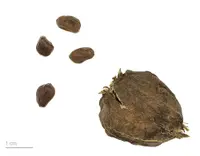
Calycanthus floridus is commonly propagated from semi-ripe cuttings, seeds, or simple layering.
This shrub is generally cold hardy in typical garden climates and needs only modest winter attention.

Plant Health Check
Not sure what's wrong with your plant? Check your plant's health inside the app.
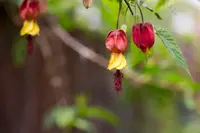
The maroon, strap-like flowers often release a complex scent described as a mix of strawberry, overripe melon, and wine, and individual plants can differ noticeably in intensity and aroma profile.
When the twigs or bark are scratched, they typically release a spicy, resinous smell that many people compare to pineapple or camphor, due to aromatic compounds stored in the wood.
The shrub was cultivated in North American gardens by the 18th century and was valued by early settlers for its fragrant flowers and aromatic wood, long before many Asian ornamentals became popular.

Historical records show that Indigenous peoples in the southeastern United States sometimes used the strongly scented wood of this shrub as a substitute for cinnamon or spice-scented materials, taking advantage of its naturally aromatic bark and twigs.
Lack of flowers is often due to immature age, heavy pruning at the wrong time, or excess shade. Avoid hard pruning after late summer and ensure the shrub has enough light and balanced nutrition to set buds.
Keep your plants happy and healthy with plant identification, disease detection, and easy care guidance.