Chacruna Care (Psychotria viridis)

Chacruna

About Chacruna

Chacruna (Psychotria viridis) is a tropical evergreen shrub from the Amazon basin and surrounding rainforest regions of South America. It is usually grown for its glossy foliage rather than for ornamental flowers.

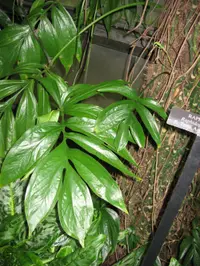
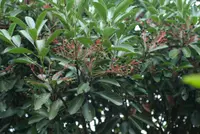
The plant forms a medium-height shrub with thin stems, smooth green bark, and opposite, lance-shaped leaves that are thin but firm. In cultivation it prefers warm, humid conditions similar to a greenhouse or shaded tropical garden.

Chacruna can be moderately challenging, as it dislikes cold, dry air, and strong sun, and reacts poorly to drought or waterlogging. Those factors largely determine how to care for Chacruna successfully.

Main Plant Requirements

Care Difficulty

Hard Care

Light Preference

Partial Shade

Water Requirements

Keep Soil Moist

Temperature Preference

Tropical / Frost Sensitive

Hardiness Zone

11–12

Soil Texture

Loamy, Peaty, Organic-rich

Soil pH

Strongly acidic (4.5–5.5), Acidic (5.5–6.5)

Soil Drainage

Moist but well-drained

Fertilization

Light (every 4–6 weeks)

Get Personalized Care Plan

Scan your plant to receive care tips personalized for your specific plant

Available on iOS and Android

How to Care for the Chacruna

Psychotria viridis grows best in bright, filtered light that mimics an understory rainforest habitat.

  • Provide 3–5 hours of gentle morning sun with dappled or filtered shade the rest of the day, especially in warm climates.
  • Protect Chacruna from strong midday and afternoon sun, which can cause leaf scorch, yellowing, and crispy edges.
  • In deep shade growth becomes sparse and leggy; move the plant where foliage receives bright indirect light, especially in winter at higher latitudes.

Watering for Psychotria viridis should keep the root zone moist but never saturated.

  • Allow the top 2–3 cm of soil to dry slightly before watering again, using your finger to check moisture rather than a fixed schedule.
  • Use loose, well-draining soil so excess water runs out quickly, helping prevent root rot, foul smells, and blackening stems from waterlogging.
  • In warmer months expect faster drying and more frequent watering; in cooler seasons slow down if leaves droop from cold, wet soil rather than dryness.

Stable warm temperatures are essential for strong growth and leaf health.

  • Aim for 70–85°F (21–29°C) for active growth; the plant slows below 68°F (20°C) and may drop leaves if kept cool for long periods.
  • Protect from cold: growth is damaged below 50°F (10°C) and plants can die near 40°F (4°C), so avoid exposure to frost or cold drafts.
  • High heat above 90°F (32°C) is tolerated if humidity stays high and soil does not dry out completely; increase shade and airflow during heatwaves.

This species prefers consistently high humidity to maintain healthy foliage and growth.

  • Aim for 60–80% humidity, which more closely mimics the native understory conditions of Chacruna.
  • Leaf edges browning, curling, or developing dry patches indicate humidity stress rather than underwatering.
  • Increase humidity with a nearby humidifier, grouped plants, and a pebble tray kept filled so water evaporates around the plant, not into the root zone.

This plant performs best in moist, airy, organic-rich soil that mimics a forest floor.

  • Use a loose, loamy mix of roughly 50% peat or coco coir, 25% compost, and 25% perlite or fine bark for structure and aeration.
  • Ensure fast but even drainage so the substrate stays lightly moist without waterlogging or forming soggy pockets around roots.
  • Target slightly acidic pH around 5.5–6.5, which supports nutrient uptake typical for Psychotria viridis in its native habitat.
  • Avoid heavy clay, compacted mixes, or pure sand, which either suffocate roots or dry too fast and destabilize moisture levels.

This species is suitable for container growing when the pot supports steady moisture and root aeration.

  • Choose a deep, slightly wider pot to allow the fine, fibrous roots to spread without circling tightly near the walls.
  • Select thicker-walled plastic or glazed ceramic if outdoor conditions are windy, as these materials stabilize moisture and reduce rapid drying.
  • Place the container in a sheltered position where it cannot tip, since the leafy upper growth can become top-heavy relative to the root mass.

Psychotria viridis responds well to light, consistent feeding during its active warm-season growth.

  • Use a balanced liquid NPK fertilizer at 1/4–1/2 strength every 3–4 weeks in spring and summer.
  • Supplement with a thin layer of fine compost on the soil surface once or twice per year for micronutrients.
  • Pause or reduce feeding to once every 6–8 weeks at very low strength during cool, low-light months.
  • Flush the pot with plain water every 6–8 weeks to prevent salt buildup, especially when caring for Chacruna.

Psychotria viridis benefits from occasional structural pruning to maintain a compact, leafy form.

  • Carry out light pruning in late winter or early spring before vigorous new growth starts.
  • Remove dead, diseased, or crossing stems first, then thin crowded interior shoots to improve airflow.
  • Tip back overly long branches to encourage bushier side shoots and denser foliage.
  • Use clean, sharp scissors or pruners, disinfected between plants to limit disease spread.

This species adapts well to containers and appreciates thoughtful repotting to prevent root binding.

  • Check for roots circling the pot, pushing through drainage holes, or for slow growth and quick drying soil.
  • Plan to move to a pot 2–5 cm wider every 1–2 years in spring, when active growth supports recovery.
  • Gently loosen circling roots and remove a small amount of old soil, keeping the root ball mostly intact.
  • Water thoroughly after potting, keep in bright shade for 5–7 days, and avoid fertilizing for about 2 weeks to reduce stress.

New plants of Psychotria viridis are most often produced from semi-hardwood stem cuttings under warm, humid conditions.

  • Take 8–12 cm semi-ripe cuttings in late spring or early summer with at least 2–3 leaf nodes.
  • Remove lower leaves, lightly wound the base, and dip in rooting hormone to improve root formation.
  • Insert cuttings into a sterile, very well-drained mix and maintain 75–85°F, high humidity, and bright shade.
  • Seeds can be sown fresh in warm conditions, but germination is slower and less predictable than cuttings.

This tropical plant is frost-sensitive and needs active winter management in most non-tropical climates.

  • Avoid exposure below about 40°F; freezing temperatures can kill foliage and stems.
  • Move container plants indoors or into a heated greenhouse before first frost is forecast.
  • Provide bright indirect light indoors and keep soil just slightly moist, never waterlogged.
  • Outdoors in very mild climates, use a light mulch to buffer root temperatures and conserve moisture.

Care Tips

Wind protection

Shelter plants from strong or drying winds with a fence, hedge, or shade cloth barrier because their thin leaves scorch and desiccate quickly in exposed spots when growing Chacruna outdoors.

Understory positioning

Plant near taller shrubs or small trees to mimic a forest understory, using their filtered shade and wind protection to reduce stress and leaf burn.

Gradual light acclimation

When moving a plant from indoors to outdoors or to a brighter spot, increase light over 7–10 days by shifting it a little closer to the light source every 2–3 days to avoid sudden leaf scorch.

Root-zone mulching

Apply a 2–3 cm layer of fine bark or leaf mulch around the root zone, keeping it 2–3 cm away from the stem, to stabilize soil moisture and temperature without causing rot.

Sanitary propagation practice

When taking cuttings, always use a sterile, sharp blade and remove lower leaves so no foliage sits in the rooting medium, which reduces fungal problems and improves strike rate.

Common Pests and Diseases

Spider mites

This pest appears in warm, dry indoor or greenhouse conditions and feeds on the undersides of leaves, causing fine stippling, dulling, and webbing on Psychotria viridis foliage. Symptoms include slowed growth, leaf yellowing, and in severe cases partial defoliation.

Solution

Rinse leaves thoroughly with lukewarm water, focusing on the undersides, and repeat every few days to disrupt the life cycle. Increase humidity, isolate the plant, and if populations persist, use a gentle insecticidal soap or horticultural oil labeled for mites, applied according to the product directions.

Scale insects

These insects attach firmly to stems and leaf veins as small brown or tan bumps, sucking sap and weakening the plant. Symptoms include sticky honeydew on leaves, sooty mold growth, and gradual yellowing or dieback of affected stems.

Solution

Physically remove visible scale with a cotton swab dipped in alcohol or by gently scraping with a fingernail, then prune heavily infested twigs. Follow up with repeated applications of horticultural oil or insecticidal soap, ensuring thorough coverage of stems and leaf undersides over several weeks.

Mealybugs

This pest shows up as white, cottony clusters in leaf axils, on stems, and near new growth, feeding on plant sap. Symptoms include distorted young leaves, sticky honeydew, and general decline if populations are not controlled.

Solution

Isolate the plant, then dab visible mealybugs with a cotton swab dipped in alcohol and rinse foliage with lukewarm water. Continue with weekly treatments of insecticidal soap or neem oil, paying special attention to crevices and new shoots until no new insects appear.

Leaf spot (fungal)

This disease produces small water-soaked or dark brown spots on leaves that may enlarge and merge, sometimes with a yellow halo. Symptoms include premature leaf drop on stressed or densely grown plants, especially under high humidity with poor air movement.

Solution

Remove and discard affected leaves, avoid overhead watering, and improve spacing and airflow around the plant. If new spots continue to appear, use a copper-based or other broad-spectrum fungicide labeled for leaf spot on ornamentals, following the instructions closely.

Bacterial leaf blight

This disease causes irregular, often angular, water-soaked lesions on leaves that can turn dark, sometimes with a greasy appearance and yellow margins. Symptoms include rapid spread in warm, humid conditions and sudden leaf loss starting from the lower canopy.

Solution

Promptly prune and discard infected leaves and any severely affected stems, disinfecting tools between cuts with alcohol. Reduce humidity on foliage by watering at the soil level, increase air circulation, and avoid overhead misting; if the plant remains badly affected, consider restarting from healthy cuttings as part of careful Psychotria viridis plant care.

Interesting Facts

Native Amazon understory shrub

This species naturally grows as a small shrub in the shaded understory of Amazon and western Amazonian rainforests, where it is adapted to warm, humid, low-light conditions beneath taller trees.

Specialist seed dispersal

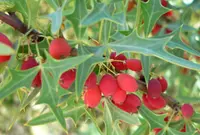
Its small red berries are eaten by birds that disperse the seeds, and passage through a bird’s digestive system helps weaken the seed coat and improves germination in the wild.

Notable alkaloid producer

The leaves contain the indole alkaloid N,N-dimethyltryptamine (DMT), which is one of the reasons this species has been of particular interest in ethnobotany and plant chemistry research.

Botan icon

Did you know?

Psychotria viridis forms part of a well-documented traditional botanical pairing in parts of the western Amazon, where its leaves are combined with a separate woody vine species to create a culturally important ritual decoction that has been the subject of substantial anthropological and pharmacological study.

FAQs about Chacruna

Yellowing leaves usually come from overwatering, poor drainage, or nutrient imbalance. Check that the pot drains well, let the top layer of soil dry slightly between waterings, and provide a balanced, dilute fertilizer during active growth.

Grow Healthy Plants with Botan Care

Keep your plants happy and healthy with plant identification, disease detection, and easy care guidance.

Botan plant care app — identify plants on mobile

Explore More Plants