Provide climbing support
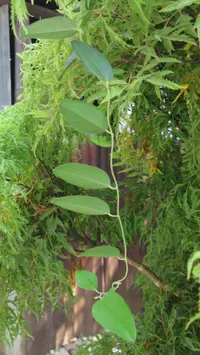
Offer a sturdy moss pole or rough wooden plank and loosely tie new vines as they elongate so the plant can climb, which encourages larger, better-shaped leaves and stronger growth.

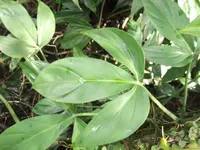
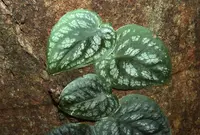
Philodendron tripartitum is a tropical aroid grown mainly for its long, deeply lobed leaves and climbing habit. It is often used as a statement foliage plant indoors. In nature it occurs in humid tropical forests of Central and South America, where it scrambles up trees and receives filtered light. The plant produces thick, vining stems and aerial roots that attach to supports, giving it a bold, architectural look as it matures. It is considered moderately easy to grow when its basic needs are met, so learning how to care for Philodendron tripartitum focuses on stable warmth, evenly moist but not waterlogged soil, and good indirect light.

Care Difficulty
Moderate Care

Light Preference
Bright Indirect Light

Water Requirements
Moderate Water

Temperature Preference
Tropical / Frost Sensitive

Hardiness Zone
10–11

Soil Texture
Loamy, Peaty, Organic-rich

Soil pH
Acidic (5.5–6.5), Slightly acidic (6.5–7.0)

Soil Drainage
Moist but well-drained

Fertilization
Light (every 4–6 weeks)
Scan your plant to receive care tips personalized for your specific plant
Available on iOS and Android
This aroid prefers bright, filtered light that mimics a forest understory.
Watering should keep the root zone moist but never saturated.
Stable, warm conditions support steady growth and reduce stress.
This species benefits from moderately high, stable humidity to keep foliage healthy and growth steady.
Philodendron tripartitum prefers a loose, airy, organic-rich mix that drains quickly but does not dry out instantly.
This species is well suited to container growing when the pot supports climbing growth and stable moisture levels.
Balanced, moderate feeding supports steady growth and healthy foliage in Philodendron tripartitum.
Thoughtful pruning keeps Philodendron tripartitum compact, tidy, and structurally strong.
Container-grown Philodendron tripartitum benefits from periodic repotting to refresh soil and manage root growth.
New plants of Philodendron tripartitum are most often produced from stem cuttings taken from healthy vines.
This tropical species lacks frost tolerance and needs warm, stable conditions in winter.

Plant Health Check
Not sure what's wrong with your plant? Check your plant's health inside the app.
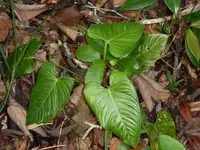
Mature plants develop long, narrow leaves that split into three deep lobes, a trait that helps distinguish this species from many heart-leaf philodendrons and likely improves light capture in its native forest habitat.
This species often starts life on the forest floor and then climbs trees as a hemiepiphyte, producing strong aerial roots that anchor it to bark and allow it to reach higher light levels in the canopy.
It is naturally found in lowland to mid-elevation tropical forests of Central America, where it grows in warm, humid, shaded environments typical of understory aroids.
This species is a climbing aroid that produces long vines and aerial roots, using tree trunks, moss poles, or trellises for support. In containers without support, stems may trail or flop rather than form upright growth.
Keep your plants happy and healthy with plant identification, disease detection, and easy care guidance.