


Robust support system
Install a sturdy trellis, wire mesh, or pergola before planting so the vine can be tied in loosely with soft ties as it grows, preventing stem breakage and helping to distribute weight evenly over time.

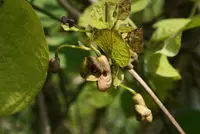
Pipevine, Aristolochia macrophylla, is a vigorous deciduous vine grown mainly for its large, heart-shaped leaves that create a dense, shady screen. It climbs by twining stems and can quickly cover trellises, fences, or arbors, giving strong visual impact in summer.
This species is native to eastern North America, where it naturally occurs in moist woodlands and along stream banks. It tends to be fairly robust once established, though its fast growth and size mean it needs space and support.
Understanding how to care for pipevine starts with its preferences for consistent moisture, humus-rich soil, and dappled to part shade, similar to a woodland edge environment.

Care Difficulty
Moderate Care

Light Preference
Partial Shade

Water Requirements
Regular Water

Temperature Preference
Cold Hardy

Hardiness Zone
4–8

Soil Texture
Loamy, Clay, Organic-rich

Soil pH
Acidic (5.5–6.5), Slightly acidic (6.5–7.0)

Soil Drainage
Moist but well-drained

Fertilization
Minimal (feed rarely)
Scan your plant to receive care tips personalized for your specific plant
Available on iOS and Android
This deciduous vine prefers bright, indirect exposure with some direct morning sun.
This vigorous climber prefers evenly moist but not waterlogged soil.
This hardy vine tolerates cold winters but grows best in moderate temperatures.
This vine tolerates a broad humidity range but grows best with moderate ambient moisture.
This species prefers evenly moist, deep, loamy soil that holds water yet drains freely.
This vine can be grown in containers if the pot provides stability and room for vigorous roots.
Aristolochia macrophylla benefits from modest feeding but often grows well in reasonably fertile garden soil.
Pruning Aristolochia macrophylla helps manage its vigorous growth and maintain a functional, leafy screen.
This vigorous vine is usually grown in the ground, with transplanting more common than container repotting.
Aristolochia macrophylla is most reliably propagated by layering and softwood cuttings under controlled conditions.
This vine is generally cold hardy in much of the US and needs only modest winter attention once established.

Plant Health Check
Not sure what's wrong with your plant? Check your plant's health inside the app.
Its pipe-shaped flowers emit a musty scent and have inward-pointing hairs that temporarily trap small flies, releasing them only after the flower’s pollen has attached to the insects.
This woody vine produces very large, overlapping heart-shaped leaves that can quickly form a thick summer screen, historically used on verandas and porches to create shade before air conditioning was common.
The foliage is a primary larval host for the pipevine swallowtail butterfly (Battus philenor); caterpillars feed on the leaves and, in turn, become important warning-colored models for mimicry in several other butterfly species.

The heart-shaped leaves of Aristolochia macrophylla can grow so large and dense on pergolas and trellises that they measurably cool shaded surfaces beneath them, which is why it was once widely planted around homes in eastern North America as a natural cooling system before mechanical air conditioning became available.
The flowers emit a faint scent and have a tubular shape that mainly attracts small flies and gnats rather than bees. The foliage is an important larval food source for pipevine swallowtail butterflies, which may visit gardens where this vine is established.
Keep your plants happy and healthy with plant identification, disease detection, and easy care guidance.

 POPULAR
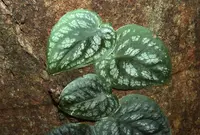
shingles plant
Monstera dubia
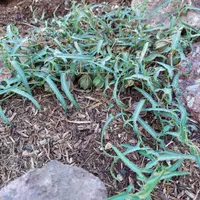
Watson's dutchman's pipe
Aristolochia watsonii
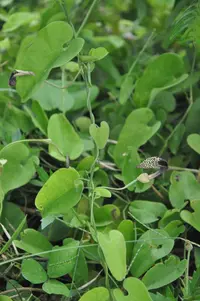
Aristolochia taliscana
Aristolochia taliscana
Aristolochia pallida
Aristolochia pallida
Yellow Birthwort
Aristolochia lutea
miracle fruit
Gymnema sylvestre
southern balsampear
Momordica balsamina
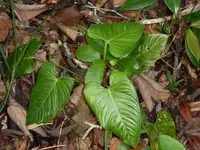
Philodendron ornatum
Philodendron ornatum