


Provide sturdy support
Install a strong, weather-resistant trellis or wire mesh before planting so the vine can attach early and develop evenly spaced, well-supported stems as it matures.

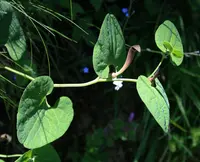
Yellow birthwort (Aristolochia lutea) is a scrambling or climbing perennial often grown for its unusual, tubular yellow flowers and twining stems. It is typically found in dry, rocky or scrubby habitats in parts of southern and eastern Europe.
The plant clings to supports and can form a loose cover on fences or shrubs when given something to climb. It prefers sun to light shade, moderately moist but well-drained soil, and does best in conditions that are not waterlogged.
Many gardeners care for Yellow Birthwort as a niche ornamental, as it can be slower to establish and needs space to climb, but it is not generally demanding once settled.

Care Difficulty
Moderate Care

Light Preference
Partial Sun

Water Requirements
Moderate Water

Temperature Preference
Warm Climate

Hardiness Zone
7–10

Soil Texture
Sandy, Loamy, Organic-rich

Soil pH
Slightly acidic (6.5–7.0), Neutral (7.0)

Soil Drainage
Moist but well-drained

Fertilization
Minimal (feed rarely)
Scan your plant to receive care tips personalized for your specific plant
Available on iOS and Android
This twining vine performs best in bright, outdoor light conditions with some protection from extreme midday sun.
This species prefers consistently moist but not waterlogged soil, especially during active growth.
This vine prefers mild to warm conditions and tolerates a moderate range once established outdoors.
This species grows well in typical outdoor humidity but benefits from moderate moisture in the air.
Aristolochia lutea prefers moist, well-structured soil that stays aerated yet never waterlogged.
This vine is suitable for container growing when given enough root space and support.
This species grows in modest soils and benefits from light feeding rather than heavy fertilization.
Pruning helps keep Aristolochia lutea vines manageable and encourages healthy flowering wood.
This vine is most often grown in the ground, with transplanting focused on young plants rather than mature clumps.
Aristolochia lutea is commonly propagated from seed and by softwood cuttings under suitable conditions.
This hardy perennial vine tolerates typical temperate winters with minimal intervention once established.

Plant Health Check
Not sure what's wrong with your plant? Check your plant's health inside the app.
The yellow, tubular flowers emit a faint scent and have a constricted throat with inward-pointing hairs that temporarily trap small flies, which then leave dusted with pollen once the hairs relax.
This species is naturally distributed in parts of Central and Southeastern Europe, typically occurring in dry, open grasslands, rocky slopes, and steppe-like habitats with well-drained soils.
After flowering, it forms pendulous, ribbed capsules that open with several longitudinal splits, releasing numerous small, flat seeds that can be dispersed by wind and gravity from the hanging structures.

Several Aristolochia species, including Aristolochia lutea, are known to contain aristolochic acids, a group of natural compounds that have been intensively studied due to their strong toxicity and carcinogenic potential in humans.
This species can self-seed and spread by creeping stems, but it is usually moderate rather than rampant in well-managed gardens. Regular deadheading and removal of unwanted shoots keep it in bounds and prevent unwanted spread into nearby beds.
Keep your plants happy and healthy with plant identification, disease detection, and easy care guidance.

miracle fruit
Gymnema sylvestre
scarlet spiderling
Boerhavia coccinea
Philodendron ornatum
Philodendron ornatum
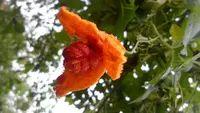
southern balsampear
Momordica balsamina
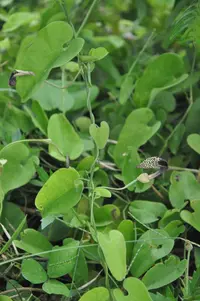
Aristolochia taliscana
Aristolochia taliscana
 POPULAR
Arrowhead Vine
Syngonium podophyllum
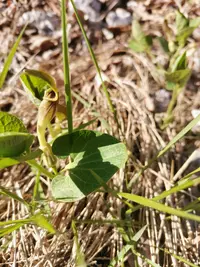
Aristolochia pallida
Aristolochia pallida
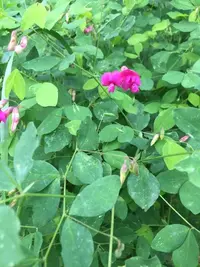
Rosy-flowered Everlasting-pea
Lathyrus roseus