Trailing abutilon Care (Callianthe megapotamica)

About Trailing abutilon

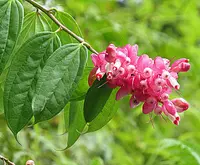
Trailing abutilon (Callianthe megapotamica) is a shrubby, semi-woody plant valued for its arching, trailing stems and bell-shaped, pendant flowers. It is often grown in hanging baskets, large containers, or trained on small trellises, where the stems can cascade gracefully.

In nature it occurs in parts of South America, especially in Brazil and nearby regions, in mild, frost-free climates. The plant tends to bloom for long periods in suitable conditions and responds well to regular pruning, which helps control its size and shape.

Callianthe megapotamica prefers bright light, moderate moisture, and a well-drained, fertile substrate. These adaptable traits make it fairly manageable once you understand how to care for Trailing abutilon.

Main Plant Requirements

Care Difficulty

Moderate Care

Light Preference

Partial Sun

Water Requirements

Regular Water

Temperature Preference

Warm Climate

Hardiness Zone

8–10

Soil Texture

Loamy, Sandy, Organic-rich

Soil pH

Acidic (5.5–6.5), Slightly acidic (6.5–7.0)

Soil Drainage

Moist but well-drained

Fertilization

Light (every 4–6 weeks)

Get Personalized Care Plan

Scan your plant to receive care tips personalized for your specific plant

Available on iOS and Android

How to Care for the Trailing abutilon

Callianthe megapotamica prefers bright conditions that balance direct sun with protection from harsh midday rays.

  • Provide 4–6 hours of direct morning sun plus bright, filtered light for the rest of the day to support flowering.
  • Tolerates light or dappled shade, but in deep shade Trailing abutilon becomes leggy and produces fewer blooms.
  • In hot summers, shield from intense sun from 12–4 p.m. to prevent leaf scorch, especially for plants grown in warmer zones.

Callianthe megapotamica prefers evenly moist, well-drained soil that never stays waterlogged.

  • Water when the top 2–4 cm of soil feels dry, letting water soak through, then drain fully to avoid root rot.
  • In spring and summer, expect to water more often during active growth; in fall and winter, extend intervals as growth slows.
  • Leaves yellowing and soft stems usually indicate overwatering, while dull, wilting leaves and dry soil point to underwatering.

This shrub grows best in mild, frost-free conditions with moderate seasonal variation.

  • Aim for 60–75°F (16–24°C) for steady growth and flowering, avoiding sudden swings of more than 10°F (6°C) in a day.
  • Short dips to 40°F (4°C) may be tolerated, but repeated exposure below 32°F (0°C) damages foliage and young stems.
  • In hot spells above 86°F (30°C), provide extra shade and soil moisture, since prolonged extreme heat can reduce flowering and stress the plant.

This species copes with typical indoor humidity but benefits from slightly moist air.

  • Aim for 40–60% humidity to support steady flowering and reduce leaf drop.
  • It tolerates short spells of drier air, but crisp leaf edges or bud drop suggest humidity stress.
  • Increase humidity by grouping plants, placing the pot on a pebble tray, or using a small humidifier near Trailing abutilon.

This shrub prefers a loose, airy, organic-rich mix that drains freely yet holds some moisture.

  • Use a loamy base with 40–50% compost, 20–30% perlite, and the remainder peat or coco coir for structure and water retention.
  • Aim for slightly acidic to neutral pH, around 6.0–7.0, which supports nutrient uptake and healthy root growth.
  • Improve drainage and aeration by adding extra perlite or fine bark if the mix feels heavy or compacts after watering.
  • Avoid dense garden clay, waterlogged spots, or mixes loaded with un-composted wood that stays wet and suffocates roots in Callianthe megapotamica.

This species is well suited to container growing on patios, balconies, or sheltered outdoor spaces.

  • Choose a wide, stable pot to counterbalance arching, trailing growth that can make the plant top-heavy in wind.
  • Use a slightly deeper container than a typical bedding pot to provide root space without creating a soggy lower zone.
  • Select terracotta or other porous materials where rainfall is frequent, as they help prevent prolonged saturation of the root zone.

Callianthe megapotamica benefits from modest, consistent feeding during active growth to maintain flowering and healthy foliage.

  • Use a balanced liquid fertilizer (for example 10-10-10 or 20-20-20) diluted to 1/2 strength every 2–3 weeks in spring and summer.
  • Alternatively, apply a slow-release granular fertilizer at the start of spring following label rates for flowering shrubs.
  • Supplement container plants with a thin layer of compost on the soil surface once each spring for steady nutrients.
  • In fall and winter, when Trailing abutilon growth slows, reduce feeding to once every 6–8 weeks or stop if light is low.

Pruning helps Callianthe megapotamica stay compact, encourage new flowering shoots, and remove weak growth.

  • Carry out main pruning in late winter or very early spring before vigorous new growth starts.
  • Remove dead, diseased, or crossing stems first, cutting back to healthy wood with clean, sharp bypass pruners.
  • Shorten overly long or leggy shoots by up to 1/3 to improve shape and stimulate branching and flowering.
  • Lightly pinch soft tips during the growing season to maintain a bushy habit and prevent stems from becoming straggly.

This shrub tolerates moderate root disturbance but responds best to careful timing and gentle handling when moved.

  • Check containers annually; repot when roots circle the pot, water runs straight through, or growth and flowering decline.
  • Plan repotting or transplanting for early spring, just as new growth begins, to allow fast root recovery.
  • Move into a pot only 2–5 cm wider, using a free-draining mix, and keep the root ball at the same depth as before.
  • Water thoroughly after moving, shade from strong sun for 3–5 days, and keep soil slightly moist to limit transplant shock.

New Callianthe megapotamica plants are most reliable from semi-ripe cuttings supported by warm, humid conditions.

  • Take 8–12 cm semi-ripe stem cuttings in late spring to mid-summer, choosing non-flowering shoots with firm, green wood.
  • Remove lower leaves, dip the cut end in rooting hormone, and insert into a moist, free-draining mix such as perlite and peat or coco coir.
  • Maintain bottom warmth around 70–75°F, high humidity, and bright indirect light until roots form in 4–8 weeks.
  • Seeds can also be sown in spring in a warm propagator, though flowering-size plants take longer to obtain.

This species is only lightly frost tolerant and needs protection in regions with cold winters.

  • In climates colder than USDA zone 9, grow in containers and move indoors or into a cool greenhouse before temperatures drop near 32°F.
  • For in-ground plants in mild areas, apply a 5–8 cm mulch layer around the root zone, keeping it slightly away from the main stem.
  • Cover exposed branches during short cold snaps with frost cloth or a breathable fabric to reduce freezing damage.

Care Tips

Support Trailing Stems

Provide a low trellis, wires, or hook supports and gently tie young stems with soft garden tape to guide long shoots where you want them and prevent breakage under the weight of flowers.

Refresh Woody Plants

If the plant becomes bare at the base, cut 1–3 of the oldest, thickest stems back to 10–15 cm above the soil in late winter to stimulate new low shoots and keep the shrub full.

Targeted Deadheading

Regularly remove faded blooms by snipping just above a leaf node, which reduces seed formation and encourages a longer, heavier flowering season when growing Trailing abutilon.

Salt And Chlorine Management

In areas with hard or heavily chlorinated tap water, flush the pot thoroughly every 4–6 weeks with plain water until it drains freely to reduce salt buildup that can cause leaf edge burn.

Container Renewal Cycle

For long-term container plants, replace the top 3–5 cm of potting mix with fresh mix each spring instead of frequent repotting, which maintains fertility and structure while minimizing root disturbance.

Common Pests and Diseases

Spider mites

This pest often appears on indoor or greenhouse plants kept in warm, dry air, causing pale stippling on leaves and fine webbing on young shoots. Symptoms include dull, yellowing foliage and slowed growth.

Solution

Rinse foliage thoroughly with a strong, lukewarm water spray, including leaf undersides, then increase humidity and reduce heat stress. For persistent infestations, apply insecticidal soap or horticultural oil every 7–10 days, isolating the plant from others during treatment.

Aphids

These insects cluster on tender shoot tips, buds, and the undersides of leaves, sucking sap and distorting new growth. Symptoms include sticky honeydew, curling foliage, and sooty black mold growing on the sugary residue.

Solution

Pinch or wash off colonies with a firm water spray, then prune heavily infested soft tips if needed. Follow with targeted treatments using insecticidal soap or neem oil, repeating weekly until no new aphids appear and encouraging good airflow around the plant.

Whiteflies

This pest is common on abutilon relatives in sheltered situations, with small white adults flying up in a cloud when the plant is disturbed. Symptoms include sticky honeydew, yellowing leaves, and general decline in vigor.

Solution

Hang yellow sticky traps near the plant to monitor and reduce adult numbers, and regularly disturb foliage to detect early infestations. Treat leaf undersides with insecticidal soap or horticultural oil, repeating at 5–7 day intervals, and avoid crowding plants to limit reinfestation while caring for Trailing abutilon.

Rust

This disease produces small orange, brown, or yellow pustules on the undersides of leaves, with corresponding pale spots on the upper surface. Symptoms include premature leaf drop and thinning of the canopy, especially in damp, crowded conditions.

Solution

Remove and discard affected leaves promptly and avoid overhead watering that keeps foliage wet for long periods. Improve air circulation, keep the plant less crowded, and if the problem persists, use a fungicide labeled for rust on ornamentals, applying according to label directions.

Leaf spot

This disease causes round to irregular brown or dark spots on leaves, sometimes with yellow halos, starting on lower, older foliage. Symptoms include gradual thinning of leaves from the bottom up and reduced flowering if stress continues.

Solution

Trim off and discard affected leaves and any fallen debris around the base to remove sources of reinfection. Water at the soil level, not over the leaves, improve airflow, and in severe cases apply a suitable ornamental fungicide, spacing treatments as directed until new growth appears clean.

Interesting Facts

Riverbank shrub specialist

This species is naturally found along riverbanks and moist forest edges in southern Brazil, Uruguay, and northern Argentina, where its arching branches can trail over rocks and water.

Hummingbird-adapted flowers

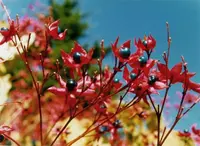
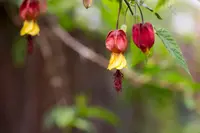
Its elongated, tubular red flowers with yellow interiors are shaped and colored in a way that strongly favors hummingbird pollination, an adaptation common in many South American shrubs but very characteristic in this species.

Ever-blooming in mild climates

In regions with mild, frost-free conditions, this plant can flower over a very long season, often producing buds and blooms for much of the year rather than in a short, synchronized flush.

Botan icon

Did you know?

The species name megapotamica refers to the Rio Grande (historically called Rio Grande do Sul or Guaíba, sometimes linked with the term "big river"), acknowledging the plant’s original discovery and description from habitats associated with major river systems in southern Brazil.

FAQs about Trailing abutilon

Poor flowering usually comes from low light, excess nitrogen fertilizer, or heavy pruning at the wrong time. Avoid cutting young flowering stems, feed with a balanced fertilizer, and maintain consistent conditions to support bud formation and repeat bloom.

Grow Healthy Plants with Botan Care

Keep your plants happy and healthy with plant identification, disease detection, and easy care guidance.

Botan plant care app — identify plants on mobile

Explore More Plants