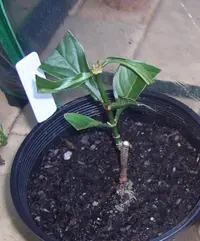
Wind-firm training
In the first 2–3 years, selectively reduce or shorten competing leaders and favor a single central stem so the plant develops a strong, wind-resistant framework rather than a weak, multi-leader structure.

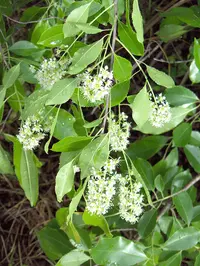
Carolina laurelcherry, Prunus caroliniana, is an evergreen shrub or small tree grown mainly for its dense, glossy foliage and uniform shape. It is often used as a screening hedge or windbreak in gardens and landscapes.
In the wild it occurs in the southeastern United States, especially in coastal plains and woodland edges. It produces small white flowers followed by dark, cherry-like fruits that attract birds.
This species is generally vigorous, adaptable, and tolerant of pruning, which makes it relatively easy to manage in suitable climates. It prefers sun to light shade, reasonably well-drained soil, and moderate moisture, which is important to understand when learning how to care for Carolina laurelcherry.

Care Difficulty
Easy Care

Light Preference
Full Sun

Water Requirements
Moderate Water

Temperature Preference
Warm Climate

Hardiness Zone
7–10

Soil Texture
Sandy, Loamy, Clay

Soil pH
Acidic (5.5–6.5), Slightly acidic (6.5–7.0)

Soil Drainage
Well-drained

Fertilization
Minimal (feed rarely)
Scan your plant to receive care tips personalized for your specific plant
Available on iOS and Android
This evergreen shrub prefers consistent sun exposure for dense growth and healthy foliage.
This species prefers evenly moist, well-drained soil once established in the landscape.
This shrub is adapted to warm-temperate climates and tolerates a moderate range of temperatures.
This species tolerates a wide humidity range and rarely needs special humidity management outdoors or in large containers.
Prunus caroliniana prefers moderately fertile, well-aerated mineral soil with reliable drainage.
This species can be grown in large containers when given sufficient root space and stability.
This native shrub or small tree grows acceptably in average soil, but light feeding supports denser growth and better vigor in Carolina laurelcherry.
Prunus caroliniana responds well to controlled pruning, which helps maintain size, shape, and plant health.
This species is usually grown in the ground, so guidance focuses on transplanting rather than long-term container culture.
Prunus caroliniana is commonly propagated from seeds and semi-hardwood cuttings.
This evergreen is fairly cold hardy in its recommended climate range and usually needs minimal winter care.

Plant Health Check
Not sure what's wrong with your plant? Check your plant's health inside the app.
This species keeps glossy, dark-green leaves year-round and is often mistaken for true laurels, but it is actually a cherry in the rose family (Rosaceae).
The leaves and seeds contain cyanogenic glycosides that can release hydrogen cyanide when chewed, which deters many herbivores and makes the plant toxic to livestock and pets if ingested in quantity.
Native to the southeastern United States, it tolerates pruning, air pollution, and a range of soils, which has led to extensive use in hedges and screens in cities and suburbs while still providing food and cover for local birds.

In parts of its native range, this species can form dense thickets under pine and oak canopies, where its shade tolerance and rapid regeneration after cutting allow it to dominate the understory and significantly alter habitat structure for other plants and animals.
This species is evergreen in mild climates, keeping its glossy foliage year-round. In unusually hard freezes, some leaf drop or burn may occur, but healthy plants typically refoliate from buds along stems once temperatures improve.
Keep your plants happy and healthy with plant identification, disease detection, and easy care guidance.