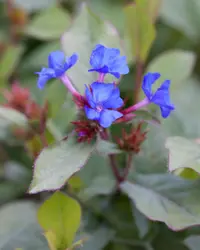
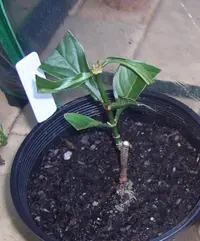
whitestem gooseberry Care (Ribes inerme)

Also known as: white-stemmed gooseberry
whitestem gooseberry

About whitestem gooseberry

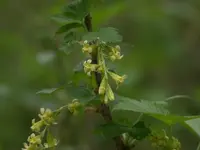
Whitestem gooseberry, Ribes inerme, is a deciduous shrub native to western North America, often found in open woods, streambanks, and mountain slopes. It forms a loose, arching habit with small lobed leaves, pale stems, and spiny branches. The plant produces modest greenish to reddish flowers followed by edible, translucent berries that attract birds and wildlife. It is generally hardy and low-maintenance once established, which makes it practical for naturalistic gardens and restoration plantings. It prefers sun to light shade and moist, well-drained soil, and understanding these basic needs is the core of how to care for whitestem gooseberry.

Main Plant Requirements

Care Difficulty

Moderate Care

Light Preference

Full Sun

Water Requirements

Moderate Water

Temperature Preference

Cold Hardy

Hardiness Zone

4–8

Soil Texture

Sandy, Loamy, Rocky

Soil pH

Acidic (5.5–6.5), Slightly acidic (6.5–7.0)

Soil Drainage

Moist but well-drained

Fertilization

Minimal (feed rarely)

Get Personalized Care Plan

Scan your plant to receive care tips personalized for your specific plant

Available on iOS and Android

How to Care for the whitestem gooseberry

Ribes inerme prefers cool, bright conditions with moderate direct sun exposure each day.

  • Provide 4–6 hours of direct sun, ideally morning sun with light afternoon shade, especially in hotter regions.
  • Plant in a site that offers partial shade or dappled light under open trees; whitestem gooseberry tolerates more shade but may fruit less.
  • Avoid intense, reflected afternoon sun that can scorch leaves in summer; in shady locations, watch for weak, elongated shoots as a sign of insufficient light.

This shrub prefers evenly moist, well-drained soil without prolonged dryness or standing water.

  • Allow the top 3–5 cm of soil to dry slightly before the next deep soak, then water until the root zone is moist to 20–25 cm depth.
  • During hot, dry periods, check soil 2–3 times per week; in cool or rainy seasons, irrigation may be unnecessary if rainfall keeps soil slightly moist.
  • Use soil texture and plant signals rather than a fixed schedule; drooping, dull leaves suggest dryness, while yellowing, soft leaves and a sour smell indicate poor drainage or overwatering around Ribes inerme.

This species is cold-hardy and suited to cool to mild climates with distinct seasons.

  • Active growth is best at 55–75°F (13–24°C), with good flowering and fruiting in areas that have cool springs and mild summers.
  • The plant tolerates winter lows near 0°F (-18°C) once established, especially with mulch over the root zone to buffer rapid freeze–thaw cycles.
  • In hot spells above 85°F (29°C), provide extra shade and soil moisture; extended heat above 95°F (35°C) can stress plants, reduce fruit set, and scorch tender foliage.

This species tolerates a wide humidity range and rarely needs special humidity management outdoors.

Ribes inerme prefers moderately moist, well-drained mineral soils that do not stay waterlogged.

  • Use a loamy or sandy loam soil with 3–5 cm of incorporated compost to support root development and moisture retention.
  • Aim for slightly acidic to neutral pH, around 6.0–7.0, and avoid strongly alkaline or saline soils.
  • Improve drainage and aeration by mixing coarse sand or fine gravel into heavy clay before planting.
  • Do not plant in compacted or chronically wet spots, since poor oxygen levels in saturated soil encourage root rot.

This shrub can be grown in containers for a few years if given ample root volume and careful moisture management.

  • Choose a deep, heavy container at least 40–50 cm wide to stabilize the shrub and accommodate its woody root system.
  • Select thick-walled clay or composite pots to reduce tipping risk and moderate moisture swings in sunny sites.
  • Raise the container slightly on pot feet so drainage holes stay clear and excess water can leave the root zone quickly.

This native shrub usually needs minimal feeding, but light fertilization can support fruiting and overall vigor in cultivated whitestem gooseberry.

  • Apply a balanced, slow-release fertilizer (such as 10-10-10) at 1/2 strength once in early spring as new growth begins.
  • Supplement with a thin layer of well-rotted compost around the drip line to improve soil structure and micronutrients.
  • Avoid additional fertilizer after midsummer to prevent soft late growth prone to winter damage.
  • Do not feed during winter dormancy; maintain an unfertilized rest period to support natural growth cycles.

Ribes inerme benefits from periodic structural pruning to maintain airflow, shape, and productive wood.

  • Carry out main pruning in late winter to very early spring, before buds break.
  • Remove dead, diseased, damaged, or crossing stems first, cutting back to healthy wood with clean bypass pruners.
  • Thin the oldest, least-productive canes at the base to encourage younger, more fruitful shoots.
  • Lightly shorten overly long branches to keep a balanced, open framework that admits light.

This species is usually grown in the ground, so focus on careful transplanting rather than frequent container repotting.

  • Transplant young shrubs in early spring or early fall, when temperatures are mild and soil is workable.
  • Look for signs like slow growth, root circling in the nursery pot, or plants drying out rapidly as cues to move them.
  • Dig a wide hole, loosen the root ball gently, and plant at the same depth, firming soil to remove air pockets.
  • Water deeply after transplanting, then keep soil evenly moist and shade lightly for 1–2 weeks to limit transplant shock.

Ribes inerme is commonly propagated by hardwood cuttings, softwood cuttings, seeds, or simple layering.

  • Take hardwood cuttings in late fall to winter, 15–20 cm long, and root in a coarse, moist, well-drained medium outdoors or in a cold frame.
  • Use softwood cuttings in late spring, placing them in high humidity and bright, indirect light until roots form.
  • Sow cleaned seeds in fall or after a cold stratification period of 2–3 months to break dormancy.
  • For layering, bend a low, flexible stem to the ground in spring, bury a section, secure it, and sever it from the parent once rooted.

This gooseberry is cold hardy across much of its native range and usually needs minimal winter attention in the ground.

  • Tolerates typical winter frosts; established plants generally overwinter without covers in USDA zones where it is native.
  • Apply a 5–8 cm mulch layer around the root zone in late fall, keeping it slightly away from the stems.
  • For container specimens, move pots to a sheltered, unheated but frost-moderated spot to prevent root damage from repeated freeze–thaw cycles.

Care Tips

Install sturdy support

Use a low trellis or tensioned wire between posts to keep stems off the ground, which improves air movement around foliage and makes harvest cleaner and faster.


Encourage lateral shoots

After the first year, tip back overly long canes by 10–15 cm in late winter to stimulate lateral branching, which produces more fruiting spurs at a manageable height.

Manage suckers smartly

Leave a limited number of strong, well-placed basal shoots each year and remove weak or crowded suckers at the base to maintain an open, productive framework.

Mulch for cane health

Apply a 5–8 cm layer of weed-free organic mulch around, but not touching, the stems to stabilize soil moisture, reduce weed competition, and protect shallow roots from cultivation damage.

Time pest monitoring

Begin inspecting undersides of leaves and young shoots weekly from bud break through early summer to catch aphids, sawfly larvae, and mildew early, which is a key part of caring for whitestem gooseberry.

Common Pests and Diseases

American gooseberry mildew

This disease causes white, felt-like fungal growth on young shoots, leaves, and fruit that later turns brown and crusty. Symptoms include distorted new growth and reduced fruit quality.

Solution

Prune out and discard infected shoot tips as soon as they are seen, improve airflow by thinning the bush, and avoid overhead watering. In regions with a history of mildew, apply a labeled sulfur or potassium bicarbonate spray at bud-break and repeat during early shoot and fruit development, following local Ribes inerme care instructions and label directions.

Gooseberry leaf spot

This disease produces small brown or purple leaf spots that can merge, leading to premature leaf drop in mid to late summer. Symptoms include weakened plants and reduced yields over time.

Solution

Collect and destroy fallen leaves in autumn, and prune for better air circulation to reduce humidity around the plant. Where leaf spot is recurring, use a copper-based or other labeled fungicide at early leaf-out and again after flowering, especially in wet springs, and keep foliage as dry as possible during irrigation.

Currant fruit fly

This pest is a small fly whose larvae tunnel inside developing berries, causing them to soften, discolor, and drop early. This pest can seriously reduce usable fruit on Ribes species, including whitestem gooseberry.

Solution

Rake up and destroy infested, fallen berries promptly to break the life cycle, and keep the area under bushes clean. In problem areas, use fine mesh or row covers over plants just before flowering to prevent egg-laying, and consider soil-surface trapping or a targeted insecticide timed to adult emergence based on local extension advice.

Currant aphid

These insects cluster on tender shoot tips and leaf undersides, sucking sap and causing curled, puckered, or yellowing foliage. This pest also produces sticky honeydew that can lead to sooty mold on leaves and stems.

Solution

Spray colonies off with a firm stream of water and pinch out heavily infested shoot tips if practical. Encourage natural predators such as lady beetles, and if needed apply insecticidal soap or horticultural oil thoroughly to leaf undersides, repeating at 5–7 day intervals while aphids are present.

Currant blister aphid

These insects cause raised, blister-like, often reddish or yellow patches on gooseberry leaves while feeding from the underside. Symptoms include distorted foliage that can reduce photosynthesis but usually does not kill the plant.

Solution

Inspect leaves early in the season and remove or prune out heavily affected leaves before colonies build up. For ongoing issues, apply insecticidal soap or horticultural oil to the undersides of young leaves at bud-break and repeat as needed, and avoid excessive nitrogen fertilization that encourages soft, aphid-prone growth.

Interesting Facts

Spines Hidden On Nodes

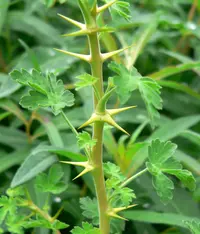
Whitestem gooseberry often appears nearly unarmed, but close inspection shows short, slender spines at nodes along its otherwise smooth, pale stems. This contrasts with many other gooseberries that have much heavier and more obvious armature.

Floodplain And Stream Specialist

This species naturally favors moist to seasonally wet habitats such as streambanks, alluvial terraces, and montane riparian thickets in western North America. Its root system tolerates periodic flooding and gravelly, well-drained substrates, making it characteristic of dynamic river corridors.

Key Shrub For Wildlife

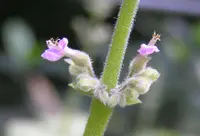
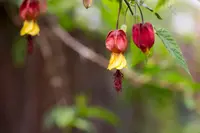
The translucent, pale berries are eaten by many songbirds and small mammals, while the dense, twiggy structure offers shelter and nesting sites. Native pollinators, including solitary bees, frequently visit its small greenish to reddish flowers in early to mid-spring.

Botan icon

Did you know?

Ribes inerme is one of the few North American gooseberries whose berries are naturally low in obvious surface bristles, giving the fruit a smoother feel than many related species that have distinctly prickly skins.

FAQs about whitestem gooseberry

The berries are edible when fully ripe and are used fresh, cooked, or in preserves. Flavor ranges from tart to mildly sweet. Avoid unripe fruit and prickles on stems, which can irritate skin when handled carelessly.

Grow Healthy Plants with Botan Care

Keep your plants happy and healthy with plant identification, disease detection, and easy care guidance.

Botan plant care app — identify plants on mobile

Explore More Plants