Plan for suckering
Allow a few strong basal shoots to develop each year and remove excess suckers at ground level in late winter so plants form a controlled multi-stem clump that is easier to harvest and maintain.

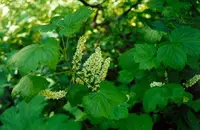
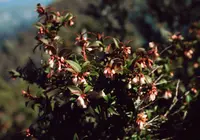
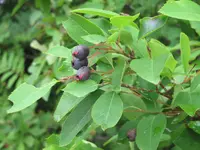
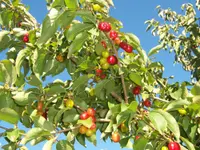
Northern black currant, Ribes hudsonianum, is a cold-hardy, deciduous shrub native to northern North America, especially moist woodland edges and stream banks. It typically forms a multi-stemmed clump with lobed leaves and clusters of small, dark berries.
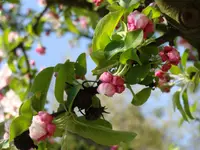
This species grows with an upright, somewhat open habit and can spread slowly through suckers. Flowers are small and tubular, followed by black fruits that attract birds and wildlife.
It is generally considered a tough, low-maintenance shrub if planted in cool climates with moist, well-drained soil. Partial sun, consistent moisture, and tolerance of cold make it relatively straightforward to care for northern black currant in suitable regions.

Care Difficulty
Moderate Care

Light Preference
Partial Sun

Water Requirements
Regular Water

Temperature Preference
Cold Hardy

Hardiness Zone
2–6

Soil Texture
Loamy, Silty, Organic-rich

Soil pH
Acidic (5.5–6.5), Slightly acidic (6.5–7.0)

Soil Drainage
Moist but well-drained

Fertilization
Minimal (feed rarely)
Scan your plant to receive care tips personalized for your specific plant
Available on iOS and Android
This shrub prefers cool, bright conditions rather than intense heat or prolonged deep shade.
Ribes hudsonianum prefers evenly moist, cool soil that never stays waterlogged.
This species is adapted to cool climates and handles substantial winter cold.
This shrub tolerates a wide humidity range and rarely needs special humidity management outdoors.
Ribes hudsonianum prefers cool, moist, well-structured soil that drains freely but does not dry out quickly.
This species can be grown in containers for a few years but performs best long term in the ground.
This hardy native shrub, including northern black currant, generally needs modest feeding in average garden soil.
Pruning Ribes hudsonianum helps maintain a healthy, open framework and supports flowering and fruiting.
This shrub is usually grown in the ground, so focus on careful outdoor transplanting rather than frequent repotting.
Ribes hudsonianum is commonly propagated by hardwood or softwood cuttings and by seed for restoration projects.
This species is naturally cold hardy through harsh winters and usually needs minimal winter care in the ground.

Plant Health Check
Not sure what's wrong with your plant? Check your plant's health inside the app.
This shrub is native mainly to cold, moist habitats of northern North America, where it often grows along streambanks, bog margins, and wet thickets within boreal forest zones.
When the foliage or stems are crushed, they release a strong resinous scent, which helps distinguish it from some other black currant relatives in the field.
Its dark berries are an important seasonal food for birds and small mammals in northern ecosystems, supporting wildlife even though the fruit is not widely cultivated for human use.

This species commonly hybridizes with the closely related Ribes triste in areas where their ranges overlap, and these natural hybrids can show intermediate leaf shapes and growth habits that complicate field identification for botanists.
Poor flowering usually relates to age, pruning, or nutrition. Young shrubs may need 2–3 years. Avoid heavy pruning of 1–2-year-old wood, ensure full light exposure, and apply balanced, low-nitrogen fertilizer if soil is nutrient-poor.
Keep your plants happy and healthy with plant identification, disease detection, and easy care guidance.