Tomato Care (Solanum lycopersicum 'Green Zebra')

About Tomato

Tomato (Solanum lycopersicum 'Green Zebra') is a cultivated tomato variety grown mainly as an annual food crop. It is known for its small to medium fruits with green and yellow striping and a tangy, rich flavor. Plants have a vining, branching habit and usually need support as they grow.

This cultivar was developed in cultivation, not in the wild, and is commonly grown in home gardens and small farms. It is moderately easy to grow but needs consistent warmth, sun, and moisture to perform well.

Understanding how to care for Tomato of this variety starts with providing full sun, well-drained fertile soil, and regular watering without waterlogging the roots.

Main Plant Requirements

Care Difficulty

Moderate Care

Light Preference

Full Sun

Water Requirements

Regular Water

Temperature Preference

Tropical / Frost Sensitive

Hardiness Zone

10–11

Soil Texture

Loamy, Sandy, Organic-rich

Soil pH

Acidic (5.5–6.5), Slightly acidic (6.5–7.0)

Soil Drainage

Moist but well-drained

Fertilization

Moderate (every 2–4 weeks)

Get Personalized Care Plan

Scan your plant to receive care tips personalized for your specific plant

Available on iOS and Android

How to Care for the Tomato

This cultivar needs strong, direct light to flower and fruit well outdoors.

  • Provide 6–8 hours of direct sun daily, ideally with morning sun and some light afternoon shade in very hot climates to limit leaf scorch.
  • Plant where taller crops or shade cloth can filter harsh sun when temperatures exceed 90°F (32°C), as Tomato foliage can wilt and fruit may sunscald.
  • In regions with short summers, choose the sunniest south-facing spot to ensure fruits ripen fully before fall day length shortens.

Consistent, deep watering supports steady growth and reduces fruit problems.

  • Water when the top 3–5 cm of soil is dry, soaking the root zone to 15–20 cm depth rather than giving frequent shallow drinks.
  • Ensure soil drains well; pooling water or a sour smell around roots of Solanum lycopersicum 'Green Zebra' indicates poor drainage and risk of root rot.
  • In hot, dry periods, check soil daily and increase frequency, while in cool or rainy spells reduce watering and monitor foliage for yellowing or wilting as stress signals.

Stable warmth is essential for reliable flowering, fruit set, and flavor development.

  • Aim for daytime temperatures of 70–85°F (21–29°C) and nights of 60–70°F (16–21°C) for best growth and pollination.
  • Avoid exposing plants to temperatures below 50°F (10°C); growth slows sharply, and any light frost near 32°F (0°C) can kill foliage and young plants.
  • During heat above 95°F (35°C), expect blossoms to drop and pollen viability to fall; provide afternoon shade and mulch to moderate soil temperature swings.

This cultivar grows best in moderate ambient humidity but copes with typical outdoor fluctuations.

  • Aim for 40–60% humidity to limit leaf stress and reduce blossom drop in warm, dry weather.
  • Dry air may cause marginal leaf curl and slightly tougher skins, but established plants usually continue fruiting.
  • In very arid conditions, increase humidity by mulching soil 5–7 cm deep and using drip irrigation to keep foliage drier than the air.

Solanum lycopersicum 'Green Zebra' requires well-aerated, moisture-retentive yet free-draining soil for steady growth and fruiting.

  • Use a loamy, crumbly structure rich in organic matter so roots spread easily and access consistent moisture.
  • Target a slightly acidic to neutral pH around 6.0–7.0 to keep nutrients available and reduce blossom-end rot risk.
  • Blend garden loam or vegetable mix with 25–40% compost plus 10–20% perlite or coarse sand to improve drainage and aeration.
  • Avoid heavy clay that stays waterlogged or very sandy soil with no organic matter, as both stress roots and reduce yields.

This tomato is suitable for container growing when the pot supports deep roots and stable top growth.

  • Choose a container at least 30–40 cm deep and wide to allow strong root development and reduce drought swings.
  • Select a sturdy, heavier pot material if possible, which helps anchor the top-heavy vine and limits tipping in wind.
  • Ensure multiple drainage holes and raise the pot slightly off the ground so excess water exits quickly instead of pooling at the base.

This tomato benefits from consistent, moderate nutrition for strong growth and fruiting.

  • Apply a balanced NPK liquid fertilizer at 1/2 strength every 10–14 days during active growth and fruit set.
  • Incorporate well-rotted compost into the planting hole and top-dress mid-season to maintain soil fertility.
  • Use a slow-release granular fertilizer at planting, following label rates, to provide a steady nutrient supply.
  • Reduce feeding in late fall or off-season, focusing instead on soil-building compost before the next growing Tomato cycle.

Thoughtful pruning improves air flow, fruit quality, and manageability for Solanum lycopersicum 'Green Zebra'.

  • Begin pruning once plants are established in late spring to early summer, avoiding very hot or drought-stressed periods.
  • Remove lower yellowing leaves, dead or diseased stems, and any foliage touching the soil to reduce disease risk.
  • Pinch out small side shoots (suckers) between main stem and leaf branches to maintain an open, vertical structure.
  • Use clean, sharp pruners or scissors, disinfected between plants, to make smooth cuts just above leaf nodes.

This cultivar is usually started in small pots and then transplanted outdoors rather than grown long term in containers.

  • Transplant seedlings when roots lightly fill the starter cell or pot and new growth slows or looks pale.
  • Move plants outdoors after frost danger passes, once soil reaches about 60°F and plants have 2–3 sets of true leaves.
  • Plant deeper than in the pot, burying part of the stem to encourage extra root formation and stronger anchoring.
  • Water thoroughly after transplanting, shade for 1–2 days if sun is intense, and avoid disturbing roots for a week.

Most home growers maintain Solanum lycopersicum 'Green Zebra' by seed, with cuttings as a backup method.

  • Sow seeds indoors 6–8 weeks before the last frost in a sterile seed-starting mix kept at 70–80°F.
  • Provide bright light and keep the medium evenly moist, not waterlogged, to support quick, even germination.
  • For cuttings, root healthy, non-flowering side shoots in water or moist mix at warm temperatures and high humidity.
  • Label saved seed carefully, as this is an open-pollinated type that can be selected for consistent traits over time.

This warm-season annual tomato does not survive true winter outdoors in most climates and needs end-of-season management.

  • Expect plants to die with the first hard frost; they lack meaningful frost tolerance.
  • In fall, harvest remaining mature and nearly mature fruits before nights drop consistently below 40°F.
  • Remove spent plants, dispose of diseased material, and compost healthy vines to reduce pest and disease carryover.
  • In mild climates, use black plastic or organic mulch to keep soil warmer for a slightly extended harvest period.

Care Tips

Early sturdy staking

Install a tall, rigid stake or cage at transplant time and secure the main stem with soft ties every 15–20 cm to keep the heavy, multi-stemmed plant upright and reduce fruit splitting from wind damage.

Cluster thinning

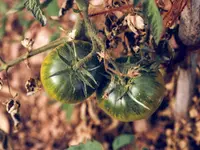
Once fruits set, remove 1–2 small or poorly positioned fruits from crowded clusters so the remaining Green Zebra fruits size up more evenly and ripen with better flavor and striping.

Targeted foliage management

Remove only the lowest yellowing leaves and any foliage touching the soil, keeping a well-ventilated but still leafy canopy that shades fruits and prevents green-shoulder sunscald.

Ripeness color check

Harvest when the green background shifts from bright green to a more golden tone and the yellow stripes deepen, and confirm ripeness by a slight softness at the blossom end rather than waiting for full color alone.

Progressive harvest timing

Pick the earliest fruits just as they turn golden-green, then leave later clusters slightly longer on the vine to compare flavor and determine the ideal harvest window for your site when caring for Tomato.

Common Pests and Diseases

Tomato hornworm

This pest is a large green caterpillar that rapidly strips foliage and can chew into unripe striped fruits. Symptoms include defoliation, large black droppings, and irregular bites on leaves and fruit.

Solution

Handpick caterpillars in early morning or evening and dispose of them, and encourage natural predators such as parasitic wasps by avoiding broad-spectrum insecticides. For heavier pressure, apply a targeted biological control like Bacillus thuringiensis (Bt) to foliage, following label rates and reapplying after heavy rain.

Early blight

This disease causes brown leaf spots with concentric rings and yellow halos, often starting on older leaves and spreading upward in humid conditions. Symptoms include premature leaf drop that can expose striped fruits to sunscald.

Solution

Remove and discard affected leaves promptly and avoid overhead watering to keep foliage dry. Space plants generously, stake or cage them for better airflow, mulch the soil to reduce splash, and rotate tomato beds at least every 3–4 years; in high-pressure areas, use a copper-based or biofungicide preventively according to label directions.

Septoria leaf spot

This disease produces many small brown spots with light centers on lower leaves, which then yellow and drop, weakening the plant. Symptoms include a thin remaining canopy that can reduce yield and expose fruits to sun stress.

Solution

Prune off the lowest infected leaves and dispose of them, then mulch to block soil splash that carries spores. Improve air circulation with proper spacing and staking, water at soil level, and use preventive fungicide sprays where this disease recurs yearly, especially when growing Tomato in wet, humid summers.

Tomato fruit cracking

This physiological disorder causes radial or concentric cracks on the striped fruits, usually after rapid swings in soil moisture or temperature. Symptoms include open or corky splits that invite secondary rots and make fruits unattractive or short-lived in storage.

Solution

Maintain consistent soil moisture with deep, even watering and a 5–8 cm organic mulch layer around the root zone. Avoid letting plants wilt between waterings, choose a balanced fertilizer rather than high-nitrogen products, and harvest fruits promptly once they reach full color but before heavy rain when possible.

Blossom end rot

This physiological disorder leads to a sunken, brown to black patch at the blossom end of fruits, often on the first clusters. Symptoms include leathery, rotten-looking areas on otherwise firm fruits due to localized calcium deficiency linked to irregular watering or root stress.

Solution

Keep soil moisture steady with regular deep watering and mulch, and avoid damaging roots by aggressive cultivation near the stem. Use a soil test to verify pH and calcium levels, apply a balanced fertilizer instead of high-salt or high-ammonium products, and remove badly affected fruits so the plant can direct energy into healthy new fruit set.

Interesting Facts

Stays Green When Ripe

Unlike most tomatoes that turn red or yellow when ripe, this cultivar keeps its green base color with yellow striping, so ripeness is judged mainly by the shift to golden stripes and a slight softening of the fruit.

Distinctive Tart Flavor

Green Zebra is known for its relatively high acidity combined with good sweetness, giving a bright, tangy flavor profile that stands out from many modern, milder tomato cultivars.

Modern Heirloom-Type Origin

Although often grouped with heirlooms, this tomato was bred in the late 20th century by tomato breeder Tom Wagner, making it a relatively recent introduction compared with true historical heirloom varieties.

Botan icon

Did you know?

Green Zebra helped spark renewed interest in striped and unusually colored tomatoes among home gardeners and small-scale growers in the late 20th century, influencing the popularity of many later green-when-ripe and bi-colored tomato cultivars.

FAQs about Tomato

Yellow leaves often result from nutrient imbalance, especially nitrogen or magnesium deficiency, or from waterlogged roots. Check drainage, avoid overwatering, and use a balanced fertilizer. Older bottom leaves yellowing first is common as fruits develop.

Grow Healthy Plants with Botan Care

Keep your plants happy and healthy with plant identification, disease detection, and easy care guidance.

Botan plant care app — identify plants on mobile

Explore More Plants