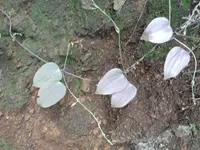
zombi pea Care (Vigna vexillata)

Also known as: Wild Cow Pea
zombi pea

About zombi pea

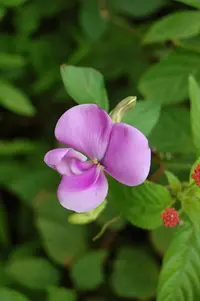
Zombi pea, Vigna vexillata, is a perennial climbing legume grown for its vigorous vines, attractive pea-like flowers, and edible tuberous roots in some regions. It typically twines over supports or surrounding vegetation, forming dense green foliage with trifoliate leaves and pods that resemble common beans.

This species occurs naturally in tropical and subtropical regions of Africa, Asia, and parts of Australia, often in grasslands and open woodland. It is generally hardy and resilient, tolerating poor soils and dry periods once established, which makes it relatively easy to manage in suitable climates.

Good light, moderately moist but well-drained soil, and warmth support healthy growth and make it simpler to care for zombi pea.

Main Plant Requirements

Care Difficulty

Moderate Care

Light Preference

Full Sun

Water Requirements

Moderate Water

Temperature Preference

Tropical / Frost Sensitive

Hardiness Zone

10–12

Soil Texture

Sandy, Loamy, Organic-rich

Soil pH

Acidic (5.5–6.5), Slightly acidic (6.5–7.0)

Soil Drainage

Well-drained

Fertilization

Minimal (feed rarely)

Get Personalized Care Plan

Scan your plant to receive care tips personalized for your specific plant

Available on iOS and Android

How to Care for the zombi pea

Vigna vexillata thrives in warm, bright conditions typical of open fields or garden beds.

  • Provide 6–8 hours of direct sun daily, ideally with strong morning sun and lighter afternoon exposure in hotter regions.
  • Allow light partial shade (2–3 hours) during intense midsummer afternoons to reduce leaf scorch, especially in dry or windy sites.
  • Watch stems and leaves; long, weak, pale growth indicates insufficient light, while crisped leaf edges and bleached patches signal excessive sun on zombi pea.

This species prefers evenly moist, well-drained soil rather than constant wetness.

  • Irrigate when the top 3–5 cm of soil feels dry, applying a deep soak so moisture reaches the root zone instead of frequent light splashes.
  • Use freely draining, loose soil or raised rows so water does not pool around roots, which increases risk of rot and yellowing lower leaves.
  • In hot, active growth periods increase checks for dryness; in cooler or rainy seasons, extend intervals and watch for wilting tips (too dry) or soft, yellow leaves (too wet) in Vigna vexillata.

This warm-season plant grows best in stable, frost-free conditions.

  • Aim for 70–86°F (21–30°C) during active growth, which supports strong vining and flowering without heat stress.
  • Avoid exposure below 50°F (10°C); growth slows, foliage may yellow, and brief dips near 40°F (4°C) can cause lasting damage.
  • Protect from frost at all stages, and during heat spikes above 95°F (35°C) reduce stress with mulch and consistent soil moisture to limit wilting and flower drop.

Humidity is rarely a limiting factor for Vigna vexillata, which handles a broad indoor and outdoor range.

  • Aim for 40–60% relative humidity; typical household levels are usually adequate for zombi pea.
  • Leaves curling inward or developing dry, crispy tips can indicate air that is too dry combined with heat stress.
  • Increase humidity locally by grouping plants or placing the pot on a pebble tray with water kept below the pot base.

Vigna vexillata prefers loose, well-drained, moderately fertile soil that allows roots to breathe.

  • Use a sandy or loamy mix with 30–40% compost for organic matter and 10–20% coarse sand for structure.
  • Ensure fast drainage by adding perlite or pumice so water moves through within a few seconds of watering.
  • Aim for a slightly acidic to neutral pH around 6.0–7.0, avoiding highly acidic or chalky, alkaline soils.
  • Avoid compacted clay, waterlogged sites, or mixes with excessive peat that stay wet and exclude air from roots.

This species can be grown in containers if the pot supports its vining habit and root depth.

  • Choose a deep container at least 25–30 cm tall so the taproot can develop without curling tightly at the bottom.
  • Use a heavy or wide-based pot to prevent tipping as the vine climbs or trails over the rim.
  • Train stems onto a small trellis or rim support to keep foliage off the soil surface and reduce rot around the crown.

Vigna vexillata benefits from light, targeted feeding during its active growing season.

  • Apply a balanced liquid fertilizer (around 10-10-10) at 1/2 strength every 4–6 weeks in spring and summer.
  • Alternatively, work a thin layer of mature compost into the soil surface at the start of the growing season.
  • Avoid feeding in fall and winter when growth slows, especially for zombi pea in cooler climates.
  • Water before and after applying fertilizer to reduce root burn risk and improve nutrient uptake.

Pruning Vigna vexillata is mainly used to manage vigor and support flowering.

  • Use clean, sharp scissors or hand pruners at the start of the growing season.
  • Remove dead, damaged, or pest-affected stems as they appear to reduce disease pressure.
  • Thin crowded or tangling vines to improve air flow and light penetration along the plant.
  • Tip back overly long shoots to maintain shape and encourage branching and more flowers.

This species is usually grown in the ground, so focus on careful transplanting rather than frequent repotting.

  • Transplant in spring after frost risk has passed, when seedlings have several true leaves.
  • Look for roots circling the plug or drainage holes and noticeably slowed growth as signs it is pot-bound.
  • Move plants into loose, well-draining soil at the same depth, spacing vines so they can spread without competition.
  • Water thoroughly after transplanting, then keep soil evenly moist and shaded for 2–3 days to limit transplant shock.

Vigna vexillata is most commonly propagated from seed under warm conditions.

  • Sow seeds in spring once soil temperatures stay above 65°F, either in trays or directly outdoors.
  • Scarify hard seed coats lightly with sandpaper, then soak seeds 6–12 hours to speed germination.
  • Use a loose, well-draining seed mix and keep it evenly moist, not waterlogged, until seedlings emerge.
  • Provide bright light and gentle airflow for seedlings, then harden off before planting into open ground.

This warm-season legume is frost-sensitive and needs protection in regions with cold winters.

  • In mild climates, add a 5–8 cm mulch layer over the root zone to buffer short cold snaps.
  • In colder areas, grow Vigna vexillata as an annual or lift container plants indoors before frost.
  • If overwintering indoors, keep plants in bright light at 60–70°F with reduced watering.

Care Tips

Provide sturdy trellis

Install a strong, 1.5–2 m trellis or mesh before planting so vines can climb freely and pods develop straight, dry quickly, and stay off wet soil where they are prone to rot.

Use living mulch

Undersow with a low, shallow‑rooted groundcover or apply a thin organic mulch to keep soil cooler, suppress weeds, and reduce pod splash from rain that can spread fungal spores.

Staggered sowing blocks

Sow in 2–3 small blocks spaced 2–3 weeks apart to spread harvest time and to make it easier to rogue out any weak, pest‑damaged, or off‑type plants without losing the entire crop.

Targeted pod harvesting

Pick dry pods in several passes as soon as they turn tan and rattle, placing them in breathable bags or trays under cover so seeds finish drying evenly without molding.

Monitor for root pests

In areas with root‑knot nematodes or soil‑dwelling beetle larvae, rotate beds yearly and solarize infested soil in the hottest part of summer to improve long‑term success when growing zombi pea.

Common Pests and Diseases

Pod borer caterpillars

This pest tunnels into developing pods and seeds, reducing yield and leaving frass and entry holes on the pods. Symptoms include shriveled seeds, premature pod drying, and webbing on flower clusters.

Solution

Hand-pick and destroy affected pods where practical, and remove plant debris after harvest to break the life cycle. For heavier infestations, use targeted biological products containing Bacillus thuringiensis (Bt) on flowers and young pods in the late afternoon, and encourage natural enemies by avoiding broad-spectrum insecticides nearby.

Aphids

These insects cluster on young shoots, undersides of leaves, and flower stalks, sucking sap and excreting sticky honeydew. Symptoms include curled or distorted foliage, reduced pod set, and sooty mold growth on honeydew-coated surfaces.

Solution

Dislodge colonies with a firm stream of water and prune heavily infested shoot tips. For persistent populations, apply insecticidal soap or horticultural oil to leaf undersides in the early morning, and reduce excess nitrogen fertilization that encourages soft, aphid-prone growth.

Leaf spot

This disease causes small, circular to irregular brown lesions on leaves that may merge into larger dead patches under warm, humid conditions. Symptoms include yellowing, premature leaf drop, and reduced plant vigor, especially in dense stands.

Solution

Remove and destroy heavily spotted leaves and crop residues to reduce inoculum, and water early in the day at soil level to keep foliage dry. Where the problem recurs, increase plant spacing for better airflow and rotate away from other legumes for at least 2–3 years; in field situations a labeled copper or chlorothalonil fungicide can be used preventively at first sign of spots.

Rust

This disease produces small, raised, reddish-brown pustules on leaf surfaces, often surrounded by yellow halos, under warm and moist conditions. Symptoms include progressive leaf yellowing, reduced photosynthesis, and early defoliation on heavily affected plants.

Solution

Promptly remove and destroy leaves with heavy pustule coverage and avoid overhead irrigation that keeps foliage wet for long periods. Improve spacing and airflow, and in repeated field outbreaks consider a protectant fungicide program using products labeled for rust on legumes, beginning at first appearance of pustules.

Root-knot nematodes

This pest lives in the soil and feeds on roots, causing swollen galls, poor nodulation, and weak root systems. Symptoms include stunted growth, pale foliage despite adequate nutrients, and poor response to watering in infested patches of soil.

Solution

Rotate away from susceptible legumes and other hosts for several seasons and incorporate organic matter to support beneficial soil organisms that suppress nematodes. In home gardens, solarize soil where climate allows, plant resistant or non-host cover crops, and remove and discard badly affected plants and roots rather than composting them.

Interesting Facts

Edible tuberous roots

This species forms underground tubers that are eaten as a root crop in parts of Africa and Asia, where they serve as a local staple similar to other starchy vegetables.

Nitrogen-fixing wild legume

As a legume, it hosts symbiotic bacteria in its root nodules that fix atmospheric nitrogen, which can improve soil fertility in low-input farming systems.

Wide climatic tolerance

The plant occurs naturally from tropical Africa to Asia and northern Australia, showing notable tolerance to heat, seasonal drought, and poor soils compared with many cultivated beans.

Botan icon

Did you know?

Some landraces of this species have been evaluated as potential underutilized crops because their protein-rich seeds and starchy tubers can both be eaten, offering a dual-purpose food resource for climate-resilient agriculture.

FAQs about zombi pea

This species can spread quickly by twining stems and underground tubers, especially in frost-free climates. In garden settings, regular pruning, trellis training, and root-barrier edging help keep growth contained and prevent unwanted spread.

Grow Healthy Plants with Botan Care

Keep your plants happy and healthy with plant identification, disease detection, and easy care guidance.

Botan plant care app — identify plants on mobile

Explore More Plants