Acorn Seedling Selection
Collect acorns in autumn and only sow those that are heavy, uncracked, and sink in water, as this quick float test helps you start with viable seed for growing Engelmann oak.

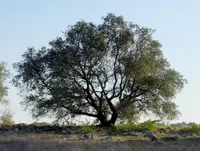
Engelmann oak, Quercus engelmannii, is a slow-growing, long-lived oak tree native to southern California and northern Baja California. It forms a broad, rounded crown with sturdy, twisting branches and thick, pale gray bark.
Its evergreen to semi-evergreen leaves are bluish green and leathery, giving the tree a distinctive, slightly silvery appearance in dry landscapes. Acorns are relatively small and support local wildlife.
This species naturally occurs in foothills and inland valleys with hot, dry summers and mild, wetter winters. It prefers full sun, well-drained soils, and benefits from deep but infrequent watering.
Once established, it has good drought tolerance, but young trees need consistent care for Engelmann oak to root deeply and adapt to garden conditions.

Care Difficulty
Moderate Care

Light Preference
Full Sun

Water Requirements
Low Water

Temperature Preference
Warm Climate

Hardiness Zone
8–10

Soil Texture
Sandy, Loamy, Rocky

Soil pH
Slightly acidic (6.5–7.0), Slightly alkaline (7.0–7.5)

Soil Drainage
Well-drained

Fertilization
Minimal (feed rarely)
Scan your plant to receive care tips personalized for your specific plant
Available on iOS and Android
This drought-adapted oak prefers strong sun from an early age to develop a dense, healthy crown.
This species prefers deep, infrequent watering once established, with soil allowed to dry between soakings.
This oak is adapted to warm, dry climates with mild winters and tolerates a wide temperature range once established.
This species is adapted to dry climates and does not require elevated humidity.
Quercus engelmannii prefers dry, well‑aerated, mineral soils that shed water quickly.
This oak can be grown in containers only short‑term, mainly for young plants or bonsai training.
This oak is adapted to low-nutrient soils, so routine fertilization is usually unnecessary for established landscape trees.
Pruning Quercus engelmannii is mainly for structure, safety, and removal of defective wood rather than frequent shaping.
This species is rarely grown long term in containers, so focus on careful, early transplanting of young trees.
Quercus engelmannii is usually propagated from seed rather than from cuttings or division.
In regions matching its native mild climate, this oak needs little to no special winter care once established.

Plant Health Check
Not sure what's wrong with your plant? Check your plant's health inside the app.
Engelmann oak often holds its bluish-green leaves through winter in mild southern California climates, but can behave more deciduous in colder or drier years, making it unusual among native California oaks.
This species is naturally restricted to a small area of Southern California and northern Baja California, mostly in interior valleys and foothills, and is absent from much of the broader oak belt that other California oaks occupy.
Engelmann oak commonly hybridizes with blue oak (Quercus douglasii) where their ranges overlap, producing intermediate trees that can make field identification difficult and illustrate ongoing gene flow between related oak species.

Engelmann oak forms part of the rare southern oak woodland community, an ecosystem now highly fragmented by urbanization and agriculture in coastal and inland Southern California, so many remaining stands are considered priorities for conservation and habitat protection.
This species is semi-evergreen. In mild climates it holds most foliage year-round, dropping some older leaves gradually. In colder or very dry conditions it can behave more deciduous, shedding more leaves during stress periods.
Keep your plants happy and healthy with plant identification, disease detection, and easy care guidance.