Early vine training
Install a sturdy trellis or wire system before the first growing season and loosely tie new shoots to it with soft ties so the plant establishes a clear trunk and cordon structure instead of forming a tangled shrub.

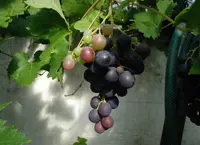
Grape vine, Vitis vinifera, is a long-lived woody climber grown for its fruit and ornamental foliage. It produces twining shoots, large lobed leaves, and dangling clusters of grapes on flexible canes.
In the wild it originates from Mediterranean and Western Asian regions, where it thrives in warm, sunny, relatively dry conditions. Today it is widely cultivated in gardens, orchards, and containers.
This species prefers full sun, good air circulation, and well-drained, moderately fertile soil. Once established, it is fairly resilient but needs support and regular pruning, which are key aspects of how to care for grape vine.

Care Difficulty
Moderate Care

Light Preference
Full Sun

Water Requirements
Moderate Water

Temperature Preference
Cold Hardy

Hardiness Zone
6–9

Soil Texture
Sandy, Loamy, Rocky

Soil pH
Slightly acidic (6.5–7.0), Slightly alkaline (7.0–7.5)

Soil Drainage
Well-drained

Fertilization
Minimal (feed rarely)
Scan your plant to receive care tips personalized for your specific plant
Available on iOS and Android
This plant needs strong, direct light to ripen fruit and maintain healthy growth.
This species prefers deep, infrequent watering that encourages long, stable root systems.
This vine is adapted to temperate climates with warm summers and cool, dormant winters.
This species tolerates a wide humidity range, so indoor air is usually acceptable.
Vitis vinifera needs well-aerated, fast-draining mineral soil that still retains moderate moisture.
This species can be grown successfully in containers when provided with a deep, stable pot and strong support.
Balanced nutrition supports steady growth and fruiting in Vitis vinifera without excessive vigor.
Structured pruning is essential for Vitis vinifera to balance shoot growth, fruit yield, and vine health.
Transplanting grape vines focuses on giving roots space and reducing stress during establishment.
New plants of Vitis vinifera are most often produced from cuttings rather than seed to maintain cultivar traits.
Cold tolerance in grape vines varies by cultivar, so winter care should match local minimum temperatures.

Plant Health Check
Not sure what's wrong with your plant? Check your plant's health inside the app.
Most traditional wine grapes worldwide come from the single species Vitis vinifera, which was domesticated from wild European and Near Eastern vines several thousand years ago and then diversified into thousands of cultivated varieties.
Vitis vinifera typically has perfect flowers that contain both male and female organs, so a single plant can set fruit without needing a second pollinizer, unlike many other fruit crops.
In suitable soils, grapevine roots of Vitis vinifera can explore several meters of soil depth, allowing plants to access water from deep layers and tolerate relatively dry conditions compared with many fruiting plants.

Ancient seeds and grape remains of Vitis vinifera have been found at archaeological sites across the Mediterranean and Near East, providing direct evidence that this species was cultivated for wine and food by early civilizations such as the Egyptians, Greeks, and Romans.
Yellowing leaves often result from nutrient deficiencies, waterlogging, or root stress. Check drainage, avoid overwatering, and consider a soil test for nitrogen, iron, or magnesium. Older leaves yellowing first is often normal seasonal aging.
Keep your plants happy and healthy with plant identification, disease detection, and easy care guidance.