Renewal cane thinning
Each late winter, remove the oldest, darkest canes at ground level and leave younger, lighter canes so the shrub maintains a mix of 1–3-year-old wood that fruits more reliably and stays healthier.

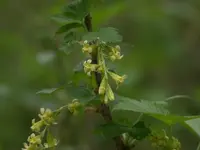
American black currant, Ribes americanum, is a deciduous fruiting shrub native to North America, especially cooler regions and moist woodland edges. It forms a rounded, multi-stem clump with lobed leaves and small, drooping clusters of pale yellow flowers that mature into dark, edible berries.
The plant offers good wildlife value, providing nectar for pollinators and fruit for birds. It is generally considered straightforward to grow if its basic needs are met.
American black currant prefers cool to mild climates, sun to light shade, and evenly moist, well-drained soil. Understanding how to care for American black currant helps gardeners maintain healthy growth and consistent fruiting.

Care Difficulty
Moderate Care

Light Preference
Partial Sun

Water Requirements
Regular Water

Temperature Preference
Cold Hardy

Hardiness Zone
3–7

Soil Texture
Loamy, Silty, Organic-rich

Soil pH
Acidic (5.5–6.5), Slightly acidic (6.5–7.0)

Soil Drainage
Moist but well-drained

Fertilization
Minimal (feed rarely)
Scan your plant to receive care tips personalized for your specific plant
Available on iOS and Android
This shrub prefers cool, bright conditions with some protection from intense afternoon sun.
This species prefers evenly moist, not saturated, soil throughout the growing season.
This cold-hardy shrub thrives in cool to moderate climates with distinct winters.
This shrub tolerates a broad humidity range, so ambient outdoor levels are usually adequate.
Ribes americanum prefers cool, moist, well-drained mineral soil with high organic content.
This species can be grown in containers, though long-term performance is usually better in the ground.
This native shrub grows well in average soil but benefits from light, targeted feeding during the growing season.
Ribes americanum responds well to thoughtful pruning that maintains vigor and fruiting wood.
This shrub is usually grown in the ground, so focus on careful transplanting rather than frequent repotting.
Ribes americanum is commonly propagated from cuttings and sometimes by layering or seed.
This species is cold hardy in much of North America and generally needs only minimal winter care.

Plant Health Check
Not sure what's wrong with your plant? Check your plant's health inside the app.
This species is naturally distributed across much of northern and central North America, where it typically grows in moist woods, stream banks, and swamp margins rather than on dry upland sites.
Its berries, produced on female plants, are a summer food for many birds and small mammals, while the dense branching also provides nesting cover and shelter in riparian and wetland edges.
It produces small, greenish to yellowish flowers in spring that are mainly pollinated by bees and other small insects attracted by nectar and pollen early in the season.

In regions where white pine blister rust is a concern, this species has historically been monitored or locally restricted because, like several other currants and gooseberries, it can act as an alternate host for the fungus that also infects white pines.
Poor flowering often comes from too much shade, heavy nitrogen fertilization, or lack of pruning. Old, crowded stems reduce bud formation. Late frosts can also damage flower buds, especially in exposed sites or frost pockets.
Keep your plants happy and healthy with plant identification, disease detection, and easy care guidance.