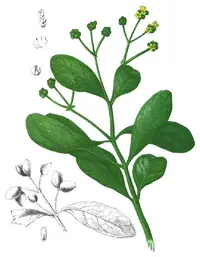
black mangrove Care (Avicennia germinans)

black mangrove

About black mangrove

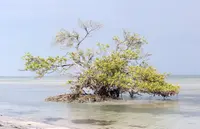
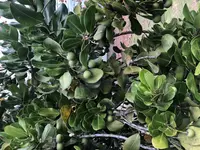
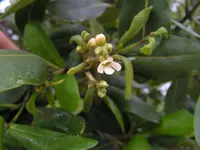
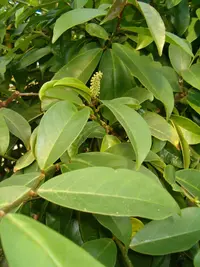
Black mangrove, Avicennia germinans, is a woody coastal tree common in tropical and subtropical shorelines, estuaries, and salt marshes. It is a key species in many mangrove forests.

It typically forms dense stands with upright trunks, gray to dark bark, and leathery, opposite leaves that are green above and often salty or pale underneath. Distinctive pencil-like roots, called pneumatophores, rise from the soil surface to help the tree breathe in waterlogged, low-oxygen mud.

This species is highly salt tolerant and adapted to tidal flooding, which makes it hardy in suitable coastal conditions but difficult to keep away from brackish or saline environments. Those who want to learn how to care for black mangrove should understand its need for strong light, regular moisture, and salty, anaerobic soils.


Main Plant Requirements

Care Difficulty

Hard Care

Light Preference

Full Sun

Water Requirements

Aquatic

Temperature Preference

Tropical / Frost Sensitive

Hardiness Zone

9–11

Soil Texture

Sandy, Silty, Organic-rich

Soil pH

Neutral (7.0), Slightly alkaline (7.0–7.5)

Soil Drainage

Waterlogged tolerant

Fertilization

Minimal (feed rarely)

Get Personalized Care Plan

Scan your plant to receive care tips personalized for your specific plant

Available on iOS and Android

How to Care for the black mangrove

This coastal species thrives with strong, direct light but tolerates some shade, especially when young.

  • Provide 6–8 hours of full sun daily; morning and midday sun promote dense growth and sturdy stems in black mangrove.
  • Allow light partial shade (2–4 hours) in very hot inland sites to reduce leaf scorch, especially for seedlings and newly planted trees.
  • In winter or cloudy seasons, maximize exposure by avoiding shade from buildings or taller trees to prevent slow growth and sparse foliage.

This mangrove is adapted to saturated, even saline, conditions but still responds to clear watering patterns on landward or restored sites.

  • Maintain soil from consistently moist to saturated; avoid letting the top 2–5 cm dry out completely for more than a short period in establishing Avicennia germinans.
  • Use free-draining but water-retentive soils or sediments; persistent standing water without oxygen leads to sour smell, blackened roots, and decline.
  • Increase freshwater input in hot, dry periods if leaves curl or drop; reduce added water in cool, rainy seasons to prevent yellowing, soft stems, and algae growth.

This species is a warm-climate coastal tree that prefers stable, frost-free conditions.

  • Aim for 70–90°F (21–32°C) for active growth; extended periods within this range support strong root and canopy development.
  • Protect from cold below 40°F (4°C); foliage and young wood are damaged near 32°F (0°C), and hard frosts can kill young plants to the ground.
  • In hot spells above 95°F (35°C), maintain soil moisture and some airflow; high heat is tolerated if roots remain wet and salinity is not extreme.

This coastal species tolerates wide humidity but grows best with consistently moist air.

  • Aim for 60–80% humidity in enclosed or greenhouse settings to mimic its native shoreline air.
  • Black mangrove handles brief drops to 30–40%, but prolonged very dry air slows growth and can crisp leaf edges.
  • Humidity stress appears as curling, browning tips, and stalled growth; increase moisture with open trays of water or nearby shallow pools.

Avicennia germinans requires saline, waterlogged, yet aerated substrate rather than typical garden soil.

  • Use coarse sand mixed with fine gravel and a small amount of organic matter to create a loose, muddy texture that still allows oxygen movement.
  • Maintain constant saturation with brackish or mildly saline water, avoiding fresh, fast-draining potting mixes that dry out fully.
  • Target slightly alkaline to neutral pH around 7.0–8.0, avoiding strongly acidic substrates that can limit nutrient availability.
  • Avoid dense clay without structure; improve aeration by blending in 30–50% sharp sand and adding a shallow, permanent water layer above the soil surface.

This species can be grown in containers for experimental or educational purposes if the pot setup mimics a shallow coastal mudflat.

  • Choose a wide, heavy container to resist tipping as aerial roots and trunk thicken in soft, saturated substrate.
  • Use a shallow basin-style pot to allow a stable water layer above the soil without submerging the entire stem.
  • Drill side outlets slightly above the base so water can pool while preventing complete stagnation and anaerobic collapse of the root zone.

Avicennia germinans usually thrives in nutrient-rich coastal mud, but light feeding can support container or restoration plantings.

  • Use a balanced slow-release fertilizer or dilute liquid feed at 1/2 strength during the warm growing season.
  • Apply every 6–8 weeks only if growth appears weak or leaves pale, avoiding overfeeding in saline substrates.
  • Skip fertilization in winter or cool dormant periods to prevent soft, weak growth.
  • For caring for black mangrove in pots, flush the soil occasionally with fresh water to limit salt and nutrient buildup.

Pruning Avicennia germinans is mainly corrective, aimed at safety, structure, and plant health rather than size control.

  • Carry out light pruning in late winter or early spring before vigorous new growth begins.
  • Remove dead, diseased, storm-damaged, or rubbing branches using clean, sharp bypass pruners or a pruning saw.
  • Thin crowded interior shoots to improve airflow and light penetration, shaping a stable, balanced crown.
  • Avoid heavy topping cuts; instead, shorten long branches back to lateral shoots to guide direction of growth.

Black mangrove is most often transplanted from nursery containers into coastal sites rather than kept long term in pots.

  • Plan transplanting for warm seasons when soils are not waterlogged by storms but temperatures stay above 65°F.
  • Look for circling roots at drainage holes or obviously pot-bound plants as cues that transplanting is needed.
  • Gently loosen outer roots, keep the root ball intact, and set at the same depth into well-drained, saline-tolerant substrate.
  • Water with low-salinity water after planting, provide shade for 3–5 days, and avoid root disturbance while new anchoring roots form.

Propagation of Avicennia germinans is usually done from seeds (viviparous propagules) for restoration and nursery production.

  • Collect mature, firm propagules in late summer to early fall when they detach naturally from parent trees.
  • Sow horizontally or with the pointed end slightly buried in a saline, sandy mud mix kept consistently moist.
  • Provide warm conditions around 70–86°F and high light for strong seedling establishment.
  • For stem cuttings, use semi-woody tips, plant in coarse, moist media, and maintain high humidity to encourage rooting.

Avicennia germinans is a subtropical to tropical species with low frost tolerance and needs protection in colder climates.

  • Avoid exposure to temperatures below about 28–32°F, which can kill young stems and foliage.
  • Mulch the root zone of in-ground plants with 5–8 cm of coarse organic material in marginal climates.
  • Move container plants indoors or into a warm greenhouse before the first hard frost and ensure strong light.
  • In case of light freeze damage, wait until spring to remove dead tissue so underlying live wood is clear.

Care Tips

Salinity Zonation Setup

Create a shallow, elongated bed or trough with a gentle slope so that one end receives higher salinity water and the other end slightly lower salinity, mimicking natural tidal gradients and encouraging strong root and pneumatophore development.

Pneumatophore Protection

Install a low barrier or marked buffer zone around emerging pneumatophores (upright air roots) to prevent foot traffic, tool damage, or mulch smothering, which can significantly reduce gas exchange and root health.

Tidal Irrigation Scheduling

Use a timer-controlled pump or manual schedule to flood and drain the planting area 1–2 times per day, allowing saline water to stand briefly before draining so roots receive both oxygen and salt exposure similar to a natural tide cycle.

Wind-Hardening Young Plants

Gradually expose young plants to increasing wind by first placing them behind windbreaks, then slowly reducing protection over several weeks so stems and roots strengthen before full coastal exposure.

Sediment Management Practice

Periodically top-dress around the base with a thin layer (0.5–1 cm) of clean sand or silt rather than heavy organic mulch to imitate natural sediment deposition and keep the root zone aerated and less favorable to root rot pathogens when growing black mangrove.

Common Pests and Diseases

Leaf-eating caterpillars

This pest feeds on young leaves and shoots, creating holes, notches, or skeletonized leaf tissue on black mangrove foliage. Damage is often patchy and may appear suddenly during warm, humid periods.

Solution

Hand-pick visible caterpillars from low and accessible branches and prune heavily infested twigs. For larger or repeated outbreaks, use a targeted biological product containing Bacillus thuringiensis (Bt) following label directions, and reduce nighttime lighting near trees that can attract adult moths.

Sap-sucking scale insects

These insects attach to stems and leaves, appearing as small bumps, and suck plant sap, which can lead to yellowing foliage and localized dieback. Symptoms include sticky honeydew and sooty mold growth on affected branches in sheltered or less tidal sites.

Solution

Prune out and dispose of heavily infested twigs, then gently scrub remaining colonies off bark with a soft brush and water. Improve water movement around the plant where possible, encourage natural predators such as lady beetles, and if needed apply a horticultural oil spray during cooler parts of the day, coating the insects thoroughly.

Black band disease

This disease forms a dark, advancing band on branches and exposed roots, often caused by a complex of cyanobacteria and other microbes on stressed mangrove tissues. Symptoms include a sharp boundary between healthy pale-gray bark and a dark, deteriorating zone where tissue dies back.

Solution

Prune and remove affected branch sections well below the dark band, disinfecting tools between cuts, and avoid injury to remaining bark. Improve overall plant vigor by maintaining stable salinity, preventing physical damage from boats or foot traffic, and keeping the site free of trapped debris that can hold excess moisture against stems.

Leaf spot complex

This disease produces scattered brown, tan, or gray lesions on leaves, often with darker margins, caused by various fungi and bacteria favored by stagnant water and poor air movement. Symptoms include premature leaf drop when spots become numerous or merge.

Solution

Remove and discard fallen and heavily spotted leaves to reduce inoculum, and avoid overhead freshwater irrigation on mangroves grown in managed or restored sites. Improve airflow by thinning dense inner branches and, if disease pressure remains high, consult local coastal extension services for region-appropriate copper-based or biological protectant sprays used only on nursery or restoration plantings.

Wood-boring beetles

These insects tunnel into trunks and larger branches, leaving small round or oval exit holes, frass (sawdust-like material), and internal galleries that weaken structural wood. Symptoms include sudden branch dieback and breakage, especially in stressed or damaged trees along disturbed shorelines.

Solution

Promptly prune and dispose of infested branches to remove larvae and reduce further spread, cutting back into solid, ungalled wood. Minimize stress by avoiding mechanical bark damage, maintaining natural tidal flushing, and not piling soil or fill around trunks; for high-value restoration or nursery stock, seek local forestry or mangrove specialists for possible targeted trunk treatments and monitoring protocols related to Avicennia germinans care instructions.

Interesting Facts

Pneumatophores for breathing

This species produces pencil-like aerial roots called pneumatophores that protrude from anoxic mud and act as snorkels, allowing gas exchange where the soil is low in oxygen.

Ultra-salty leaf sap

It filters seawater at the roots and excretes excess salt through special salt glands in the leaves, so the leaf sap and surface can be extremely salty compared with many other mangroves.

Buoyant, ready-to-root seeds

Its propagules (seedlings still attached to the parent) are buoyant and can drift long distances on tides, then quickly root when they strand on suitable muddy shores, aiding the species in colonizing new coastlines.

Botan icon

Did you know?

Black mangrove forests often form a distinct landward zone behind red mangroves in intertidal wetlands, helping stabilize coastal soils and create habitat transitions that support high biodiversity, including specialized crabs, snails, and nursery fish.

FAQs about black mangrove

It can be container-grown when young if the pot is wide, heavy, and stable. Use a salty, water-holding mix and shallow standing water. Expect slower growth and plan for eventual planting in a suitable outdoor site.

Grow Healthy Plants with Botan Care

Keep your plants happy and healthy with plant identification, disease detection, and easy care guidance.

Botan plant care app — identify plants on mobile

Explore More Plants