Substrate Containment
Use a fine-grain sand or aquatic plant soil in a mesh pot or shallow tray so roots anchor firmly while still allowing water flow and easy repositioning within the aquarium or pond.

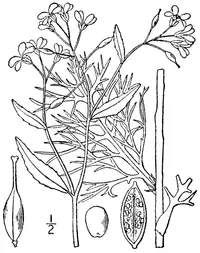
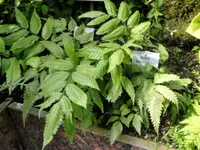
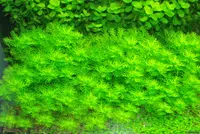
Lake-cress (Rorippa aquatica) is an aquatic perennial from the mustard family that naturally grows in shallow lakes, ponds, and slow streams in North America. It often forms dense, low underwater stands with finely divided, feathery leaves that give a soft, fern-like look. Above the surface it can send up simple stems with small yellow flowers, but many aquarium or pond setups highlight mainly its submerged foliage. It is generally considered easy to grow if water is clean, cool to moderate in temperature, and gently moving. Those conditions make it straightforward to care for Lake-cress in naturalistic aquariums and outdoor water gardens.

Care Difficulty
Moderate Care

Light Preference
Partial Sun

Water Requirements
Aquatic

Temperature Preference
Cool Climate

Hardiness Zone
4–8

Soil Texture
Loamy, Silty, Organic-rich

Soil pH
Slightly acidic (6.5–7.0), Neutral (7.0)

Soil Drainage
Waterlogged tolerant

Fertilization
Minimal (feed rarely)
Scan your plant to receive care tips personalized for your specific plant
Available on iOS and Android
This aquatic species needs bright, gentle light to support compact, healthy growth.
This aquatic plant is adapted to constantly wet conditions rather than fluctuating soil moisture.
This species prefers cool to mild conditions but tolerates a moderate seasonal range.
This aquatic species does not rely on air humidity, as leaves are typically submerged or splashed in water.
For container culture, treat the substrate as a permanently wet aquatic medium rather than standard potting soil.
This species is suitable for containers when grown as a submerged or marginal plant in water-filled tubs or ponds.
This aquatic native needs only light feeding, especially in nutrient-poor setups, to support steady growth without algae problems.
Pruning helps keep Rorippa aquatica compact, healthy, and suited to its tank or pond layout.
This species is usually grown rooted in substrate or shallow margins, so care focuses on gentle transplanting rather than frequent repotting.
Rorippa aquatica is commonly multiplied by cuttings and division under stable aquatic conditions.
In many regions this aquatic perennial is fairly cold tolerant, but winter care depends on climate and whether it grows in a pond or container.

Plant Health Check
Not sure what's wrong with your plant? Check your plant's health inside the app.
Rorippa aquatica is an aquatic member of the mustard family (Brassicaceae) that spends its entire life cycle fully submerged, unlike most brassicas that are terrestrial or only marginally aquatic.
This species develops finely divided, feathery underwater leaves that greatly increase surface area, helping gas exchange and nutrient uptake in low-flow freshwater habitats.
Rorippa aquatica is native to North America and is naturally found in cool, clear lakes and slow streams of the Great Lakes region and parts of the upper Mississippi basin, where it anchors in sandy or muddy substrates.

Rorippa aquatica has been used as a model organism in evolutionary developmental biology to study how environmental conditions, especially submersion and light, influence leaf shape variation within a single species.
This species spreads by creeping stems and self-seeding, especially in shallow, nutrient-rich water. In small ponds or aquariums, regular thinning and trimming are needed to stop it from overtaking slower plants and blocking light.
Keep your plants happy and healthy with plant identification, disease detection, and easy care guidance.