Lawn alga Care (Chondracanthus canaliculatus)

Lawn alga

About Lawn alga

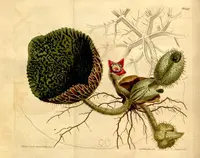
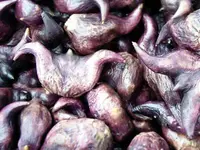
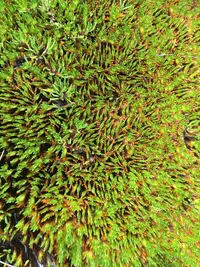
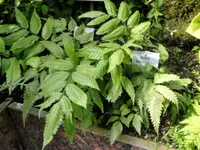
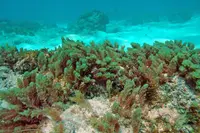
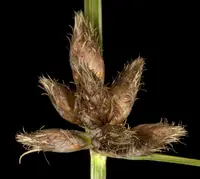
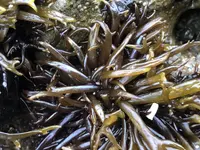
Lawn alga is a common name sometimes used for Chondracanthus canaliculatus, a marine red alga rather than a traditional land plant. It forms dense, often flattened fronds that attach to rocks or other hard surfaces in coastal zones. Color ranges from deep red to brownish, depending on light and age.

This species naturally occurs in cool to temperate marine waters, most often in intertidal and shallow subtidal habitats. It is adapted to constant water movement, changing tides, and high mineral content, which makes home cultivation challenging.

Those wishing to learn how to care for Lawn alga need to consider stable saltwater conditions, strong water flow, and appropriate lighting more than soil or pot choice.

Main Plant Requirements

Care Difficulty

Hard Care

Light Preference

Full Sun

Water Requirements

Aquatic

Temperature Preference

Cool Climate

Hardiness Zone

Unknown

Soil Texture

Sandy, Rocky, Organic-rich

Soil pH

Slightly acidic (6.5–7.0)

Soil Drainage

Waterlogged tolerant

Fertilization

Minimal (feed rarely)

Get Personalized Care Plan

Scan your plant to receive care tips personalized for your specific plant

Available on iOS and Android

How to Care for the Lawn alga

Chondracanthus canaliculatus grows best in bright, unobstructed coastal light with careful exposure management.

  • Provide 4–6 hours of direct morning sun plus bright, open light the rest of the day; gentle afternoon sun is tolerated in cool, foggy areas.
  • In hotter regions, protect from intense afternoon sun using partial shade, rock cover, or tidal pool edges to prevent bleaching and tissue stress in Lawn alga.
  • Watch color and thickness: pale, thinned fronds signal too little light, while crisped or bleached tips indicate excessive sun exposure, especially in summer.

Water availability for Chondracanthus canaliculatus should mimic natural tidal cycles and well-drained coastal conditions.

  • Use very free-draining, coarse, sandy or rocky substrate so water runs through quickly, avoiding constant submersion in stagnant water.
  • Allow surface water to drain off fully between soakings; re-wet when fronds begin to feel slightly less firm but before they become brittle or curl.
  • Reduce soaking frequency in cooler seasons, and avoid standing water or foul smell, which indicate low oxygen and potential rot in attached holdfasts.

Temperature management for this marine alga focuses on cool to mild conditions without freezing or extreme heat.

  • Aim for 50–68°F (10–20°C) for steady growth, with cooler, well-oxygenated water supporting thicker, healthier fronds.
  • Protect from frost; growth slows sharply below about 41°F (5°C), and prolonged exposure near freezing or ice formation damages tissue.
  • Limit exposure to sustained heat above 77–82°F (25–28°C), which can cause softening, discoloration, and increased risk of decay in calm, shallow pools.

This marine alga does not have true humidity needs but reacts to air exposure and drying speed.

  • Aim for 70–100% ambient humidity if kept temporarily emersed, using a covered tank or humid chamber.
  • Tolerates short periods of 50–60% air humidity if fronds stay damp from splashes or mist, not left to dry out.
  • Watch for crisping, bleaching, or brittle texture as signs of desiccation stress and increase moisture exposure or submersion for Lawn alga.

Chondracanthus canaliculatus grows attached to hard marine substrates, so soil preparation only matters in artificial culture systems.

  • Use a coarse, mineral base such as rinsed marine gravel or crushed coral that allows strong water movement around holdfasts.
  • Maintain excellent drainage and circulation so water never becomes stagnant, which quickly damages tissue in culture tanks.
  • Keep pH in the natural seawater range, roughly 8.0–8.4, supported by marine salt mix and, if needed, a small amount of crushed coral buffer.
  • Avoid fine sand, clay, or organic potting mixes, which trap debris, reduce oxygen around attachment points, and encourage rot.

This species can be kept in containers such as marine tanks or trays when water movement and stability are managed carefully.

  • Choose wide, shallow trays or low tanks so fronds spread horizontally without piling up and shading lower layers.
  • Use heavier containers or weighted racks to prevent buoyant thalli from shifting and detaching in strong water flow.
  • Position rock or artificial anchors low and stable in the container so holdfasts remain submerged even when water level fluctuates slightly.

Chondracanthus canaliculatus, often called Lawn alga, is usually grown in natural, nutrient-rich seawater and needs very little added fertilizer in culture.

  • If cultured in tanks, use a dilute, balanced NPK marine plant fertilizer at 1⁄4 strength to avoid algal blooms and tissue burn.
  • Dose during active growth only, typically spring to early autumn, following manufacturer rates for macroalgae systems.
  • Reduce or stop feeding in winter or when growth slows, as excess nutrients can cause water-quality problems.
  • In outdoor seawater systems, rely mainly on natural nutrient inputs and monitor nitrate and phosphate instead of adding compost.

Pruning Chondracanthus canaliculatus is minimal and mainly done to maintain healthy, productive biomass in culture systems.

  • Trim away dead, bleached, or decaying fronds with clean scissors to prevent decomposition and water fouling.
  • Thin crowded clumps to improve water movement and light penetration, which supports faster, cleaner growth.
  • Harvest upper, healthy fronds rather than basal holdfasts to maintain stable attachment and long-term production.
  • Disinfect tools between tanks to reduce transfer of nuisance algae or pathogens.

This marine alga is not typically potted; management focuses on transplanting small thalli or holdfast pieces between culture sites or substrates.

  • Transplant when growth slows or biomass becomes too dense, indicating limited light or poor water circulation rather than container crowding.
  • Choose mild seasons, often spring or early autumn, to move material, avoiding periods of extreme heat or storm activity.
  • Attach thalli gently to clean rocks, ropes, or nets using soft ties or mesh to avoid bruising the tissue.
  • Handle fronds under water where possible and limit exposure to air and temperature swings to reduce stress during transfer.

Propagation of Chondracanthus canaliculatus is commonly done vegetatively using thallus fragments rather than spores in small-scale culture.

  • Select healthy, firm, richly colored fronds and cut them into moderate-sized segments for planting.
  • Carry out cutting and attachment in cooler parts of the day and during stable weather to reduce stress.
  • Secure fragments to ropes, nets, or small rocks so they are held in gentle water movement with good light.
  • Maintain clean, well-circulated seawater and moderate light intensity to encourage rapid attachment and branching.

In mild coastal climates this marine alga generally needs little specific winter care when left in natural seawater.

  • In culture tanks, monitor water temperature and avoid sudden drops below the local winter norm to limit stress.
  • Reduce harvesting in the coldest months so the stock bed maintains enough biomass for spring regrowth.
  • If held in shallow systems prone to freezing, increase water depth or circulation to prevent ice forming around the thalli.

Care Tips

Tidal flow simulation

If growing Lawn alga in a tank, use a programmable wavemaker to create alternating stronger and gentler flow periods that mimic tides, which improves nutrient exchange and keeps the fronds free of settled debris.

Regular biomass thinning

Harvest or trim denser clumps every 2–3 weeks to prevent self-shading and internal decay, always removing older, darker fronds and leaving younger, firm tissue to maintain vigorous regrowth.

Optimized attachment surfaces

Provide rough, inert rocks or ceramic discs as holdfast anchors and secure initial pieces with fine mesh or elastic thread for 1–2 weeks until they attach, which stabilizes growth and reduces mechanical stress.

Salinity and nutrient logging

Keep a simple log of salinity, nitrate, and phosphate readings along with growth observations, adjusting only one parameter at a time so that cause-and-effect relationships become clear over several growth cycles.

Algal community management

Manually remove fast-spreading filamentous algae from frond surfaces and hardscape with a soft brush or gloved fingers during water changes, since unchecked competitors will shade and weaken the main thallus over time.

Common Pests and Diseases

Epiphyte fouling

This condition involves heavy growth of other algae, diatoms, or small invertebrates on the frond surface, blocking light and reducing photosynthesis. Symptoms include dull, roughened fronds often covered with slimy or fuzzy films.

Solution

Reduce nutrient and organic pollution in the water, improve water movement, and gently rinse or swish fronds in clean seawater to dislodge epiphytes. For cultivated material, avoid overcrowding, maintain good flow, and periodically clean holding tanks or culture lines to limit settlement.

Grazing by gastropods

This pest pressure comes from marine snails or limpets that rasp tissue, leaving scraped or perforated areas on fronds. Symptoms include irregular bite marks, thinning edges, and localized tissue loss that can lead to breakage.

Solution

Regularly inspect culture structures and holding tanks, manually remove visible grazers, and use physical barriers such as fine mesh screens around high‑value cultures. In aquaculture systems, maintain moderate flow and avoid rough substrates that favor snail settlement.

Amphipod feeding damage

These crustaceans shelter within fronds and feed on softer tissues, especially on younger parts of the thallus. Symptoms include shredded margins, small missing sections, and fronds that fragment more easily in strong water movement.

Solution

Shake or rinse fronds in flowing seawater to dislodge amphipods and reduce hiding sites such as dense detritus or filamentous algae. In culture systems, keep lines or tanks clean, maintain good flow, and avoid excessive organic buildup that attracts and sustains amphipod populations.

Bacterial thallus rot

This disease is associated with opportunistic marine bacteria that invade stressed or wounded tissue. Symptoms include soft, dark, or translucent patches that spread along the frond, sometimes with a slimy surface and unpleasant odor.

Solution

Remove and discard affected fronds or sections promptly, and avoid leaving decaying material in culture tanks or baskets. Improve water exchange, avoid crowding, reduce handling stress, and maintain stable salinity and temperature to support healthy tissue and limit bacterial spread.

Filamentous algal overgrowth

This problem involves fine filamentous green or brown algae overgrowing fronds, shading them and trapping sediments. Symptoms include fronds entangled in hair‑like mats that reduce movement and light penetration.

Solution

Manually remove filamentous mats by gentle shaking or combing in clean seawater, and reduce dissolved nutrients by improving water turnover and minimizing nutrient inputs. In culture, adjust stocking density, maintain stronger but not damaging water flow, and keep culture lines or structures free of surfaces where nuisance filaments can anchor and spread.

Interesting Facts

Grooved blade structure

This red alga has distinctly channeled or grooved blades that increase surface area and help trap a thin layer of water, which reduces desiccation stress when temporarily exposed at low tide.

Pacific intertidal specialist

It is commonly found on rocky shores of the northeast Pacific, especially along the California coast, where it occupies mid to low intertidal zones and can form dense mats on wave-exposed rocks.

Seasonal color changes

The blades often appear brighter red to reddish-brown in high light and cooler seasons, while in more shaded or subtidal conditions they may look darker and less intensely colored due to differences in pigment expression.

FAQs about Lawn alga

This red seaweed is edible and used in some coastal cuisines, often dried or cooked. Only harvest from clean, unpolluted waters, as seaweeds can accumulate heavy metals and contaminants. Rinse thoroughly to remove sand and small organisms.

Grow Healthy Plants with Botan Care

Keep your plants happy and healthy with plant identification, disease detection, and easy care guidance.

Botan plant care app — identify plants on mobile

Explore More Plants