European Larch Care (Larix decidua)

Also known as: common larch
European Larch

About European Larch

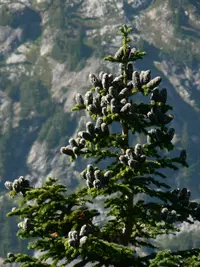
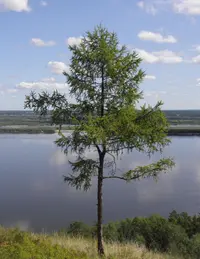
European larch, Larix decidua, is a cold-hardy, deciduous conifer that drops its soft needles in autumn after they turn golden-yellow. It forms a tall, pyramidal tree with fine, horizontal branches and short needle clusters.

This species is native to the mountains of central Europe, where it grows in cool, sunny, well-drained sites. It is generally robust but needs full light and space, so it is not suited to small gardens or long-term container culture. Understanding how to care for European Larch starts with providing sun, good air flow, and soil that does not stay waterlogged.

Main Plant Requirements

Care Difficulty

Moderate Care

Light Preference

Full Sun

Water Requirements

Moderate Water

Temperature Preference

Cold Hardy

Hardiness Zone

2–6

Soil Texture

Sandy, Loamy, Silty

Soil pH

Acidic (5.5–6.5), Slightly acidic (6.5–7.0)

Soil Drainage

Moist but well-drained

Fertilization

Minimal (feed rarely)

Get Personalized Care Plan

Scan your plant to receive care tips personalized for your specific plant

Available on iOS and Android

How to Care for the European Larch

This deciduous conifer needs strong light to form dense, healthy foliage and buds.

  • Provide full sun for 6–8 hours per day; European Larch develops best color and dense growth in open, unshaded sites.
  • It tolerates light partial shade, especially in hot regions, but more than 3–4 hours of shade daily leads to sparse, elongated shoots.
  • In summer, young trees in very hot inland areas benefit from some protection from intense late-afternoon sun to reduce needle scorch and drought stress.

This species prefers consistently moist, cool soil but reacts poorly to both drought and standing water.

  • Outdoors in the ground, allow the top 2–5 cm of soil to begin drying, then water deeply so moisture reaches the full root zone.
  • Increase watering during hot, dry spells, watching for soft, drooping new needles as a sign the tree needs water, and reduce input in cool, rainy periods.
  • Ensure sharply drained soil; persistent puddling, sour smell, or yellowing, shedding needles indicate overwatering and potential root rot, while brittle, browning tips indicate underwatering.

This cold-hardy conifer is adapted to cool to cold climates with marked seasonal changes.

  • Active growth is strongest around 50–68°F (10–20°C), typical of spring and early summer in temperate regions.
  • Mature trees tolerate winter lows to about -40°F (-40°C); frosts during dormancy are not a problem, but very late hard freezes can damage new shoots.
  • In summer, it copes with short heat spells up to about 86–90°F (30–32°C) if soil stays moist; prolonged high heat with dry soil leads to needle scorch and stress.

This species is adapted to outdoor climates and does not require special humidity control.

Larix decidua prefers cool, moist, well-aerated, mineral soils that drain freely but do not dry out quickly.

  • Use a loamy or sandy-loam soil with 20–30% coarse sand or fine gravel to keep structure open and stable.
  • Incorporate 10–20% mature compost to support nutrient availability without making the soil heavy or waterlogged.
  • Aim for slightly acidic to neutral pH, around 5.5–7.0, and avoid strongly alkaline or saline soils that restrict nutrient uptake.
  • Avoid compacted clay, peat-heavy mixes, or standing-water sites, and improve aeration by gently loosening the top 5–8 cm each year.

This species can be grown in containers when young or as a small specimen, but long-term culture is demanding.

  • Choose a deep, heavy container that resists tipping and allows the developing taproot and framework roots to anchor well.
  • Select thick-walled ceramic or concrete pots to moderate temperature swings and reduce rapid substrate drying in summer.
  • Raise the container on feet or spacers so drainage holes stay clear and excess water can escape quickly during heavy rain.

Larix decidua usually needs minimal feeding in the ground, but container or young trees benefit from light, targeted fertilizer.

  • Use a balanced slow-release fertilizer (for example 10-10-10) or well-rotted compost in early spring as new growth starts.
  • Feed once in spring and, if growth is weak, once more in early summer during the active growing season.
  • Apply at 1/2 strength of the label rate for trees in pots to avoid salt buildup and root burn.
  • Stop feeding by late summer; do not fertilize during fall and winter dormancy.

Larix decidua responds well to light structural and health pruning when timed correctly.

  • Carry out pruning in late winter to very early spring, before bud break, so cuts heal as growth resumes.
  • Remove dead, diseased, storm-damaged, or rubbing branches first, cutting back to a healthy lateral or the branch collar.
  • Thin crowded interior shoots slightly to improve light penetration and airflow while keeping the natural pyramidal form.
  • Use clean, sharp bypass pruners or a small pruning saw and make smooth cuts without leaving stubs.

Transplanting Larix decidua focuses on preserving its sensitive root system and timing the move carefully.

  • Look for signs like roots circling the container, water running off quickly, or declining vigor in a bonsai or nursery pot.
  • Plan transplanting or root work for late winter to early spring while the tree is still dormant.
  • For field planting, dig a wide hole, keep the root ball intact, set at the same depth, and water thoroughly afterward.
  • Reduce root stress by shading the tree for the first weeks, maintaining even soil moisture, and avoiding heavy root pruning in one season.

Sexual propagation from seed is standard for Larix decidua, while vegetative methods are less reliable for home growers.

  • Collect mature cones in fall, extract seeds, and cold-stratify them at 34–41°F for 6–8 weeks in moist medium.
  • Sow stratified seed in spring in a free-draining, slightly acidic substrate and keep evenly moist, not waterlogged.
  • Provide bright light, good air circulation, and protection from strong sun and heavy rain for delicate seedlings.
  • Semi-hardwood cuttings taken in late summer root slowly and often poorly, even with rooting hormone and bottom heat.

This deciduous conifer is very cold hardy and usually requires little winter care once established in the landscape.

  • European Larch tolerates freezing temperatures well, so foliage loss in fall is normal dormancy, not damage.
  • Apply a 5–8 cm mulch layer over the root zone in late fall, keeping it slightly away from the trunk flare.
  • For container trees, place pots against a sheltered wall, insulate the container, or heel them into soil to prevent root freeze–thaw cycles.

Care Tips

Root flare check

When planting or after a few seasons, gently remove excess soil around the trunk base until the uppermost structural roots are just visible, since a buried root flare increases risk of rot and weak anchoring in wind.


Wind-hardening young trees

In the first 2–3 growing seasons, avoid staking too rigidly and allow some trunk movement, which encourages stronger taper and deeper rooting for better storm resistance.

Mulch ring management

Maintain a grass-free mulch ring 30–60 cm around the base, using a 5–7 cm layer of wood chips kept a few cm away from the trunk to protect roots from mower damage and reduce soil compaction.

Seasonal candle pinching

On young trees in late spring, lightly pinch back a portion of the soft new shoots (candles) on overly vigorous branches to keep a balanced crown and reduce the risk of narrow, weak crotches forming.

Winter weight relief

In areas with heavy, wet snow, gently brush accumulated snow off flexible branches during cold spells to reduce breakage, which is especially helpful when growing European Larch in exposed sites.

Common Pests and Diseases

Larch adelgid

This pest feeds on needles and twigs, causing yellowing, needle distortion, and premature needle drop, especially on younger shoots.

Solution

Prune and destroy heavily infested twigs, then treat remaining foliage in spring with a targeted horticultural oil or insecticidal soap, ensuring thorough coverage of needles and branch tips. Encourage natural predators such as lady beetles and avoid excessive nitrogen fertilization, which promotes soft, susceptible growth.

Larch casebearer

This pest is a small moth larva that lives in a silken case on needles, leading to browning, hollowed needles, and a thinned crown over time.

Solution

Remove and destroy heavily damaged branch tips where feasible to reduce larval numbers, then monitor new growth and apply a biological insecticide containing Bacillus thuringiensis (Bt) at budbreak when young larvae are active. Maintaining overall tree vigor through proper watering and avoiding soil compaction helps the tree outgrow light to moderate infestations.

Larch needle cast

This disease is caused by fungi that infect needles, leading to yellowing, brown bands or spots, and early needle drop starting on lower branches.

Solution

Collect and dispose of fallen needles to reduce fungal spores, and improve airflow by avoiding overcrowding and, where practical, thinning nearby vegetation. In high-value plantings, apply an appropriate preventive fungicide at budbreak and repeat according to label directions during wet springs, which strongly favor infection.

Larch canker

This disease produces sunken, dead patches on branches or stems, often with resin exudation, leading to branch dieback and, in severe cases, structural weakness.

Solution

Prune out infected branches well below visible cankers during dry weather, disinfecting pruning tools between cuts with alcohol or a 10% bleach solution. Avoid wounding the trunk and maintain good tree vigor with proper site selection, mulching, and drought avoidance, as stressed trees are more susceptible to canker fungi.

Sawfly larvae

These insects feed in groups on clusters of needles, rapidly stripping sections of branches and giving the tree a ragged, thinned appearance.

Solution

On smaller trees, dislodge larvae by shaking branches or hose them off with a strong stream of water, then crush or collect fallen larvae. For heavier infestations, use a targeted insecticidal soap or a selective insecticide labeled for sawflies, applied when larvae are small and actively feeding, and monitor annually as part of ongoing Larix decidua care instructions.

Interesting Facts

Deciduous needle conifer

European larch is unusual among conifers because it sheds its soft needles each autumn, turning a clear golden-yellow before dropping them and flushing fresh green needles again in spring.

High‑altitude specialist

This species naturally dominates subalpine slopes in the Alps and Carpathians, forming open, light-filled forests on cold, rocky sites where many broadleaf trees cannot survive.

Long‑lived timber tree

European larch can reach ages of several centuries and has historically been valued in central Europe for durable, resin-rich wood used in construction, especially in exposed mountain buildings.

Botan icon

Did you know?

Some of the oldest known European larches, such as individuals in the Alps of Switzerland and Italy, are estimated from growth-ring studies to be around 600–800 years old, making them among the longest-lived tree species in European mountain forests.

FAQs about European Larch

Brown needles usually result from drought stress, root damage, or salt and pollution exposure. Check soil moisture, drainage, and recent road-salt or fertilizer contact. Winter windburn can also brown exposed branches, which may recover if buds remain firm.

Grow Healthy Plants with Botan Care

Keep your plants happy and healthy with plant identification, disease detection, and easy care guidance.

Botan plant care app — identify plants on mobile

Explore More Plants