Subalpine Fir Care (Abies lasiocarpa)

Also known as: Alpine Fir
Subalpine Fir

About Subalpine Fir

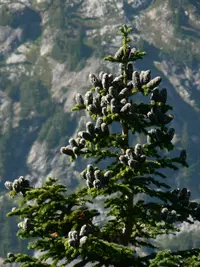
Subalpine fir, Abies lasiocarpa, is a cold-loving coniferous tree native to high mountains of western North America. It often forms dense, upright spires with a narrow crown. Needles are short, soft, and blue-green, creating a fine-textured, tidy appearance even in harsh climates.

In nature it grows in cool, moist forests with long winters and short summers. It prefers full sun in cool regions, evenly moist but well-drained soil, and consistent snow or cold.

Gardeners who care for Subalpine Fir should know it is slow-growing and sensitive to heat, air pollution, and compacted or dry soils, which limits its success in many lowland landscapes.

Main Plant Requirements

Care Difficulty

Moderate Care

Light Preference

Full Sun

Water Requirements

Moderate Water

Temperature Preference

Cold Hardy

Hardiness Zone

2–6

Soil Texture

Loamy, Sandy, Rocky

Soil pH

Strongly acidic (4.5–5.5), Acidic (5.5–6.5)

Soil Drainage

Moist but well-drained

Fertilization

Minimal (feed rarely)

Get Personalized Care Plan

Scan your plant to receive care tips personalized for your specific plant

Available on iOS and Android

How to Care for the Subalpine Fir

This high-elevation conifer prefers cool sites with bright light but protection from intense heat.

  • Provide 4–6 hours of direct morning sun with light afternoon shade; in hotter regions, use dappled light after noon to prevent needle scorch.
  • Subalpine Fir tolerates partial shade, especially in lower, warmer elevations, but very dense shade leads to sparse, elongated growth and thinning foliage.
  • In winter, full sun is usually beneficial, but in exposed sites young trees may need windbreaks to reduce drying from strong sun and cold winds.

This species prefers consistently moist, cool, well-drained soil rather than alternating drought and saturation.

  • Check the top 3–5 cm of soil; water when it feels slightly dry, aiming for evenly moist soil without puddling or standing water.
  • Reduce watering in cool, wet seasons and increase during hot, dry, or windy periods; watch for limp, dull needles as a sign of drought stress.
  • Abies lasiocarpa dislikes waterlogged conditions; yellowing needles and soft, dark roots indicate overwatering and poor drainage that need correction.

This cold-adapted conifer thrives in cool climates and tolerates significant winter frost.

  • Best growth occurs around 50–70°F (10–21°C) during the growing season, especially where nights stay cool and summers are not humid or excessively hot.
  • Mature trees tolerate winter lows near -40°F (-40°C) when hardened, but sudden warm spells followed by hard freezes can damage buds and young shoots.
  • Extended heat above 85°F (29°C), especially with dry winds, can stress Abies lasiocarpa; provide mulch and avoid heat-reflecting surfaces near the root zone.

This species tolerates a wide humidity range and usually does not need special humidity management outdoors.

  • Target ambient humidity around 40–70% when possible, similar to its cool, moist native mountain habitats.
  • It handles short dry spells, but prolonged hot, very dry air can brown needle tips and edges.
  • If air is very dry, use mulch over the root zone and provide wind protection to reduce moisture loss from foliage.

Abies lasiocarpa prefers cool, moist, well‑aerated soil that never stays waterlogged.

  • Use a deep, loamy soil with moderate organic matter, combining native soil with composted bark and leaf mold for structure.
  • Ensure rapid drainage by avoiding heavy clay; on compact sites, build raised beds or incorporate coarse sand and fine gravel.
  • Aim for slightly acidic to acidic conditions, roughly pH 5.0–6.5, and avoid liming unless a soil test clearly indicates need.
  • Improve aeration and root health by mixing in chunky materials such as pine bark fines that prevent the soil from becoming dense or smeary when wet.

This species is only moderately suitable for container growing and usually stays healthier in the ground long term.

  • Choose a tall, heavy container that resists tipping, as the tree becomes top‑heavy even when relatively short.
  • Select a potting mix blended with pine bark and coarse grit to keep the root zone cool and prevent compaction over time.
  • Place the container where winter root temperatures remain cold but not deeply frozen, since exposed pots chill roots much faster than ground soil.

This high-elevation conifer needs minimal feeding in typical garden soil.

  • Use a light application of balanced slow-release conifer fertilizer (around 10-10-10) in early spring only if growth is weak or soil is poor.
  • Apply once per year during the growing season; avoid summer overfeeding, which can cause overly soft growth.
  • Skip fertilizing in winter, as the tree is dormant and cannot use extra nutrients.
  • When using liquid feeds on young container plants, apply at 1/2 strength to avoid root burn.

Abies lasiocarpa needs only light, corrective pruning to maintain health and natural form.

  • Plan any pruning for late winter or very early spring, before new growth starts.
  • Remove dead, diseased, storm-damaged, or rubbing branches first, cutting back to the branch collar.
  • Avoid cutting the central leader, as this controls the tree’s strong upright shape.
  • Use clean, sharp bypass pruners or a pruning saw and make smooth, angled cuts.

This species is usually field-grown or landscape-planted, so transplanting young trees is more relevant than repotting long-term containers.

  • Look for roots circling inside the pot, slowed growth, or the plant drying out very fast as signs a young tree needs a larger container or planting site.
  • Transplant in late fall or early spring when the tree is dormant and soil is workable, typically every 2–3 years for nursery stock.
  • Dig a wide hole, keep the root ball intact, and plant at the same depth as before to limit transplant shock.
  • Water deeply after planting, mulch 5–8 cm around (not touching the trunk), and keep soil evenly moist while new roots establish.

This fir is most often propagated professionally, mainly from seed, as home propagation is slow and requires patience.

  • Collect ripe, brown cones in late summer to autumn and extract seeds once dry.
  • Provide cold stratification at about 34–41°F for 6–8 weeks to break seed dormancy.
  • Sow in a free-draining, slightly acidic mix, keep evenly moist, and maintain cool temperatures with bright, indirect light.
  • Semi-hardwood cuttings root poorly and need high humidity, rooting hormone, and several months to form stable roots.

This cold-hardy conifer tolerates severe winters and usually needs little special care once established in the ground.

  • Young or newly planted trees benefit from 5–8 cm of mulch over the root zone to moderate freeze–thaw cycles.
  • Container-grown Subalpine Fir should be moved into an unheated but sheltered spot where roots will not freeze solid.
  • In windy, exposed sites, use a breathable windbreak to reduce needle desiccation during harsh cold spells.

Care Tips

Snow load management

In areas with heavy, wet snowfall, gently knock accumulated snow off branches with a broom to reduce the risk of limb breakage and maintain a strong central structure.

Early leader training

When the tree is young, select and lightly stake a single, straight central leader and remove competing upright shoots to encourage a stable, wind-resistant form.

Mulch for root stability

Apply a 5–8 cm layer of coarse, uncolored wood mulch over the root zone, keeping it a few cm away from the trunk, to buffer soil temperature, retain moisture, and reduce heaving in freeze–thaw cycles.

Wind exposure planning

Plant on the leeward side of a building or windbreak and avoid funnel-shaped wind corridors so the tree develops dense, even branching rather than windburned or one-sided growth.

Root protection from traffic

Keep foot and equipment traffic off the soil under the canopy drip line by using a dedicated path or edging, since compaction in this zone greatly reduces fine root health when growing Subalpine Fir.

Common Pests and Diseases

Bark beetles

These insects bore into the trunk and larger branches, causing resin bleeding, fading needle color, and eventual dieback of entire sections of the tree.

Solution

Reduce stress on the tree through proper watering during drought, avoiding trunk injury, and maintaining a mulch layer over the root zone; severely infested trees are usually removed to prevent spread, while nearby trees can be protected with properly timed preventive trunk sprays labeled for conifer bark beetles if local regulations allow.

Spruce budworm

This pest feeds on new buds and needles, leading to chewed foliage, webbing, and thin, bare branch tips on the upper crown.

Solution

Prune and destroy heavily infested shoot tips where practical, encourage natural predators by limiting broad-spectrum insecticides, and in larger landscape settings consider timing a biological insecticide containing Bacillus thuringiensis kurstaki (Btk) to bud break according to local extension guidance.

Fir needle rust

This disease causes yellow spots on needles and, later in the season, orange pustules that release powdery spores, leading to premature needle drop.

Solution

Rake and remove fallen needles to reduce spore levels, improve spacing and airflow around trees, and avoid overhead irrigation; in high-value plantings, consult local guidance on the need and timing for fungicidal sprays labeled for rust on firs as part of Abies lasiocarpa care instructions.

Cytospora canker

This disease creates sunken, resin-soaked cankers on branches, often starting on lower limbs, which then turn brown and die back from the tip inward.

Solution

Prune out affected branches during dry weather, cutting several inches into healthy wood and disinfecting tools between cuts, then reduce plant stress by watering during prolonged dry periods and avoiding mechanical injury to bark so the tree can compartmentalize new infections more effectively.

Needle cast

This disease leads to browning and shedding of older needles from the inner parts of branches, giving the tree a thin, sparse appearance while current-year needles may remain green initially.

Solution

Remove and dispose of fallen needles, increase spacing and airflow, and avoid frequent overhead watering; in persistent cases, fungicides labeled for needle cast on fir can be applied in early spring to protect new growth, guided by local extension recommendations for timing and product choice.

Interesting Facts

Blue-tinted alpine needles

The needles often show a bluish or silvery cast due to a thick waxy coating that protects them from intense ultraviolet radiation and desiccating winds in high-elevation habitats.

Unusual stem rooting

In some high-elevation sites, this species can root from stems that are buried by snow and soil creep, allowing new vertical shoots to arise and helping the tree persist on unstable, cold mountain slopes.

Cloud forest specialist

This fir commonly forms upper subalpine and treeline forests in western North America, where frequent cloud immersion and long-lasting snowpack supply much of its moisture instead of regular rainfall.

Botan icon

Did you know?

In extreme alpine conditions, long-lived individuals may adopt a krummholz growth form, where the tree is sculpted by wind and ice into low, sprawling mats that can be far older than nearby taller trees, preserving living tissue close to the ground where winter temperatures and wind stress are less severe.

FAQs about Subalpine Fir

This species grows slowly, typically 15–30 cm per year in favorable conditions. Growth is slower at higher elevations or in exposed, windy sites. Young trees often establish roots for several years before height growth becomes noticeable.

Grow Healthy Plants with Botan Care

Keep your plants happy and healthy with plant identification, disease detection, and easy care guidance.

Botan plant care app — identify plants on mobile

Explore More Plants