Chinese Hemlock Care (Tsuga chinensis)

Chinese Hemlock

About Chinese Hemlock

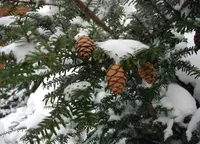
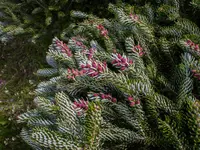
Chinese hemlock, Tsuga chinensis, is an evergreen conifer that forms a graceful, pyramidal tree with fine, flat needles and small, dangling cones. It is typically grown as a landscape or woodland specimen rather than a houseplant.

This species is native to mountains in China and Taiwan, where it grows in cool, moist forests. In cultivation it is valued for its soft texture, layered branching, and steady, moderate growth.

It prefers cool climates, consistent soil moisture, and well-drained, slightly acidic soil, which can make how to care for Chinese Hemlock more demanding in hot or very dry regions.

Main Plant Requirements

Care Difficulty

Moderate Care

Light Preference

Partial Shade

Water Requirements

Regular Water

Temperature Preference

Cold Hardy

Hardiness Zone

5–8

Soil Texture

Loamy, Sandy, Organic-rich

Soil pH

Strongly acidic (4.5–5.5), Acidic (5.5–6.5)

Soil Drainage

Moist but well-drained

Fertilization

Minimal (feed rarely)

Get Personalized Care Plan

Scan your plant to receive care tips personalized for your specific plant

Available on iOS and Android

How to Care for the Chinese Hemlock

This species prefers bright, cool conditions with protection from harsh midday sun.

  • Provide 3–5 hours of gentle morning sun with light shade or dappled light through the afternoon, especially in warmer regions.
  • Site Chinese Hemlock in partial shade; full sun in hot, dry areas can scorch needles and cause browning, while deep shade leads to sparse, elongated growth.
  • In cooler coastal or northern climates, it tolerates more direct sun, but mulch and consistent soil moisture help reduce stress during high summer light.

Tsuga chinensis prefers consistently moist, cool soil that never stays saturated.

  • Water when the top 3–5 cm of soil feels slightly dry, then soak the root zone deeply so moisture reaches 20–30 cm down.
  • Use well-drained, slightly acidic soil; pooling water, sour odor, or yellowing, dropping needles indicate overwatering and poor drainage.
  • Increase watering during hot, windy periods and reduce in cool, wet seasons, watching for limp, curling, or browning needle tips as a sign of drought stress.

This conifer thrives in cool to mild climates and does best with moderate temperature swings.

  • Optimal growth occurs around 50–75°F (10–24°C), with steady moisture helping the tree handle minor fluctuations.
  • Dormant trees tolerate winter lows near -10°F (-23°C) once established, but newly planted specimens need protection from sudden hard freezes.
  • Prolonged heat above 85°F (29°C), especially with dry air, can stress needles, so provide mulch, wind protection, and partial shade during hot summers.

This conifer prefers cool, moist air and can suffer in hot, very dry conditions.

  • Aim for 50–70% humidity in sheltered planting sites, such as near shaded water features or in humid microclimates.
  • Tolerates short dry spells but chronic dry air causes browning needle tips and premature needle drop, especially on inner branches.
  • Increase humidity by wind protection, mulching the root zone 5–8 cm deep, and avoiding heat-reflective hardscapes nearby.

Tsuga chinensis grows best in consistently moist, well-aerated, organic-rich soil.

  • Use a deep, loamy structure with high organic matter, such as a mix of native soil, compost, and fine bark for moisture retention and root penetration.
  • Ensure free drainage; the soil should stay evenly moist but never waterlogged, as standing water encourages root rot and reduced oxygen around roots.
  • Target slightly acidic conditions, roughly pH 5.0–6.5, and avoid strongly alkaline or compacted clay that restricts root growth and nutrient uptake.
  • Improve aeration by incorporating 10–20% coarse sand or fine pine bark into heavy soils and keeping a permanent mulch layer to moderate moisture swings.

This species is only moderately suitable for long-term container growing and is best kept in large, stable outdoor tubs when container-grown at all.

  • Choose a tall, heavy container that resists tipping and matches the plant’s eventual height and sail-like canopy in windy sites.
  • Use a deep, moisture-retentive but fast-draining mix, such as composted bark with some sand, to prevent root suffocation while avoiding rapid drying.
  • Raise the container on feet or bricks so drainage holes stay clear and excess water exits quickly after heavy rain or irrigation.

This species usually grows well in reasonably fertile soil and needs only light feeding in managed landscapes.

  • Use a balanced slow-release fertilizer (for example 10-10-10) or a thin layer of compost over the root zone in early spring.
  • Apply once per year for established trees; young or container-grown Chinese Hemlock may benefit from a second light feeding in midsummer.
  • Reduce or skip feeding in fall and winter, when growth slows and nutrient demand is low.
  • Keep granular fertilizer off the trunk and needles, and use at 1/2 label rate to avoid salt injury.

Pruning Tsuga chinensis is mainly about maintaining structure and removing unhealthy wood rather than frequent shaping.

  • Plan structural pruning for late winter to very early spring, before active growth starts.
  • Remove dead, diseased, or storm-damaged branches first, cutting back to healthy wood with clean bypass pruners or a sharp saw.
  • Thin crowded interior branches lightly to improve air flow, but retain the tree’s natural layered outline.
  • Avoid cutting back into bare, older wood that lacks green shoots, since hemlock does not bud well from old stems.

Tsuga chinensis is usually planted in the ground, so care focuses on thoughtful transplanting rather than frequent repotting.

  • Transplant in early spring or early fall, when temperatures are mild and soil moisture is reliable.
  • Look for signs such as circling roots in a container, poor vigor, or the root ball drying out very fast as indicators a move is needed.
  • Dig a wide planting hole, keep the root flare at soil level, and gently loosen circling roots without tearing the root mass.
  • Water deeply after planting, apply a 5–8 cm mulch ring, and keep soil evenly moist for the first 1–2 growing seasons to reduce stress.

Propagation of Tsuga chinensis is possible but slow, so it is usually done by nurseries rather than home gardeners.

  • Use semi-ripe cuttings in late summer, taken from healthy, non-flowering shoots 8–12 cm long.
  • Remove lower needles, treat the base with a rooting hormone, and place in a well-drained, moist medium such as sand and peat.
  • Maintain high humidity, bright indirect light, and cool temperatures around 60–70°F for several months while roots develop.
  • Seed propagation is possible but slow; provide a cold stratification period of 60–90 days before sowing in a free-draining mix.

This species is generally cold hardy in suitable climates and typically needs only basic winter care once established.

  • In colder regions, apply a 5–8 cm mulch layer over the root zone, keeping it slightly away from the trunk to limit freeze–thaw stress.
  • Shelter young trees from drying winter winds with a temporary windbreak or breathable burlap wrap around the canopy.
  • Container-grown plants should be moved into a sheltered, unheated but frost-moderated location, and the root ball kept slightly moist.

Care Tips

Windbreak placement

Site young trees where existing structures or taller plants provide some shelter from prevailing winter winds, which reduces desiccation and branch breakage in exposed landscapes.


Mulch root zone

Maintain a 5–8 cm deep ring of composted bark or wood chips over the root zone, keeping it a few cm away from the trunk, to stabilize soil moisture and protect the shallow feeder roots.

Staggered formative pruning

Over the first 3–5 years, remove only a few poorly placed or rubbing branches each late winter to build a strong, layered framework without shocking the tree.

Monitor for woolly adelgid

Inspect undersides of needles and twig bases at least twice a year for small white woolly masses, and if found early, use a labeled systemic insecticide or horticultural oil according to local recommendations for caring for Chinese Hemlock.

Snow load management

In regions with heavy, wet snow, gently brush accumulated snow off branches with a soft broom during thaws to prevent limb bending or breakage, avoiding any action when branches are frozen and brittle.

Common Pests and Diseases

Hemlock woolly adelgid

This pest feeds on needles and twigs, causing needle yellowing, thinning foliage, and branch dieback over time. Symptoms include white, cottony masses at the base of needles, especially on underside of branches.

Solution

Prune and destroy heavily infested twigs, then treat remaining foliage with horticultural oil in late winter or early spring, coating needle bases thoroughly. For valuable trees, systemic insecticides containing imidacloprid or dinotefuran can be applied to soil or trunk by a licensed professional, and trees should be irrigated during drought to reduce stress while recovery occurs.

Elongate hemlock scale

This pest causes yellow stippling, a dull gray-green appearance, and premature needle drop, often first on lower or inner branches. These insects appear as flattened, brownish scales on the underside of needles, often co-occurring with hemlock woolly adelgid.

Solution

Remove and destroy heavily infested branches to reduce populations and improve light and airflow. Treat remaining foliage with properly timed applications of horticultural oil or labeled systemic insecticides, and avoid high-nitrogen fertilization that can encourage scale outbreaks.

Hemlock looper

This pest is a defoliating caterpillar that chews needles, leading to sparse crowns and in severe cases partial branch dieback. Symptoms include ragged or missing needles and noticeable frass (droppings) beneath the tree during outbreaks.

Solution

Monitor foliage closely in late spring to early summer and hand-pick caterpillars where practical on smaller trees. For larger or heavily affected trees, use Bacillus thuringiensis (Bt) products targeted at young caterpillars, and maintain tree vigor with proper watering to support recovery after defoliation while following appropriate Tsuga chinensis care instructions.

Needle blight

This disease causes browning and premature shedding of older needles, often starting on lower, shaded branches. Symptoms include tan to brown needles with dark transverse bands or small fruiting bodies, giving the tree a thin or tufted appearance.

Solution

Improve air circulation by selectively thinning crowded branches and avoiding overhead irrigation that keeps foliage wet. Remove and dispose of fallen needles and infected twigs, and if disease is recurring, apply a labeled fungicide in early spring to protect new growth, following local extension guidance on timing.

Canker disease

This disease produces sunken, discolored areas on branches or stems, which can girdle the tissue and cause dieback beyond the infected point. Symptoms include resin exudation and sudden browning of branch tips above the canker site.

Solution

Prune out affected branches several inches below visible cankers during dry weather, disinfecting tools between cuts. Reduce plant stress through consistent watering in dry periods and mulching the root zone, and avoid wounding bark so the tree can better resist further infection while you grow Tsuga chinensis in landscape settings.

Interesting Facts

High-altitude native range

This species is naturally distributed in mountainous regions of central and southern China, typically growing on cool, moist slopes and ravines at mid to high elevations, where fog and cloud cover are frequent.

Important genetic resource

Chinese hemlock has been studied as a potential source of genetic resistance to hemlock woolly adelgid, an invasive sap-sucking insect that devastates North American hemlock species, because T. chinensis often shows less severe damage when exposed.

Broad environmental tolerance

Compared with several other hemlocks, this species tolerates a relatively wide range of soil types and slightly warmer conditions, which makes Tsuga chinensis care instructions of interest for breeding and conservation programs.

Botan icon

Did you know?

In parts of eastern Asia, Chinese hemlock has been used historically as a timber tree, with its straight trunk and fine-grained wood valued for construction and joinery, while its bark has been an important local source of tannins for leather production.

FAQs about Chinese Hemlock

Growth is generally slow to moderate. Young trees often add 15–30 cm per year, sometimes more in ideal conditions. Rate depends on climate, soil fertility, moisture consistency, and root health, especially in the first 10 years.

Grow Healthy Plants with Botan Care

Keep your plants happy and healthy with plant identification, disease detection, and easy care guidance.

Botan plant care app — identify plants on mobile

Explore More Plants