New Caledonia pine Care (Araucaria columnaris)

Also known as: Coral Reef Araucaria, Cook's Pine, Cook's araucaria, columnar araucaria
New Caledonia pine

About New Caledonia pine

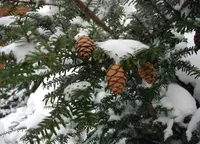
New Caledonia pine, Araucaria columnaris, is an evergreen conifer valued as both an outdoor landscape tree in mild climates and a container plant indoors. It has a tall, narrow columnar shape with layered, symmetrical branches and dense, scale-like leaves that give a clean architectural look.

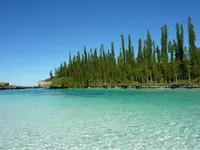
In nature it occurs on the islands of New Caledonia in the South Pacific, often along coasts. As a houseplant it grows slowly and stays manageable for many years, which makes it easier to place, but it dislikes neglect or sudden changes. It prefers bright light, stable temperatures, and evenly moist but well-drained soil, so anyone learning how to care for New Caledonia pine should focus on avoiding extremes in light and watering.

Main Plant Requirements

Care Difficulty

Moderate Care

Light Preference

Full Sun

Water Requirements

Moderate Water

Temperature Preference

Warm Climate

Hardiness Zone

10–11

Soil Texture

Sandy, Loamy, Organic-rich

Soil pH

Acidic (5.5–6.5), Slightly acidic (6.5–7.0)

Soil Drainage

Well-drained

Fertilization

Minimal (feed rarely)

Get Personalized Care Plan

Scan your plant to receive care tips personalized for your specific plant

Available on iOS and Android

How to Care for the New Caledonia pine

This species prefers bright, consistent light similar to open coastal conditions.

  • Outdoors, provide full sun with at least 6–8 hours of direct light, ideally including gentle morning sun; young trees benefit from some light afternoon shade in very hot inland sites.
  • New Caledonia pine tolerates light partial shade (3–4 hours sun) but growth becomes looser and less dense, and lower branches may thin over time.
  • In regions with intense summer sun, offer filtered light or brief shade during 12–4 p.m. to reduce needle scorch and excessive drying of the root zone.

Watering should support steady moisture without saturating the root zone.

  • Allow the top 3–5 cm of soil to dry before deep watering, ensuring moisture reaches the full root depth but excess drains freely from the site or planting hole.
  • Reduce watering frequency in cool seasons when growth slows, but avoid letting the soil dry completely; slightly moist, well-drained soil suits Araucaria columnaris best.
  • Watch for yellowing, soft needles or a sour soil smell as signs of overwatering, and for browning, crisp needle tips and light soil color as indicators of underwatering.

This conifer prefers mild, frost-free climates with stable temperatures.

  • Optimal growth occurs around 65–75°F (18–24°C), though healthy trees can function well from about 55–80°F (13–27°C) in many coastal areas.
  • The tree is sensitive to frost; brief drops to 30–32°F (-1–0°C) may cause needle burn, and repeated or lower freezes can damage young stems and buds.
  • In hot climates, it tolerates short periods up to about 90–95°F (32–35°C) if soil moisture is stable and the roots are mulched to limit heat and evaporation.

This conifer prefers moderate indoor humidity and reacts if air is very dry for long periods.

  • Aim for 40–60% relative humidity to keep foliage dense and tips healthy.
  • It tolerates short spells of drier air but prolonged levels below 30% cause browning at needle tips and increased shedding.
  • For a New Caledonia pine, group plants, use a humidity tray, or run a small humidifier nearby instead of misting.

Araucaria columnaris needs a freely draining, slightly acidic, sandy-loam type substrate.

  • Use a mix of roughly 40% pine bark fines, 30% coarse sand, and 30% peat or coco coir to balance moisture retention and aeration.
  • Ensure sharp drainage; the mix should drain within 30–60 seconds after watering, without waterlogging pockets around the roots.
  • Target pH around 5.5–6.5, avoiding strongly alkaline mixes that can reduce nutrient availability and cause chlorosis.
  • Do not use heavy clay-based garden soil or compacted potting mixes, which limit oxygen around roots and increase root-rot risk.

This species adapts well to container growing when its tall, top-heavy form is supported properly.

  • Choose a wide, weighty pot or add stones to the base so the container stays stable in wind and cannot tip easily.
  • Select a container slightly deeper than typical houseplant pots to give the taproot enough vertical space for anchoring.
  • Opt for a thicker-walled, less porous pot material in hot, exposed sites to slow moisture loss and reduce watering frequency.

Araucaria columnaris benefits from light, balanced feeding but is sensitive to overfertilization.

  • Use a balanced, slow-release fertilizer or dilute liquid feed around 1/4–1/2 strength, labeled for woody evergreens.
  • Apply during spring and summer only, about every 6–8 weeks for container plants; in-ground trees often need less.
  • Keep granules or solution off the trunk and foliage, and water before and after feeding to prevent root burn.
  • Stop feeding in fall and winter, when growth slows, to avoid weak, frost-tender shoots when caring for New Caledonia pine.

Pruning needs for Araucaria columnaris are minimal and mainly corrective.

  • Carry out light pruning in late winter or early spring before active growth starts.
  • Remove only dead, diseased, or storm-damaged branches, cutting back to the branch collar with clean bypass pruners or a sharp saw.
  • Avoid cutting the central leader, as this permanently distorts the natural spire-like form and symmetry.
  • Limit thinning of lower branches; excessive removal increases sunscald risk and can stress the tree.

This species dislikes frequent disturbance, so repotting or transplanting Araucaria columnaris should be infrequent and carefully planned.

  • Check for roots circling the pot, pushing through drainage holes, or for slowed growth and rapid drying soil as signs a larger container is needed.
  • Plan repotting or transplanting for early spring, allowing roots to recover as warm weather begins.
  • Step up only 1–2 pot sizes or move to a permanent site with well-drained soil, keeping the original soil ball intact.
  • Handle the rootball gently, avoid breaking major roots, water thoroughly afterward, and shade from harsh sun for 1–2 weeks to reduce stress.

Propagation of Araucaria columnaris is possible but slow and technically demanding for home growers.

  • Most propagation uses semi-hardwood cuttings from upright shoots taken in late summer, though rooting rates are often low.
  • Provide bottom heat around 70–75°F, high humidity, and a very well-drained medium such as 1:1 perlite and coarse sand.
  • Use a rooting hormone on cut surfaces, insert cuttings upright, and maintain bright, indirect light without full sun.
  • Seed propagation is mainly done by nurseries; fresh seed, warm temperatures, and consistent moisture improve germination.

Winter care for Araucaria columnaris is important in climates colder than mild coastal zones.

  • This species is frost-sensitive and performs best where temperatures stay above about 28°F.
  • Mulch the root zone with 5–8 cm of bark or compost, keeping mulch a few cm from the trunk to limit rot.
  • In colder areas, grow Araucaria columnaris in containers and move indoors to a bright, cool room before hard frost.

Care Tips

Rotate For Symmetry

Turn the pot 90° every 2–3 weeks so the crown develops evenly and the trunk stays straight rather than leaning toward the strongest light source.

Single-Leader Training

If a storm, pet, or handling damage bends the top, gently stake the main leader vertically with soft ties for 1–2 growing seasons to preserve the classic columnar form.

Salt-Sensitive Watering

In areas with hard or salty tap water, occasionally flush the container thoroughly with low-salt water (rain, distilled, or filtered) to reduce salt buildup that can brown the needle tips.

Careful Container Upsizing

When repotting, move up only 1 pot size and use a tall, heavy container to reduce tipping and to accommodate the deepening root system of this naturally vertical tree.

Seasonal Outdoor Acclimation

If moving the plant outdoors for summer, acclimate it gradually over 7–10 days in bright shade before full exposure to sun and wind to reduce shock when growing New Caledonia pine.

Common Pests and Diseases

Scale insects

These insects attach to stems and needles, sucking sap and causing yellowing, thinning foliage, and sticky honeydew that can lead to sooty mold. Infestations often start on sheltered indoor or protected outdoor specimens.

Solution

Prune and discard heavily infested twigs, then wipe accessible stems and branches with a cotton pad dipped in diluted alcohol or insecticidal soap. For larger trees or persistent problems, use a horticultural oil spray labeled for conifers, applied thoroughly to trunk and branches during mild, dry weather, and repeat as directed to disrupt the life cycle.

Spider mites

This pest thrives on stressed or indoor trees in warm, dry air, causing dull, grayish or bronzed needles, fine webbing, and premature needle drop. Symptoms include a dusty look to foliage and speckling when viewed closely.

Solution

Increase humidity around the plant and hose down the canopy, paying attention to the undersides of needles to physically remove mites. If populations remain high, apply a miticide or horticultural oil labeled for conifers, repeating at intervals to catch new hatchlings, and avoid placing the tree next to heat sources or in very dry rooms as part of New Caledonia pine indoor care.

Needle blight

This disease causes browning and death of older needles, often starting at the lower branches and working upward, sometimes leaving only tufted green growth at branch tips. Humid, poorly ventilated conditions favor spread.

Solution

Remove and dispose of affected needles and severely affected lower branches to reduce spore sources, and avoid overhead watering that keeps foliage wet. Improve spacing and airflow around the tree, and if the problem recurs, use a copper- or chlorothalonil-based fungicide labeled for conifers, applied according to label directions during the main growth period.

Phytophthora collar rot

This disease attacks the root collar area in poorly drained or chronically wet soils, causing gradual yellowing, stunted growth, and sudden branch dieback; the bark at the base may darken and ooze resin. Symptoms include decline in spite of adequate watering and fertilization.

Solution

Improve drainage immediately by reducing watering, amending soil, or relocating container plants, and avoid letting water stand around the base of the trunk. Remove and destroy severely affected plants, and in high-value landscape situations, consult a local arborist about soil drenches with appropriate Phytophthora-targeted fungicides and ongoing moisture management.

Interesting Facts

Genetic island lineage

This species is endemic to New Caledonia and is part of an ancient Gondwanan lineage, meaning its ancestors were already present before the southern supercontinent broke apart.

Natural coastal column

In its native habitat it develops a very narrow, column-like crown that reduces wind resistance, allowing the tree to withstand strong ocean winds along exposed coasts.

Living navigation marker

In the southwestern Pacific it has historically been planted as a landmark near shores, where its tall, straight form is easily visible from the sea and helps orient navigation.

Botan icon

Did you know?

In suitable coastal climates this species can reportedly reach around 50–60 m in height, forming some of the tallest living structures in many low-lying Pacific island landscapes and becoming dominant visual elements in the shoreline skyline.

FAQs about New Caledonia pine

Container culture is possible for many years if the pot is deep, heavy, and well-draining. Growth stays smaller than in-ground plants. Regular root pruning and repotting every few years prevent the tree from becoming unstable or root-bound.

Grow Healthy Plants with Botan Care

Keep your plants happy and healthy with plant identification, disease detection, and easy care guidance.

Botan plant care app — identify plants on mobile

Explore More Plants