Windfirm training
In the first 3–5 years, selectively shorten or remove competing leaders after storms so the tree keeps one dominant, straight leader that resists windthrow and trunk splitting as it matures.


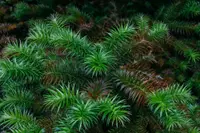
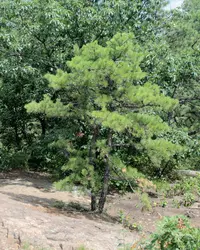
Teocote pine, Pinus teocote, is a medium-sized coniferous tree native to the mountains of Mexico and parts of Central America. It forms a straight trunk with a rounded to irregular crown and dense clusters of slender needles.
In its native range it grows on dry, rocky slopes and open woodlands, often in nutrient-poor soils. Its tolerance of drought, wind, and poor substrates makes it relatively resilient once established, though it prefers full sun and well-drained soil.
Because it grows into a sizable tree, it is more suitable for outdoor landscapes and reforestation projects than for small gardens. Learning how to care for Teocote Pine mainly involves providing strong light, good drainage, and avoiding prolonged waterlogging.

Care Difficulty
Moderate Care

Light Preference
Full Sun

Water Requirements
Low Water

Temperature Preference
Warm Climate

Hardiness Zone
7–10

Soil Texture
Sandy, Loamy, Rocky

Soil pH
Acidic (5.5–6.5), Slightly acidic (6.5–7.0)

Soil Drainage
Well-drained

Fertilization
Minimal (feed rarely)
Scan your plant to receive care tips personalized for your specific plant
Available on iOS and Android
This highland pine prefers strong, direct light in open landscapes.
This species prefers well-drained soil and benefits from deep, infrequent watering once established.
This pine is adapted to cooler, upland climates with distinct seasonal shifts.
This pine prefers relatively dry to moderately dry air and usually does not need special humidity control.
This species prefers mineral, well-drained soils that stay aerated and never waterlogged.
This pine can be grown in containers for several years, mainly as a young specimen or for bonsai-style training.
This pine generally thrives in lean soils and needs only modest feeding in cultivation.
Pinus teocote needs only light, purposeful pruning to maintain structure and health.
This species is usually grown in the ground, so focus on careful transplanting rather than frequent repotting.
Sexual propagation from seed is the standard and most practical method for this pine.
Established trees are generally cold hardy in suitable climates and need minimal winter intervention.

Plant Health Check
Not sure what's wrong with your plant? Check your plant's health inside the app.
This species is native to central and northern Mexico, where it is especially common on dry, rocky slopes at mid to high elevations, often forming open pine or pine–oak forests.
The tree is tapped locally for resin used in traditional products and as a source of turpentine and rosin, making it one of several Mexican pines valued for resin extraction.
Its relatively fast growth, straight trunk, and tolerance of poor, eroded soils have led to its use in commercial timber plantations and erosion-control or reforestation projects in parts of Mexico and other regions with similar climates.

Genetic and morphological studies have shown that this species belongs to a closely related group of Mexican pines, and it has been used as a reference taxon to understand the evolution and diversification of hard pines in the mountains of Mexico.
This species is considered moderately fast-growing for a pine, often adding 30–60 cm in height per year in good conditions. Growth slows as the tree matures and is strongly influenced by climate, soil quality, and water availability.
Keep your plants happy and healthy with plant identification, disease detection, and easy care guidance.