Site Airflow Check
Choose planting locations on exposed slopes or open areas where wind can move freely around the plant, which helps reduce fungal issues and discourages spider mites that thrive in still, hot air.

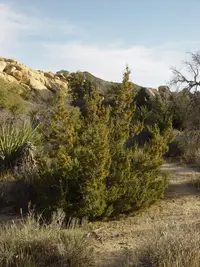
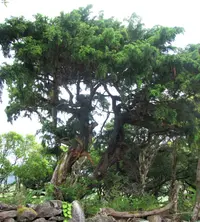
California juniper (Juniperus californica) is a long-lived, drought-tolerant conifer native to dry slopes and foothills of California and parts of the southwestern United States. It typically forms a dense, multi-stemmed shrub or small tree with blue-green scale-like foliage and small berry-like cones.
This species is adapted to hot, sunny, low-rainfall environments and poor, rocky soils, which makes it a strong candidate for low-water and xeriscape plantings. Its slow to moderate growth and natural tolerance of heat, wind, and poor soil mean that those who care for California Juniper usually find it durable once established.
It generally prefers full sun, excellent drainage, and infrequent deep watering rather than constant moisture or rich, fertile soil.

Care Difficulty
Easy Care

Light Preference
Full Sun

Water Requirements
Low Water

Temperature Preference
Cold Hardy

Hardiness Zone
5–9

Soil Texture
Sandy, Loamy, Rocky

Soil pH
Slightly acidic (6.5–7.0), Slightly alkaline (7.0–7.5)

Soil Drainage
Well-drained

Fertilization
Minimal (feed rarely)
Scan your plant to receive care tips personalized for your specific plant
Available on iOS and Android
This desert-adapted shrub needs abundant direct sun to stay dense and healthy.
This species is highly drought-tolerant and prefers infrequent, deep watering once established.
This shrub is adapted to wide temperature swings typical of arid and semi-arid regions.
This species is adapted to very dry air, so humidity is rarely a concern for California Juniper.
Juniperus californica prefers lean, fast-draining, mineral soils that do not stay wet.
This species can grow in containers, but long-term size and strong drought tolerance make it better suited to large, outdoor pots.
This drought-adapted species needs minimal feeding, but light nutrition can support container or landscape growth in poor soils.
Pruning Juniperus californica is mainly corrective, aimed at maintaining structure and removing problem wood rather than reshaping the plant.
This species is usually grown in the ground; transplanting demands care to preserve its drought-adapted root system.
Propagation of Juniperus californica is possible but can be slow, especially from seed.
Mature plants are cold hardy and usually need little winter care in typical growing regions.

Plant Health Check
Not sure what's wrong with your plant? Check your plant's health inside the app.
This species can survive in extremely dry sites by using both deep roots to tap groundwater and fine surface roots to capture brief rainfall and coastal fog drip.
Its berry-like cones are a key winter food for many birds and mammals, including Merriam’s turkeys and mule deer, and the dense crown offers nesting and thermal cover in harsh desert-edge habitats.
This naturally gnarled, slow-growing shrub or small tree is highly valued in North American bonsai for its twisted deadwood, called jin and shari, which forms in response to wind exposure and branch dieback over many decades.

Some individual California junipers have been dated to well over 600 years old, and old-growth stands often contain many overlapping generations, creating a living record of past climate conditions preserved in their growth rings.
Browning foliage often indicates root stress from chronic overwatering, poor drainage, or compacted soil. It can also result from de-icing salts, dog urine, or intense reflected heat. Check roots, improve drainage, and correct the environmental cause.
Keep your plants happy and healthy with plant identification, disease detection, and easy care guidance.