BotaN logo

koa Care (Acacia koa)

Also known as: Gray Koa, Koa tree

About koa

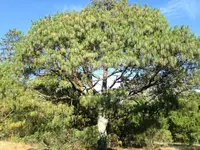
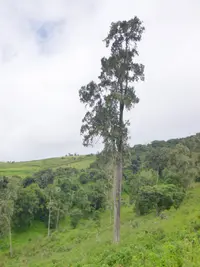
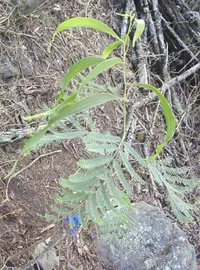
Koa, Acacia koa, is a fast-growing evergreen tree native to higher elevations in Hawaii. It is best known for its sweeping, curved branches and distinctive sickle-shaped leaf-like phyllodes. Mature trees develop a broad, rounded crown and richly colored wood valued for furniture and instruments. In nature, koa forms part of upland forests and can reach impressive heights in suitable conditions. It prefers full sun, well-drained soil, and moderate moisture, and it does not tolerate hard frost. For home growers, care for koa is easier in mild climates or large outdoor spaces than in small indoor settings.

Main Plant Requirements

Care Difficulty

Moderate Care

Light Preference

Full Sun

Water Requirements

Moderate Water

Temperature Preference

Tropical / Frost Sensitive

Hardiness Zone

10–11

Soil Texture

Loamy, Rocky, Clay

Soil pH

Acidic (5.5–6.5), Slightly acidic (6.5–7.0)

Soil Drainage

Well-drained

Fertilization

Minimal (feed rarely)

Get Personalized Care Plan

Scan your plant to receive care tips personalized for your specific plant

Available on iOS and Android

How to Care for the koa

This species needs abundant direct light to grow fast and form a strong canopy.

  • Provide 6–8 hours of full sun daily; morning to early afternoon exposure is ideal for young koa in open sites.
  • Accepts light partial shade, especially in the hottest 2–3 afternoon hours, but dense shade causes thin growth and sparse foliage.
  • In summer, monitor for leaf scorch on exposed, dry ridges; in winter, avoid deep shade from buildings or tall trees that blocks low-angle sun.

This tree prefers evenly moist but not saturated soil, especially during establishment.

  • For in-ground Acacia koa, water when the top 5–8 cm of soil feel dry, then soak deeply to encourage a deep root system.
  • Use fast-draining soil or sloped ground; prolonged puddling or sour, swampy smell indicates poor drainage and rising root-rot risk.
  • Reduce supplemental watering in cool or rainy seasons; watch for yellowing, soft leaves from overwatering or crisp leaf edges and early leaf drop from drought stress.

This species thrives in mild, frost-free climates with moderate temperature swings.

  • Ideal growth occurs around 65–80°F (18–27°C), with stable warmth supporting steady shoot and root development.
  • Tolerates brief highs near 90°F (32°C) if soil moisture is adequate; mulch roots to buffer heat and reduce evaporation.
  • Very sensitive to frost; damage often appears below about 32°F (0°C), so protect young trees from cold pockets and cold, drying winds.

This species grows best in moderate, stable humidity but adapts to many outdoor conditions.

  • Aim for 40–60% humidity, roughly typical of mild outdoor climates in its range.
  • Dry air is usually tolerated, but extended hot, low-humidity winds can cause leaf edge browning and tip dieback.
  • Increase humidity by grouping plants near other vegetation, using windbreaks, or providing occasional fine misting during very dry spells.

Acacia koa prefers freely draining, slightly acidic to neutral mineral soils that do not stay waterlogged.

  • Use a sandy or loamy mix with moderate organic matter so roots receive both moisture and air movement.
  • Aim for pH 6.0–7.0; avoid strongly alkaline substrates that can lock up iron and cause yellowing leaves.
  • Blend coarse sand or fine gravel into native soil to increase drainage on heavier sites, especially for young trees.
  • Avoid compacted clay, standing water, or thick peat-heavy mixes that keep roots saturated and promote root rot.

This tree can be grown in containers only short term, mainly as a juvenile or in bonsai-style culture.

  • Choose a wide, heavy container to reduce tipping risk as the top growth becomes tall and wind-sensitive.
  • Use a deep pot that allows development of a strong taproot while still providing rapid lateral drainage.
  • Select a rigid, non-flexible pot material to minimize root disturbance when the trunk begins to thicken and lignify.

Nutrient-rich soils suit Acacia koa best, but light feeding improves growth in poor or disturbed sites.

  • Apply a balanced slow-release fertilizer (such as 10-10-10) at half label rate once in early spring.
  • In very lean soils, repeat a light application in midsummer, avoiding overfeeding to limit weak, lanky growth.
  • Incorporate compost into the top 5–8 cm of soil to boost organic matter and microbial activity.
  • Stop feeding in late summer to allow wood to harden before cooler weather, and do not fertilize in winter.

Acacia koa benefits from thoughtful structural pruning to maintain a strong, safe canopy.

  • Carry out main pruning in late winter to early spring before active growth resumes.
  • Remove dead, diseased, crossing, or storm-damaged branches using clean, sharp bypass pruners or a pruning saw.
  • Thin crowded interior branches to improve light penetration and airflow while preserving the tree’s natural form.
  • On young trees, select a single strong leader and well-spaced scaffold branches to encourage stable long-term structure.

Young Acacia koa is often started in containers, then transplanted to a permanent site once established.

  • Plan transplanting for late winter to early spring, just before vigorous new growth begins.
  • Check for roots circling the pot, tight root balls, or slowed growth as signs container space is limiting the plant.
  • Transplant every 1–2 years while small, moving into a slightly larger container or directly into deep, well-drained soil.
  • Water thoroughly before and after moving, keep the root ball intact, and provide temporary shade to reduce transplant shock.

Acacia koa is most often propagated from seed, which responds well to pre-germination treatment.

  • Collect mature pods in late summer to autumn and store dry until sowing time.
  • Scarify seeds by nicking the seed coat or pouring near-boiling water over them, then soak 12–24 hours.
  • Sow into a free-draining mix, keeping temperatures around 68–77°F and the medium just moist, not wet.
  • Grow seedlings in full sun to bright light with good airflow to encourage sturdy, compact growth.

This subtropical tree is frost sensitive and needs protection in regions with cold winters.

  • In ground, only plant in climates where winter lows stay above about 30°F for reliable survival.
  • Apply a 5–8 cm mulch layer over the root zone, keeping it slightly away from the trunk to limit rot risk.
  • For container plants, move pots indoors or into a bright, frost-free space before the first freeze.

Care Tips

Shelter From Wind

Site young trees where buildings, windbreaks, or temporary shade cloth reduce strong prevailing winds, since repetitive wind rock can damage roots and slow establishment when growing koa.

Dry-Season Mulching

Apply a 5–8 cm layer of coarse organic mulch around the root zone, keeping it 5–10 cm away from the trunk, to stabilize soil moisture and temperature during dry periods.

Single-Leader Training

In the first 2–3 years, select one strong central stem and remove competing upright shoots to develop a stable single leader and improve long-term branch structure.

Early Root Space

Plant out seedlings or pot-grown trees before they become rootbound, using wide rather than deep planting areas to encourage lateral root spread and better anchorage.

Firewise Understory Management

In fire-prone areas, regularly remove dry weeds, litter, and woody debris under the canopy to reduce fuel load while leaving a thin layer of fine mulch for soil protection.

Common Pests and Diseases

Koa wilt

This disease causes rapid yellowing, wilting, and dieback of branches, often killing young trees quickly. Symptoms include brown discoloration in the sapwood and sudden collapse of foliage, especially in stressed plants.

Solution

Remove and destroy severely affected trees to reduce inoculum, and avoid planting new koa in obviously infested or poorly drained sites. Promote tree vigor with proper spacing, reduced mechanical injury, and good soil drainage, and consult local forestry or extension services for region-appropriate fungicide or sanitation recommendations as part of broader Acacia koa care.

Koa rust

This disease produces yellow to orange powdery pustules on young leaves, shoots, and sometimes pods, leading to distortion, premature leaf drop, and reduced growth. Symptoms include heavy defoliation in humid, warm conditions where spores spread easily.

Solution

Prune out and destroy heavily infected shoots and plant only rust-tolerant seed sources when available. Improve air circulation by proper spacing, avoid unnecessary overhead irrigation in humid climates, and remove nearby alternative host acacias that may act as spore reservoirs when practical.

Black twig borer

This pest is a tiny ambrosia beetle that bores into small branches and twigs, causing wilting, dieback, and small entry holes with dark frass at the surface. These insects introduce fungi into the wood, which further weakens and kills affected twigs.

Solution

Prune and destroy infested twigs several inches below visible entry holes to remove beetles and associated fungi, disinfecting tools between cuts. Reduce plant stress through proper watering and nutrition, and use fine-mesh screening, trap branches, or locally recommended beetle traps in high-value plantings when available.

Koa psyllid

This pest feeds on new growth, causing leaf curling, cupping, and yellowing, with honeydew deposits that can lead to sooty mold on foliage. These insects are small, jumping sap-suckers that favor tender shoots and can slow growth in young trees.

Solution

Encourage natural predators by minimizing broad-spectrum insecticides nearby, and prune out heavily infested tips on small trees. For young or nursery plants, spray thorough coverage of insecticidal soap or horticultural oil on the undersides of leaves during mild temperatures, repeating as needed according to product directions.

Koa looper

This pest is a caterpillar that defoliates koa by feeding on leaves and sometimes young pods, leaving ragged foliage and, in heavy outbreaks, near-complete defoliation. These insects are typically more damaging to seedlings and saplings than mature trees.

Solution

Hand-pick caterpillars from reachable branches on small trees and destroy them, and monitor regularly during known outbreak seasons. In nursery or young plantation settings, targeted applications of Bacillus thuringiensis (Bt) or similar biological insecticides can be used on actively feeding larvae, following local guidelines and avoiding treatment when beneficial insects are highly active.

Interesting Facts

Hawaiian forest builder

This species is one of the dominant native canopy trees in mid‑ to high‑elevation Hawaiian forests and plays a key role in creating the moist, shaded conditions that allow many endemic understory plants and animals to survive.

Nitrogen-fixing partner

Its roots host symbiotic bacteria that convert atmospheric nitrogen into forms usable by plants, gradually enriching thin, volcanic soils and improving conditions for other native species.

Prized tonewood source

The wood is light yet strong, with a distinctive golden to reddish-brown figure, and has long been valued in Hawaii for high-quality furniture, carved objects, and modern ukuleles and guitars due to its acoustic properties.

Botan icon

Did you know?

This tree is endemic to the Hawaiian Islands and shows striking genetic and growth-form variation from one island and elevation zone to another, making it an important model for studying how plants adapt and diversify in isolated archipelagos.

FAQs about koa

Growth is relatively fast in suitable conditions. Young trees often add 0.6–1.2 m per year, reaching small-usable size for shade or windbreaks in about 5–10 years, depending on climate, soil, and competition.

Grow Healthy Plants with Botan Care

Keep your plants happy and healthy with plant identification, disease detection, and easy care guidance.

Botan plant care app — identify plants on mobile

Explore More Plants