Japanese black pine Care (Pinus thunbergii)

Japanese black pine

About Japanese black pine

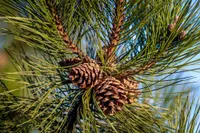
Japanese black pine, Pinus thunbergii, is an evergreen conifer valued for its strong structure and dark, textured needles. It often develops a rugged, picturesque form with age, making it popular in coastal landscapes and bonsai.

This species is native to coastal areas of Japan and Korea, where it tolerates wind, salt, and poor, sandy soils. These traits make it relatively resilient but it still needs full sun, good drainage, and consistent care for Japanese black pine to stay healthy in gardens or containers.

Main Plant Requirements

Care Difficulty

Moderate Care

Light Preference

Full Sun

Water Requirements

Low Water

Temperature Preference

Cold Hardy

Hardiness Zone

5–8

Soil Texture

Sandy, Loamy, Rocky

Soil pH

Acidic (5.5–6.5), Slightly acidic (6.5–7.0)

Soil Drainage

Well-drained

Fertilization

Minimal (feed rarely)

Get Personalized Care Plan

Scan your plant to receive care tips personalized for your specific plant

Available on iOS and Android

How to Care for the Japanese black pine

This coastal pine thrives in full sun but adapts to slightly lower light in cooler climates.

  • Provide 6–8 hours of direct sun daily; Japanese black pine develops denser needles and stronger branching in open, unshaded sites.
  • Tolerates light afternoon shade in hot inland areas, but too much shade leads to sparse growth, elongated shoots, and weaker buds.
  • Plant with unobstructed southern or western exposure; in winter, ensure access to low-angle sun and avoid deep shade from buildings or evergreens.

This species prefers evenly moist, well-drained soil and is more sensitive to excess water than brief dryness.

  • Outdoors in the ground, water when the top 3–5 cm of soil feels dry, using deep soaking rather than frequent light sprinkling.
  • Use sharply drained, sandy or gritty soil so water clears from the root zone within a few hours to reduce root-rot risk in Pinus thunbergii.
  • Reduce watering in cool seasons; watch for yellowing, soft needles as a sign of overwatering and dry, browning tips as a sign of underwatering.

This pine is cold hardy but grows best within a moderate temperature range when roots are not waterlogged.

  • Active growth is strongest around 55–77°F (13–25°C), with good performance in typical spring and fall conditions.
  • Mature trees tolerate short drops near 0°F (−18°C); young plants benefit from protection from severe wind chill and freeze–thaw cycles.
  • Handles summer heat up to about 90–95°F (32–35°C) if soil is slightly moist; mulch roots to buffer temperature swings and avoid reflected heat from pavement.

Humidity is rarely a limiting factor for Pinus thunbergii in typical outdoor conditions.

Pinus thunbergii prefers sharply drained, mineral soils that stay aerated around the roots.

  • Use sandy or sandy-loam soil with coarse particles that prevent compaction and allow rapid drainage.
  • Aim for slightly acidic to neutral pH around 5.5–7.0, avoiding strongly alkaline or saline substrates.
  • Blend components such as pine bark, pumice, coarse sand, and a small amount of compost to balance structure and nutrient supply.
  • Avoid heavy clay, peat-heavy mixes, or water-retentive substrates that stay wet for more than 1 day after watering.

This species can be grown in containers, especially for bonsai or patio use, if root conditions stay stable.

  • Choose a heavy, low, and wide container that reduces tipping risk as the crown becomes dense and top-heavy.
  • Use a coarse, fast-draining mix so water sheets through quickly and does not pool at the base of the pot.
  • Select unglazed ceramic or similar porous material to allow gradual evaporation from the sides and moderate moisture swings in the root zone.

This species benefits from moderate feeding but should not be overfertilized.

  • Use a balanced slow-release fertilizer (for example 10-10-10) or a light top-dressing of compost in early spring.
  • Feed container or bonsai Japanese black pine every 6–8 weeks during the growing season, following label rates or slightly weaker.
  • Avoid high-nitrogen lawn fertilizers that can cause overly soft growth and reduce stress tolerance.
  • Stop feeding 6–8 weeks before expected frost so new growth can harden off for winter.

Thoughtful pruning helps shape Pinus thunbergii and maintain strong structure.

  • Carry out main structural pruning in late winter to early spring before growth starts.
  • Remove dead, diseased, crossing, or inward-growing branches with clean, sharp bypass pruners or a pruning saw.
  • Use candle pinching in late spring to control size and encourage denser branching in bonsai or small landscape trees.
  • Avoid cutting back into old, bare wood that has no green needles, as buds seldom form there.

Container-grown plants and bonsai need occasional repotting; landscape trees focus on careful transplanting.

  • Repot when roots circle the pot, water drains slowly, or growth declines despite good care.
  • Plan major transplanting or repotting for late winter to very early spring while the tree is still dormant.
  • For bonsai Pinus thunbergii, repot every 3–5 years, trimming roots modestly and using a fast-draining, gritty mix.
  • Reduce stress by watering well before and after moving, keeping the root ball shaded, and avoiding heavy pruning at the same time.

Pinus thunbergii is usually propagated from seed and requires patience and controlled conditions.

  • Collect ripe cones in late summer to autumn, dry them, and extract seeds once scales open.
  • Provide cold stratification at about 35–40°F for 6–8 weeks to break seed dormancy.
  • Sow seeds in a well-drained, sandy mix, keep evenly moist, and place in bright, cool conditions for germination.
  • Cuttings and grafting are possible for selected forms but typically require specialist techniques and controlled environments.

This pine is generally cold hardy but young or potted plants benefit from some winter care.

  • Mature in-ground trees tolerate typical temperate frosts once well established.
  • Apply 5–8 cm of mulch over the root zone, keeping it away from the trunk, to moderate soil temperature.
  • For containers, shelter pots from severe freeze-thaw cycles or heel them into the ground for insulation.
  • In very windy sites, use a windbreak screen to reduce needle desiccation during cold, dry periods.

Care Tips

Candle pinching

In late spring, pinch back new candles by 30–50% with fingers rather than cutting, staggering the length of each candle to balance vigor and encourage dense, even branching.


Needle thinning

Once needles harden off, remove older inner needles by hand on crowded branches to improve airflow, reduce fungal risk, and direct energy to well-placed buds.

Bud selection

After candle growth, leave 2–3 outward-facing buds per shoot and remove weak or inward-facing buds so the tree develops a strong, open structure suitable for long-term landscape or bonsai training.

Root flare exposure

When top-dressing or lightly refreshing soil, keep the root flare just visible above the surface to prevent bark rot and promote a stable, buttressed base.

Seasonal pest checks

Inspect needles and branch crotches every 2–4 weeks in spring and early summer for pine needle scale, sawfly larvae, and aphids, and treat early with targeted horticultural oil or species-appropriate controls as part of caring for Japanese black pine.

Common Pests and Diseases

Pine wilt nematode

This disease is caused by the pinewood nematode carried by sawyer beetles and can lead to rapid browning and death of trees. Symptoms include sudden needle discoloration, wilting, and quick decline, often within a single growing season.

Solution

Remove and destroy affected trees promptly to prevent beetle spread, and avoid storing fresh pine wood nearby. In regions where pine wilt is present, preventive trunk injections with registered nematicidal products and strict sanitation of dead wood are key parts of practical Pinus thunbergii care instructions.

Pine needle cast

This disease is caused by fungi that infect and kill older needles, leading to premature needle drop and a thin, bare appearance of branches. Symptoms include yellowing, browning, and banding on needles, often followed by needles shedding from the inner parts of shoots.

Solution

Prune and dispose of infected needles and small branches to reduce fungal spores, and avoid overhead watering that keeps foliage wet. Improve spacing and airflow around trees, and in high-pressure areas use a labeled copper or chlorothalonil-based fungicide in spring when new needles are emerging.

Pine needle scale

This pest is a small sap-sucking insect that appears as white, elongated scale coverings on needles, causing yellow spotting and weakening of the tree. This pest can lead to reduced vigor, sparse foliage, and higher susceptibility to other stresses.

Solution

Prune and discard heavily infested twigs and gently hose needles with water to dislodge some scales. Monitor for the crawler stage in late spring and, if needed, apply a horticultural oil or insecticidal soap thoroughly to the needles, repeating as required according to label directions.

Sawfly larvae

These insects are caterpillar-like larvae that feed in groups on needles, sometimes stripping branches and giving the tree a scorched look. Symptoms include chewed or missing needles, clusters of larvae on shoots, and reduced growth when defoliation is heavy or repeated.

Solution

Handpick and remove small groups of larvae, or prune out and destroy heavily infested branch tips. For larger outbreaks, treat the foliage with a labeled product for sawflies such as spinosad or insecticidal soap, making sure to cover needles where larvae are feeding.

Pine needle blight

This disease is caused by several fungal pathogens that infect needles and shoot tips, leading to browning and dieback, especially in humid or poorly ventilated sites. Symptoms include necrotic needle tips, small black fruiting bodies on dead needles, and progressive thinning of the canopy from the inside out.

Solution

Remove fallen needles and prune out dead or blighted shoots to lower inoculum levels, disinfecting tools between cuts. Improve light and air movement, avoid prolonged wetting of foliage, and where the disease is persistent, apply a labeled preventive fungicide in early spring and again after new needle growth starts.

Interesting Facts

Salt-spray specialist

This coastal pine naturally grows on sea-facing cliffs and dunes in Japan and tolerates strong salt spray and coastal winds that damage many other tree species.

Key coastal defender

Its dense, fibrous root system and wind-firm structure make it an important species in Japanese coastal shelterbelt forests designed to stabilize sand dunes and reduce wind erosion.

Iconic bonsai subject

Its rugged bark, strong needle clusters, and ability to back-bud on old wood have made it one of the classic species for long-lived bonsai, often trained for decades to emphasize aged, weathered forms.

Botan icon

Did you know?

This species played a central role in large-scale coastal planting projects in Japan after historic tsunamis, because mature trees can attenuate wind and wave energy and help protect inland areas when used in wide, multi-row shelterbelts.

FAQs about Japanese black pine

Growth is moderate, usually about 20–30 cm per year in good conditions. Young trees establish slowly, then gain speed. Growth rate depends strongly on site quality, root space, climate, and consistent long‑term care.

Grow Healthy Plants with Botan Care

Keep your plants happy and healthy with plant identification, disease detection, and easy care guidance.


Botan plant care app — identify plants on mobile

Explore More Plants